
How to Help Kids Enjoy Reading: 12 Fun Tips
Table of Contents
- Why Some Kids Resist Reading (And How to Change That)
- Build a Reading-Friendly Home Environment
- Practical Tips for Reluctant Readers
- How to Make Reading Fun for Kids Every Day
- The Benefits of Reading to Children: Why It Matters
- Model Reading Behavior and Start a Family Book Club
- Conclusion: Start Your Child's Reading Adventure Today
- Frequently Asked Questions
Last Updated: September 4, 2026
Why Some Kids Resist Reading (And How to Change That)
Every parent knows the scene: a shelf full of books, yet the tablet wins every time. Resistance is rarely about the child, it is almost always about the approach. This guide from Smokey D Baby Dogga breaks down practical, play-based strategies that turn reading from a chore into the best part of the day.

Reading enjoyment is a habit that grows when books connect to what a child already loves. For reluctant readers aged 3 to 8, the goal is to build intrinsic motivation, the internal drive that makes a child choose a book on their own.
Before diving into tactics, understand the two most common culprits behind resistance: pressure and mismatch. When reading feels like a test or when the material does not match a child's interests, they disengage fast. Reading Rockets guide on motivating reluctant readers notes that children who see reading as a shared, enjoyable activity are far more likely to develop lasting literacy skills than those who read only for external rewards.
Build a Reading-Friendly Home Environment
A reading-friendly home environment is the single most effective tool for raising a reader. You do not need a dedicated library, a cozy corner with a basket of books, a soft pillow, and good lighting signals that reading is valued.
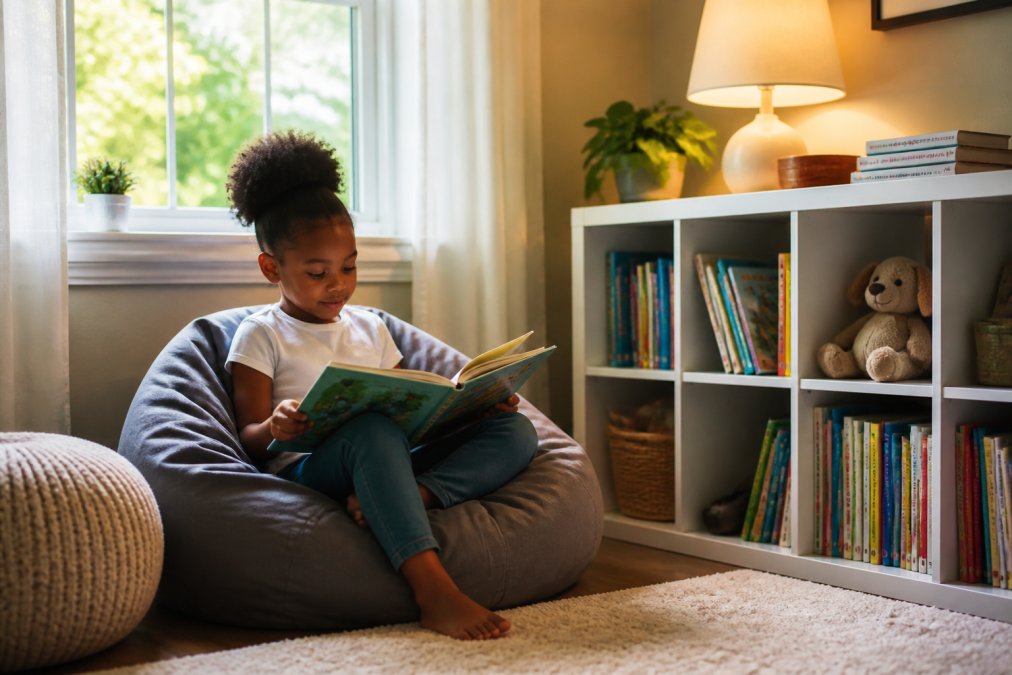
The key is visibility and access. Books stored on high shelves or in closed boxes get forgotten. Place them at eye level in the rooms where your family spends time, keep a stack in the car and a few in the kitchen. The easier books are to reach, the more likely a child will grab one during downtime.
Book access also means variety. Stock your home with different formats to match different moods: picture books for shared reading, graphic novels for visual learners, nonfiction for curious minds, and audiobooks for car rides. According to the American Library Association's family literacy resources, children who grow up in homes with diverse reading materials develop stronger vocabulary acquisition and reading comprehension over time.
Practical Tips for Reluctant Readers
If you are searching for tips for reluctant readers, start by surrendering control of the book selection. Many parents steer children toward "quality literature" when the child really wants a book about trucks, dinosaurs, or a puppy named Smokey. Let them choose, even if it means the same comic book for the tenth night in a row. Repetition builds fluency and confidence.
A common mistake is forcing a child to finish every book they start. Abandoning a book that does not click is a skill, not a failure. The freedom to stop teaches children that reading is for pleasure, not obligation.
But standard advice only goes so far. Many reluctant readers are not unmotivated, they are wired differently. Children with ADHD, dyslexia, or sensory processing differences often find traditional reading setups uncomfortable. Here is how to adapt.
For Children with ADHD
A child with ADHD does not lack interest in stories; they lack the executive function to sustain attention on a static page. Work with their neurology instead of against it:
- Use high-interest, low-length formats. Graphic novels, comic books, and magazine-style nonfiction deliver complete narrative arcs in short visual bursts. The "one page rule" works especially well here, one page is a manageable commitment for a brain that craves novelty.
- Build in movement. Let them read while bouncing on an exercise ball, pacing the room, or lying upside down on the couch. Reading does not require sitting still. Many pediatric occupational therapists recommend "heavy work" activities like holding a weighted lap pad during reading to improve focus.
- Try "paired reading." You read one sentence, they read the next. This keeps the pace moving and prevents the frustration of decoding every word while trying to track a plot.
- Use a reading tracker that gamifies progress. Visual progress systems, like a sticker chart that leads to a small prize after every five books, provide the external structure ADHD brains often need to build internal habits.
For Children with Dyslexia
Dyslexia affects an estimated 1 in 5 children in the United States, yet most reading advice ignores it. If your child reverses letters, skips words, or complains that letters "move" on the page, traditional instruction will not work. What does:
- Audiobooks are not cheating. Listening to a story while following along in the print version builds word recognition without the cognitive overload of decoding every word. Many children's librarians recommend the "listen and follow" method as a bridge to independent reading.
- Use dyslexia-friendly fonts. The font OpenDyslexic is freely available and designed with heavier bottoms to prevent letter flipping. Many e-readers and reading apps now include it as a display option.
- Focus on meaning over decoding. Ask comprehension questions after listening to a chapter, not after reading it aloud. This separates the skill of understanding from the skill of decoding, letting your child experience the joy of story without the frustration of print.
- Request an evaluation through your school district. Under the Individuals with Disabilities Education Act (IDEA), public schools must provide free evaluation and, if eligible, an Individualized Education Program (IEP) with reading accommodations. Early intervention matters, most reading specialists agree that support before third grade dramatically improves outcomes.
For Children with Sensory Processing Differences
Some children find the physical experience of reading overwhelming, paper texture, page-turning sounds, or visual density can trigger sensory discomfort. Practical fixes:
- Offer e-readers or tablets. Many parents worry about screen time, but for sensory-sensitive kids, a backlit screen with adjustable font size and brightness removes the visual overwhelm of a dense print page.
- Create a sensory-friendly reading space. A corner with a weighted blanket, noise-canceling headphones, and dimmable lighting signals safety. Let your child build the space themselves, control over the environment reduces sensory anxiety.
- Try "ear reading" first. Audiobooks delivered through headphones bypass visual and tactile triggers entirely. Many children who resist print will devour a 10-hour audiobook series in a week.
The bottom line: reluctant readers are not a monolith. The child who refuses picture books may crave chapter books. The child who hates print may love audio. The child who cannot sit still may need to move to focus. Match the approach to the child.
How to Make Reading Fun for Kids Every Day
Learning how to make reading fun for kids does not require elaborate crafts or expensive programs. It requires shifting from "reading time" to "story time", the difference is energy. Reading time sounds like a task; story time sounds like an adventure.
One of the most effective ways to make reading fun is to add a physical element. Act out scenes, build a blanket fort, or use stuffed animals as audience members. When Smokey D Baby Dogga and her friends go on adventures, readers can join by pretending to pack a backpack or make forest sounds.

Another powerful tool is the "book hook." Before opening a book, show the cover and ask your child to predict what will happen. Pause mid-story and ask what they would do in the character's situation. These conversations transform passive listening into active participation.
But "make it fun" means different things at different ages. A strategy that delights a 3-year-old will bore a 9-year-old. Here is what daily reading fun looks like across stages.
Visit & Subscribe on YouTube →
Ages 2-4: Play Is the Story
At this stage, children experience stories through their bodies, not their eyes. The book is a prop for play, not a text to decode. What works daily:
- Let them "read" the pictures. Ask "What do you see on this page?" before reading the words. This builds narrative comprehension before decoding skills exist.
- Use the "echo read." You read a line, they repeat it. This builds vocabulary and gives them a speaking role in the story.
- Make books part of the routine, not an interruption. A 5-minute book before every meal, diaper change, or bath creates micro-rituals that add up to 30 minutes of daily reading without a dedicated "reading time."
- Expect repetition, embrace it. Reading the same book 50 times is not a failure; it is mastery. Children at this age learn through repetition, and each reread builds new neural connections.
Ages 5-7: Choice and Identity
This is the age when children start forming an identity as "a reader" or "not a reader." The daily goal is to make sure they see themselves in stories. What works:
- The "three-book rule." Let them pick three books at the library or bookstore, knowing one can be "too easy," one can be "too hard," and one is "just right." This removes the pressure of finding the perfect book and gives them agency.
- Create a "reading identity" ritual. Ask "What kind of reader are you today?" Let them choose from labels like "animal expert," "joke collector," or "adventure seeker." Then pick books that match that identity.
- Use the "chapter cliffhanger" method. Read one chapter of a longer book each night, always stopping at the most exciting moment. The anticipation makes the next day's reading session something they request.
- Try "book tastings." Once a month, lay out 5-7 books from different genres. Give them 3 minutes with each, then have them rate which ones they want to "check out" for the week. This builds exposure to variety without overwhelming choice.
Ages 8-12: Independence with Connection
Pre-teens are developing independent tastes, but they still need adults to broker the relationship. Daily fun at this stage looks different:
- The "parallel reading" hour. You read your book, they read theirs, side by side. No discussion required. This models reading as a valued adult activity and provides low-pressure togetherness.
- Let them abandon books freely. At this age, children know what they like. Forcing them to finish a book they hate teaches them that reading is obligation. The freedom to quit is what keeps the door open.
- Connect books to their world. If they love a video game, find the novelization or a book set in that universe. If they are obsessed with a sports team, find biographies of athletes. Reading does not have to be "literary" to be valuable.
- Start a "book talk" at dinner. Instead of asking "How was school?" ask "What happened in your book today?" This normalizes reading as part of family conversation.
| Strategy | What It Looks Like | Why It Works |
|---|---|---|
| Character Voices | Give each character a distinct voice | Adds entertainment and improves comprehension |
| Prediction Pauses | Ask "What happens next?" before turning pages | Builds critical thinking and anticipation |
| Story Stretching | Act out scenes or draw the setting | Connects reading to kinesthetic learning |
| Choice Time | Let your child pick the book, even if it is the same one | Builds independence and confidence |
| Reading Rituals | Snuggle under a blanket with a special bookmark | Creates positive associations with books |
| Parallel Reading | You read your book, they read theirs, side by side | Models reading as a valued adult activity |
For daily practice, create a predictable reading ritual. The bedtime story is classic for a reason, but do not limit yourself to evenings, a morning story with breakfast or an after-school snuggle session works just as well. Consistency matters more than the clock. If your child is in a "reading slump," do not panic. Back off completely for two weeks, then reintroduce with a different format (try audiobooks if they were reading print, or graphic novels if they were reading chapter books). Sometimes the break reignites the love.
The Benefits of Reading to Children: Why It Matters
The benefits of reading to children extend far beyond early literacy. When you read aloud, you build neural pathways that support comprehension, empathy, and vocabulary. Children who are read to regularly hear more words, giving them a significant advantage when they begin reading independently.
Reading aloud also builds reading stamina. A child who can sit through a 20-minute chapter book has developed the attention span needed for academic success, especially important in an age of short-form video content that trains young brains to expect constant stimulation.
The emotional benefits are just as important as the cognitive ones. the National Institute of Child Health and Human Development's research on reading aloud highlights that shared reading strengthens the parent-child bond, which in turn creates a safe space for children to ask questions about difficult topics like fear, loss, or friendship. Stories featuring characters like Rocky the Ghost Dog give children a gentle way to explore big feelings through a safe, fictional lens.
Model Reading Behavior and Start a Family Book Club
Children learn more from what you do than what you say. If you want to raise a reader, let your child see you reading, put down your phone, pick up a book, and let them catch you lost in a story. This modeling reading behavior is the most powerful lesson you can teach.
A family book club takes this one step further. It does not have to be formal. Once a week, gather the family and each person shares something about what they are reading, a favorite picture for younger children, a chapter summary or acted-out scene for older kids. This builds storytelling skills and shows that reading is social.
To make it special, add a small prop. A dedicated bookmark, like the Smokey D Baby Dogga & Friends Bookmark, turns each reading session into a ritual. At $11.99, it is an affordable way to make reading feel like an event rather than an assignment.
Conclusion: Start Your Child's Reading Adventure Today
The path to helping kids enjoy reading is not about pushing harder. It is about creating an environment where books feel like friends and reading is a shared adventure. Start small: build a cozy reading corner, let your child pick the books, and model your own reading habit.
Smokey D Baby Dogga was created to support families on this journey. Our ten adventure-themed books feature a lovable cast including Smokey, Rocky the Ghost Dog, and Bella the Bat, each story designed to promote friendship, kindness, and courage while keeping young readers engaged. The Smokey D Baby Dogga Coloring Book extends storytime with 24 pages of creative play, and the Kids Jigsaw Puzzle turns reading into a family activity.

Get started with Smokey D Baby Dogga and give your child stories they will want to read again and again. Visit and subscribe on YouTube to preview our video trailers and begin your family's reading adventure today.
Frequently Asked Questions
Why is my child not interested in reading?
Children often resist reading when it feels like a chore or when they haven't found the right book. A mismatch between reading level and interest can also cause frustration. Try letting your child choose their own books, including graphic novels or nonfiction, and pair reading with a cozy ritual. If they see you enjoying a book, they are more likely to mirror that behavior. Patience is key, as forcing the issue can create negative associations.
How much time should a child spend reading daily?
For young children aged 3-8, short, consistent sessions work best. Aim for 10 to 20 minutes of focused reading time daily. The goal is to build reading stamina without turning it into a battle. For reluctant readers, even five minutes of successful reading is a win. You can gradually increase the time as their interest grows. Consistency matters more than duration, so a daily bedtime story ritual is an excellent starting point.
What are the best ways to encourage reading for reluctant readers?
Start by discovering what already excites your child. If they love dinosaurs, find books on that topic, whether fiction or nonfiction. Offer a choice between two books to give them a sense of control. Try pairing a physical book with its audiobook version. Also, consider using a fun bookmark or a special reading corner to make the experience feel new. Never use reading as a punishment, and always praise the effort, not just the outcome.
Is it normal for a 7 year old to struggle with reading?
Yes, it is completely normal. Children develop reading skills at different rates, and a 7-year-old is often transitioning from learning to read to reading to learn. Struggles can stem from a need for more phonemic awareness practice or simply a lack of interest in the assigned material. If your child is frustrated, step back and read aloud to them more often. This builds vocabulary and listening comprehension without the pressure of decoding.
This article was written using GrandRanker