
Character Building Stories for Toddlers
Table of Contents
- Why Character Building Stories Matter for Young Children
- How to Teach Values Through Storytelling
- Books That Teach Kindness to Kids: Top Stories for Ages 3-8
- Teaching Social Skills Through Reading
- Interactive Discussion Techniques for Toddler Storytelling
- Age-Specific Milestones: Which Stories Work Best When
- Extending the Story: Activities and Merchandise to Reinforce Lessons
- Conclusion
Last Updated: August 18, 2026
Why Character Building Stories Matter for Young Children
Character building stories for toddlers are foundational tools for developing the values, empathy, and social awareness that shape who children become. When you read stories that emphasize kindness, honesty, and courage, you're creating neural pathways that help young minds understand right from wrong, recognize emotions in others, and practice making good choices in a safe, imaginative space.
Research shows that children who engage with values-based literature develop stronger empathy skills and greater self-regulation than peers without regular story exposure. At Smokey D Baby Dogga, we've built an entire collection around this principle: every adventure Smokey and friends embark on teaches something meaningful about friendship, courage, and discovery.
How to Teach Values Through Storytelling
Teaching values through storytelling works because stories bypass the resistance young children show to direct instruction. When you tell a three-year-old "You should share," you get pushback. When you tell them a story about a character who discovers that sharing makes them feel happy, something shifts.
The most effective values-based literature follows a simple pattern: introduce a character facing a situation where a particular value matters, show the character making a choice, and reveal the natural consequences. This narrative arc helps toddlers understand cause and effect in the moral realm.
When you read aloud with genuine engagement, varying your voice and making eye contact, you signal that this story matters. Over time, story time becomes a ritual where values get reinforced through both narrative and relationship.
Books That Teach Kindness to Kids: Top Stories for Ages 3-8
Character building stories for toddlers span a range of themes, but kindness remains the most universally valued starting point. Stories about kindness introduce young children to empathy without overwhelming them, showing that small acts matter and that being kind feels good.
Stories About Honesty and Integrity
Honesty might seem abstract for a three-year-old, but stories that celebrate truthfulness help children understand that honesty builds trust. These narratives work best when they show a character facing a real temptation to lie, then discovering that telling the truth leads to better outcomes.
Stories about integrity teach toddlers that doing the right thing matters even when no one is watching. A character who returns a found toy, admits a mistake, or keeps a promise models behavior young children can observe and replicate. When you read these stories, pause occasionally to ask gentle questions: "Why do you think the character told the truth?" These discussion points transform passive listening into active moral reasoning.
Stories About Sharing and Generosity
Sharing doesn't come naturally to toddlers, which is why stories about generosity are valuable. A three-year-old operates from scarcity; stories that show characters discovering the joy of sharing help reframe generosity as creating connection and happiness.
The best stories about sharing show realistic scenarios: a character reluctant to share a favorite toy, a sibling wanting to play with something precious, a new friend feeling left out. When the story character makes the generous choice and experiences positive results, your child begins to associate sharing with good feelings rather than loss.

Stories About Courage and Trying New Things
Courage for toddlers means trying something new despite feeling scared. Stories about courage help young children understand that brave people feel fear too, but they move forward anyway. This reframing is crucial, a toddler who learns that courage means being scared and trying anyway has a tool they can actually use.
The best courage stories show incremental progress. A character doesn't jump from terrified to fearless; they take small steps, get encouragement, and try again. This mirrors the real developmental process toddlers experience as they navigate new situations. When they see a character model this approach, they have a template for their own brave moments.
Teaching Social Skills Through Reading
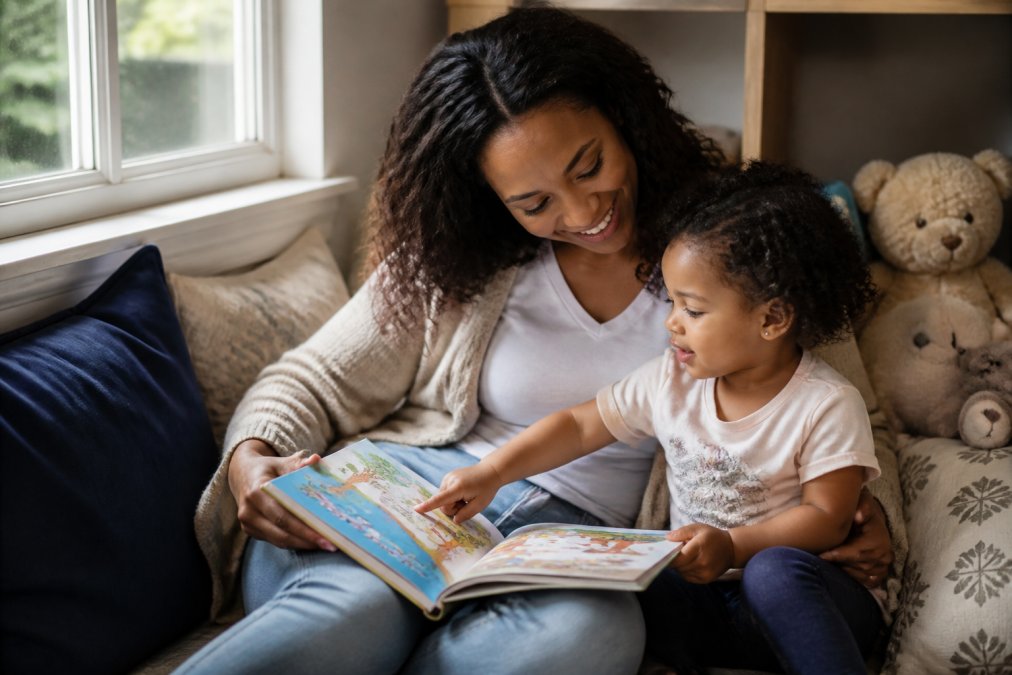
Reading stories together creates a natural laboratory for practicing social skills. When you pause to discuss what a character did and why, you're essentially role-playing social scenarios. Your toddler learns to recognize emotions in others, understand different perspectives, and think through how their actions affect people around them.
Rather than reading passively, pause at key moments and ask open-ended questions. Don't ask "Was that nice?" Instead ask "What do you think the character should do now?" or "How do you think that character felt?" These questions invite your child into moral reasoning.
The repetition of beloved stories matters enormously for social-emotional learning. When your toddler asks to hear the same story repeatedly, they're deepening their understanding of the values embedded in that narrative. Each listening builds more sophisticated comprehension of the social dynamics at play.
Interactive Discussion Techniques for Toddler Storytelling
The way you facilitate discussion around character building stories shapes how deeply your child absorbs the lessons. Ask questions that invite thinking: "What do you notice about what just happened?" or "Why do you think the character made that choice?" rather than launching into explanations.
Use voices and expressions to bring characters to life. When you read with animated enthusiasm, your toddler stays engaged longer and absorbs more. Pause for predictions: "What do you think happens next?" This transforms your toddler from a passive listener into an active participant.
Connect stories to real life. After finishing a story about sharing, notice when your toddler shares something and acknowledge the connection: "Remember in the story when the character shared their toy? You just did that with your brother." These connections cement the transfer of values from the story world to real behavior.
Age-Specific Milestones: Which Stories Work Best When
Toddler development moves quickly, and the stories that captivate a two-year-old won't hold a five-year-old's attention.
Visit & Subscribe on YouTube →
Ages 2-3 respond best to stories with simple plots, repetitive language, and concrete outcomes. Stories about basic kindness, sharing a snack, playing together, and helping work well because they're easy to visualize.
Ages 3-4 can follow slightly more complex narratives with multiple characters and basic conflict. Stories that show a character facing a problem, trying a solution, and experiencing a consequence work well. Stories about making friends, taking turns, and managing big feelings resonate deeply.
Ages 5-8 can handle more sophisticated plots with multiple scenes and character development. They can understand stories where the "right" choice isn't immediately obvious and engage in nuanced discussions about motivation and consequence.
The same beloved story often works across multiple age groups, but what your child takes from it changes. A three-year-old might simply enjoy the plot, while a six-year-old might engage in deeper discussion about why the character felt tempted to lie. Returning to favorite stories as your child grows is valuable, they extract new meaning each time.
Extending the Story: Activities and Merchandise to Reinforce Lessons
The most powerful learning happens when stories extend beyond the page. You can intentionally extend the learning through activities and merchandise that keep the story alive between readings.
Coloring books based on beloved characters give toddlers hands-on time with the stories they love. The Smokey D Baby Dogga Coloring Book features 24 pages of adventures with Smokey and friends, letting your child recreate the story worlds they've heard about. As your toddler colors, they're reliving the story, thinking about the characters, and practicing fine motor skills.
Puzzles offer another way to deepen engagement. The Smokey D Baby Dogga and Friends Kids Jigsaw Puzzle brings the colorful cast to life in a tangible way. As your child works through the pieces, they're spending focused time with the characters and building spatial reasoning skills.

Merchandise like the Smokey D Baby Dogga and Friends Plush Teddy Bear ($45.48) transforms beloved characters into comfort objects. A toddler who loves the stories might want the plush to cuddle during quiet time or carry on adventures around the house.
Smaller items extend engagement affordably: the Smokey D Baby Dogga Sticker Sheet ($10.99), the Smokey D Baby Dogga & Friends Bookmark ($11.99), and the Smokey D Baby Dogga & Friends Pencil Case ($23.12) bring characters into daily life.
Home decor items keep the characters present: the Smokey D Baby Dogga and Friends Decorative Pillow ($30.99), the Sherpa Blanket ($44.99), and the Area Rug ($53.99) create a welcoming space where your toddler can curl up with their favorite books. The Smokey D Baby Dogga Baby Swaddle Blanket ($44.68) introduces the characters to even the youngest readers.
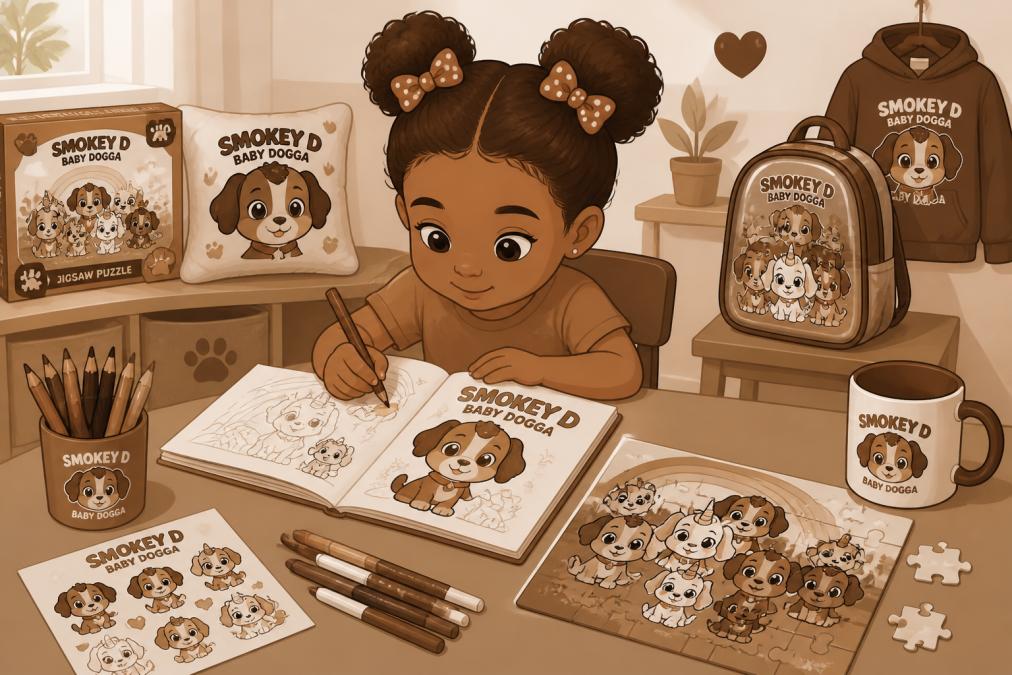
When you combine stories with activities and merchandise, you create a multi-sensory learning environment. Your child hears the story, sees the characters illustrated on the page, colors them, puzzles them together, cuddles the plush, and carries the stickers. Each touchpoint reinforces the values embedded in the narrative.
Character building stories for toddlers are an investment in who your child becomes. Stories teach kindness, courage, honesty, and empathy in ways that direct instruction never can. When you pair beloved narratives with interactive discussion and meaningful engagement, you create a foundation for social-emotional learning that shapes a lifetime of choices.
Smokey D Baby Dogga offers a complete ecosystem for this kind of intentional parenting. The storybooks introduce characters your toddler will love, and the accompanying merchandise extends that engagement into daily life. Start with the stories, follow your child's lead into deeper discussion, and let the characters become trusted companions on your child's journey toward becoming a person of character and kindness. Visit Smokey D Baby Dogga's YouTube channel to preview book trailers and discover which adventures will resonate most with your family.
Frequently Asked Questions
At what age should you start reading character-building books to children?
You can begin sharing character building stories with children as early as 18 months, though ages 3-5 is when toddlers start grasping moral concepts like kindness and honesty. At 3 years old, children develop early empathy and can understand simple cause-and-effect in stories. By ages 6-8, they engage with more complex character lessons and can discuss why characters made certain choices. Start with picture-heavy books for younger toddlers and progress to stories with more dialogue and emotional depth as they grow.
What are some good moral stories for toddlers?
Effective moral stories for toddlers focus on one clear value: sharing, telling the truth, showing kindness, or being brave. Look for stories with relatable characters, bright illustrations, and simple language. Stories about friendship and cooperation work well because toddlers are beginning to interact with peers. Character-driven adventures that show characters making good choices and experiencing positive outcomes help young children understand that values matter. Repetition across multiple stories reinforces the same lessons from different angles.
How can stories help in building character in kids?
Stories build character by giving children safe, imaginative spaces to explore values and emotions. When children hear about characters facing challenges, like choosing honesty over lying or showing kindness to someone left out, they develop emotional intelligence and moral reasoning. Stories normalize virtues like courage, patience, and gratitude. They also create shared language families can use to discuss behavior: 'Remember how the character in that story helped a friend?' This connection between story and real life helps children internalize values and apply them to their own choices and relationships.
How do I choose books that teach kindness to kids?
When selecting books that teach kindness to kids, look for stories where characters show compassion, help others, or learn the value of caring. Check the illustrations, they should convey warmth and positive emotions. Read reviews from other parents to confirm the story actually delivers on kindness themes rather than just mentioning them. Choose books with diverse characters so children see kindness across different backgrounds. Age-appropriate language matters: younger toddlers need simpler stories, while older children can handle more nuanced examples of kindness. Finally, pick stories you genuinely enjoy reading, your enthusiasm makes the lesson stick.
What are some activities for building character in kids beyond reading?
After reading, extend character lessons through hands-on activities. Use coloring books featuring story characters to reinforce visual memory of the tale. Ask open-ended questions: 'What would you do if you were in that story?' Create simple role-play scenarios where children act out story moments. Make crafts together inspired by the book. Use story-themed puzzles to keep characters top-of-mind. Praise specific character traits when you see them in real life: 'You were so kind to share your toys, just like the character in that story.' These activities transform passive listening into active character development.
This article was written using GrandRanker