
Books That Teach Kindness to Kids: 7 Stories for Ages 3-8
Table of Contents
- Why Books That Teach Kindness to Kids Work Better Than Lectures
- How to Teach Kindness to Toddlers With Board Books and Pictures
- 1. Smokey D Baby Dogga Awaits the Mail Lady Ronnie: Everyday Kindness in Action
- 2. Social Emotional Learning Books for Kids: Building Empathy and Self-Awareness
- 3. Activities to Teach Kindness in the Classroom That Pair With Read-Alouds
- 4. Kindness for Neurodivergent Children: Adapting Stories and Questions
- 5. Turning Books That Teach Kindness to Kids Into Family Habits
- Frequently Asked Questions
Last Updated: September 13, 2026
Why Books That Teach Kindness to Kids Work Better Than Lectures
Books that teach kindness to kids work because children absorb values through story, not instruction. A lecture tells a child what to do. A story lets them feel why it matters, watching a character choose generosity, empathy, or courage and then seeing what happens next.
At Smokey D Baby Dogga, we have spent over 41 years building stories around friendship, kindness, and adventure because we have seen how children respond when a lesson arrives wrapped in a character they love. The Collaborative for Academic, Social, and Emotional Learning (CASEL) framework describes social-emotional learning as the process through which children understand and manage emotions, set positive goals, and show empathy for others. Storytime is one of the most natural places that process unfolds.

Below, we break down how to choose kindness books by age, what to look for in social emotional learning books for kids, and how to turn a single read-aloud into a family habit. The seven picks here span ages 3 to 8, so you can match the story to the child.
How to Teach Kindness to Toddlers With Board Books and Pictures
The best way to teach kindness to toddlers is through short, picture-driven board books read aloud with pointing, sound effects, and simple questions. Toddlers learn through repetition and images, so a sturdy board book they can hold and revisit does more than a longer story they cannot sit through.
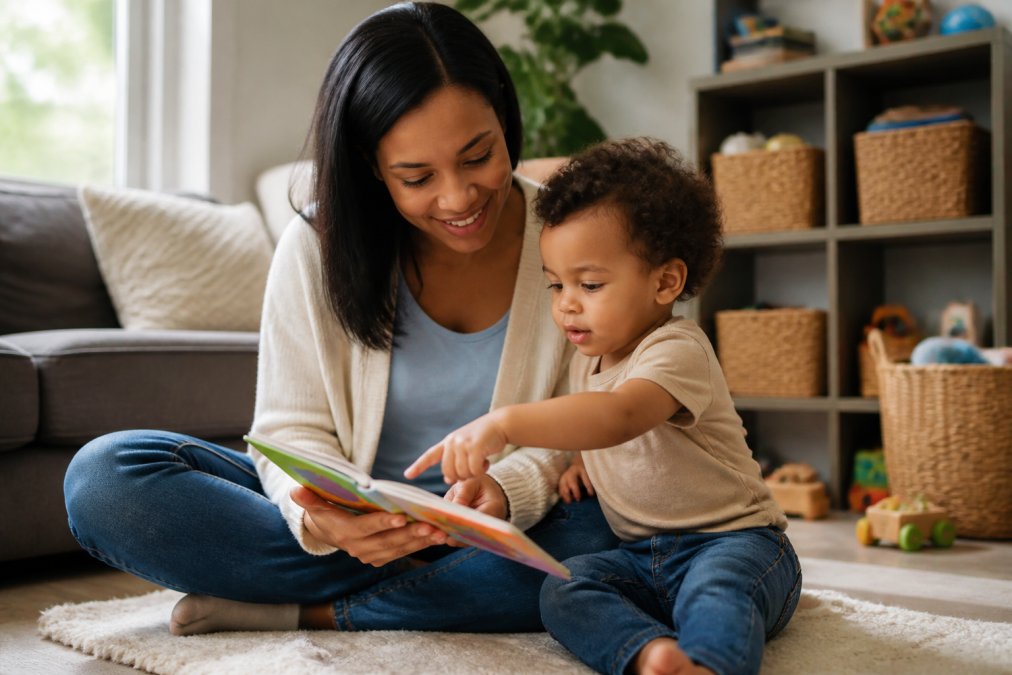
A few practical rules for the toddler stage:
- Keep sessions to 3-5 minutes and let the child turn the pages
- Point to faces and name the feelings: "She looks happy because he shared"
- Repeat the same book for weeks. Repetition builds the vocabulary of kindness
- Pair the story with one real action, like handing a snack to a sibling
Many parents find that toddlers grasp "helping" long before they grasp the word "kindness." Choose board books that show helping, sharing, and comforting in plain, visual scenes.
1. Smokey D Baby Dogga Awaits the Mail Lady Ronnie: Everyday Kindness in Action
Our top pick for everyday kindness is Smokey D Baby Dogga Awaits the Mail Lady Ronnie, a story built entirely around a small, ordinary act of gratitude. Smokey waits eagerly for Mail Lady Ronnie, and the book turns that simple daily moment into a lesson about appreciating the people who show up for us.

What makes it work is the scale. There is no grand gesture here, just a dog, a mail carrier, and the joy of a special delivery. That is exactly the kind of kindness young children can copy tomorrow.
You can extend the story beyond the page with the matching Smokey D Baby Dogga Awaits the Mail Lady Ronnie Canvas Tote Bag, a book bag that carries the same friendship-and-gratitude message to the library or the grocery store. For younger readers who want to color the characters themselves, the Smokey D Baby Dogga Coloring Book offers 24 pages of Smokey and friends, including scenes from the same adventures.
Discussion Questions to Ask After Reading
- Why do you think Smokey was so excited to see Mail Lady Ronnie?
- How do you think Ronnie felt when she saw Smokey waiting?
- Who is someone you see every day that you could thank this week?
2. Social Emotional Learning Books for Kids: Building Empathy and Self-Awareness
Social emotional learning books for kids are stories that deliberately build empathy, self-awareness, and relationship skills alongside a plot. They differ from ordinary picture books in that the emotional arc is the point, not a side effect. The Collaborative for Academic, Social, and Emotional Learning (CASEL) framework groups those skills into five areas, self-awareness, self-management, social awareness, relationship skills, and responsible decision-making, and the strongest kindness books hit at least two of them in a single read.
When you evaluate an SEL book, watch how the character handles a feeling. Does the story show a child noticing someone else's sadness? Does it show a character calming down before reacting? Those modeled moments are what children carry into the classroom and the playground.
Real Titles That Model Each SEL Skill
A useful shortcut is to match the book to the skill you want to reinforce this month:
- Social awareness and perspective-taking: Those Shoes by Maribeth Boelts, illustrated by Noah Z. Jones. Jeremy wants the same shoes his classmates wear, then meets a friend who needs them more. The book lets a child sit inside someone else's want before deciding what to do with it.
- Empathy and emotional literacy: When Sophie Gets Angry, Really, Really Angry by Molly Bang. Sophie's anger is drawn as a color that fills the page, which gives a child a concrete way to name a feeling before it controls them.
- Relationship skills and repair: Enemy Pie by Derek Munson, illustrated by Tara Calahan King. The narrator spends a day with a boy he has decided to hate, and the friendship that forms is the payoff of the father's quiet setup.
- Self-management and impulse control: My Mouth Is a Volcano! by Julia Cook, illustrated by Carrie Hartman. Louis interrupts constantly until he learns to "wait his turn," a phrase many teachers reuse in class.
- Responsible decision-making: The Invisible Boy by Trudy Ludwig, illustrated by Patrice Barton. Brian is drawn in grayscale until a classmate includes him, and the color returning to the page is the visual proof that one small choice changed a child's day.
- Gratitude and everyday noticing: Last Stop on Market Street by Matt de la Peña, illustrated by Christian Robinson. CJ rides the bus with his grandmother and slowly sees the beauty in what he already has.
What to Look for in an SEL Book
- A character who names an emotion out loud
- A conflict that resolves through listening or sharing, not punishment
- Illustrations that show facial expressions clearly
- A moment a child can connect to their own day
- A story where the kind act has a visible consequence, so the child sees the cause and effect
The American Academy of Pediatrics guidance on reading with children notes that shared reading supports language, literacy, and emotional bonding, which is why SEL stories read aloud outperform the same stories read alone. Look for titles where kindness is the engine of the plot, not a closing moral tacked onto the last page.
3. Activities to Teach Kindness in the Classroom That Pair With Read-Alouds
Activities to teach kindness in the classroom work best when they follow a read-aloud within the same session. The story primes the language; the activity gives children a place to use it. Most competitors stop at "read a book about kindness", the section below pairs six real titles with a specific follow-up activity so a teacher or parent can run the lesson tomorrow.
A simple structure teachers can repeat weekly:
- Read the story aloud and pause at the moment of choice
- Ask the class what the character could do next
- Run a five-minute paired activity where students practice the same act
- Close with one sentence from each child about what they noticed
Book-to-Activity Pairings
- Those Shoes by Maribeth Boelts → Needs-and-Wants Sort. Give each child two sticky notes and have them write or draw one thing they need and one thing they want. Post them on a T-chart and talk about which one a friend might need more.
- The Invisible Boy by Trudy Ludwig → Color a Classmate In. Print a simple outline of a person. Each child writes the name of someone they have not played with this week inside the outline, then colors it in. The grayscale-to-color shift in the book becomes the visual for the activity.
- Enemy Pie by Derek Munson → Two-Truths Friendship Web. Students sit in a circle and pass a ball of yarn, each sharing one thing they like about the person they pass it to. The yarn becomes a visible web of connection, echoing the friendship in the story.
- My Mouth Is a Volcano! by Julia Cook → Volcano Breathing. Teach a five-count breath: inhale for five, hold for two, exhale for five. Practice it once after the read-aloud and once before the next transition. The phrase "wait your turn" from the book becomes the classroom cue.
- Last Stop on Market Street by Matt de la Peña → Gratitude Bus Ride. Draw a bus with five windows. In each window, a child draws one thing they are grateful for that they can see on the way home. Post the buses on a wall as a "gratitude route."
- Smokey D Baby Dogga Awaits the Mail Lady Ronnie → Thank-You Note to a Helper. After reading, each child picks one adult in the building, a custodian, a lunch aide, a bus driver, and draws a thank-you card. Deliver them the same day so the cause and effect stays close.
Kindness Journal and Reflection Prompts
A kindness journal gives the lesson a paper trail. After a read-aloud, ask students to draw or write one answer:
- One kind thing someone did for me today
- One kind thing I did for someone else
- One person I want to help tomorrow
For early writers, drawing counts. The goal is reflection, not spelling.
A 30-Day Kindness Challenge to Send Home
Send home a simple calendar with one small act per day, hold a door, compliment a sibling, help clear the table, call a grandparent. Ask families to initial each square. The goal is not a completed calendar; it is that a child notices kindness as a daily choice rather than a special event. Pair the calendar with one book from the list above so the story and the challenge reinforce each other.
4. Kindness for Neurodivergent Children: Adapting Stories and Questions
Kindness for neurodivergent children often needs a different delivery, not a different message. Many autistic and ADHD readers respond well to the same kindness stories when the questions are made concrete and the sensory load is reduced.
Three adaptations that help:
- Replace abstract questions ("How did he feel?") with concrete ones ("What did he do with his hands?")
- Let the child hold a related object, like a plush or a tote bag, while you read
- Allow movement breaks between pages instead of expecting a full sit
Some children also connect better to a story they can watch before they read. Smokey D Baby Dogga offers video trailers for its books, which give a visual preview that can make the read-aloud feel familiar before it starts. You can find them on the brand's YouTube channel.
5. Turning Books That Teach Kindness to Kids Into Family Habits
Books that teach kindness to kids only change behavior when they become a routine, not a one-time event. The families who see the biggest shift are the ones who read the same kindness story repeatedly and connect it to real moments in the week.
A simple weekly rhythm:
- Pick one kindness book for the week and read it three times
- Name one real act of kindness you saw your child do
- Let your child pick the next book from a small shelf of kindness titles
Pairing the story with a physical object, like a Charlie the Chipmunk & Smokey D Baby Dogga mug for the grown-up reading aloud, keeps the characters present between sessions.

| Stage | Book Style | Session Length | Follow-Up Activity |
|---|---|---|---|
| Ages 3-4 | Board books, picture-led | 3-5 minutes | Point and name feelings |
| Ages 5-6 | Simple picture books | 5-10 minutes | One discussion question |
| Ages 7-8 | Longer picture books | 10-15 minutes | Kindness journal entry |
The National Association for the Education of Young Children (NAEYC) emphasizes that consistent, responsive interactions with caring adults are what build young children's social skills, which is why the routine matters more than any single book.
Frequently Asked Questions
What is a good way to teach kindness to a child?
Read aloud together and pause to talk about what the characters feel. Ask questions like 'How do you think she felt when he shared?' Pair the story with one small real-world action that week, such as writing a thank-you note to a mail carrier or helping a neighbor. Repetition matters more than one big lesson: short, frequent conversations build empathy faster than a single talk about being nice.
What are some good books to teach kindness to 4th graders?
Look for chapter books and picture books with moral dilemmas rather than simple 'be nice' messages. Fourth graders respond to characters who face a real choice, such as whether to include a new classmate or stand up for a friend. After reading, ask what they would have done differently. Books that show consequences, both good and bad, give 9- and 10-year-olds something concrete to discuss.
How can stories help children develop empathy?
Stories let children step into someone else's experience without risk. When a character feels left out or scared, kids practice recognizing emotions in a safe context. Research on social-emotional learning shows that discussing character feelings during read-alouds supports perspective-taking. The key is the conversation around the book, not just the plot. Ask 'What would you do?' and let your child answer without correcting them right away.
How do I teach kindness to toddlers with a short attention span?
Keep it to 5-10 minutes and use board books with one clear act of kindness per page. Point to faces and name the emotions: 'Look, she is smiling because he shared.' Toddlers learn through repetition, so reading the same book many times works better than new titles every night. Add a simple action, like waving to a neighbor or handing a toy to a sibling, so the idea connects to something they can actually do.
What activities pair well with kindness books in the classroom?
Try a kindness jar where students add a note each time they help someone, or a buddy system that pairs older and younger readers. After a read-aloud, have students draw one kind act they could do that day and share it with a partner. These activities work best when they follow the story immediately, while the characters and feelings are still fresh in students' minds.
Building a kindness habit takes consistency, and the right characters make children want to return to the same stories. Smokey D Baby Dogga offers ten adventure-themed books starring Smokey, Rocky the Ghost Dog, Bella the Bat, and friends, plus video trailers so families can preview each story before reading. Visit and subscribe on YouTube to start your family's next kindness adventure with Smokey D Baby Dogga.