
Best Books for Teaching Kindness 2026
Table of Contents
- Quick Comparison: Top Kindness Books at a Glance
- Picture Books for Empathy and Early Learners
- Children's Books About Empathy and Social Skills
- How to Teach Kindness Through Storytelling
- Books for Classroom Read-Alouds and Group Learning
- Activities to Pair With Kindness Books
- Which Book Should You Choose?
- Conclusion
Last Updated: August 24, 2026
Quick Comparison: Top Kindness Books at a Glance
| Book Title | Age Range | Key Theme | Best For |
|---|---|---|---|
| Smokey D Baby Dogga Waits for the Mail Lady Ronnie | 3-8 | Friendship & gratitude | Teaching appreciation for everyday heroes |
| Smokey D Baby Dogga Goes to School | 3-8 | Kindness & teamwork | First-day jitters and making friends |
| The Kindness Book | 4-8 | Empathy & compassion | Discussing emotions and feelings |
| Imagine | 4-9 | Inclusion & diversity | Celebrating differences |
| The Feelings Book | 5-9 | Emotional intelligence | Understanding emotions |
| Last Stop on Market Street | 5-10 | Gratitude & community | Finding joy in simple moments |
| Wonder | 8-12 | Acceptance & kindness | Deeper conversations about differences |
Teaching kindness through books works because stories make abstract values concrete and emotionally real (peer-reviewed research). The best books don't preach, they show kindness in action through characters children care about, making empathy feel natural rather than forced.

At Smokey D Baby Dogga, we believe children learn kindness best when they connect emotionally with characters who show it. Our stories feature Smokey and her friends navigating real situations where kindness matters: waiting for a mail carrier, starting school, making new friends. These adventures teach social-emotional learning through storytelling, exactly what research shows works best for early childhood development.
Below, we'll walk you through the most effective books for teaching kindness across different age groups, plus practical activities that extend the lessons beyond the page.
Picture Books for Empathy and Early Learners
Picture books are where kindness education begins. For children ages 3-5, visual storytelling combined with simple text creates the foundation for understanding empathy and compassion (apa.org). Illustrations show facial expressions and emotional moments that help young learners recognize feelings in themselves and others.
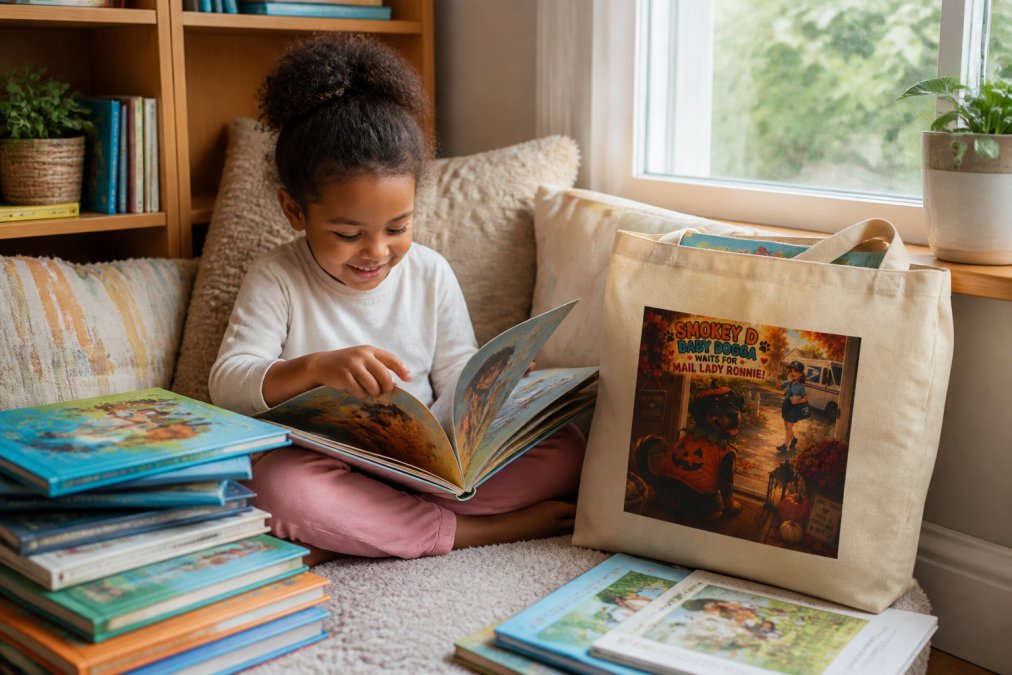
Smokey D Baby Dogga Waits for the Mail Lady Ronnie stands out because it teaches gratitude and recognition of community helpers through a character children genuinely connect with. Smokey's excitement as she waits for Mail Lady Ronnie models how to notice and appreciate the people who make our days better.
For early learners, picture books work best when they feature relatable characters in familiar situations, show emotions clearly through illustrations, keep text simple but meaningful, celebrate small acts of kindness, and include diverse characters and family structures.
Children's Books About Empathy and Social Skills
As children move into ages 5-8, they're ready for longer stories with more complex emotions and social situations (peer-reviewed research). Books for teaching kindness work best when they show conflict and resolution. A story where everyone is kind from page one doesn't teach much; instead, look for books where characters face actual challenges, misunderstandings, or moments where kindness requires courage.
Smokey D Baby Dogga Goes to School captures this perfectly. Smokey experiences the real anxiety of a first day while discovering the importance of kindness, teamwork, respect, and curiosity. The story validates nervousness while showing how kindness from others makes the experience better.
Books in this age range should address making and keeping friendships, handling disagreement respectfully, recognizing when someone needs help, understanding different perspectives, and managing big emotions. The best books include characters who make mistakes and learn from them, teaching that kindness is a practice, not an automatic trait.
How to Teach Kindness Through Storytelling
Storytelling is one of the most effective ways to teach kindness because stories connect directly to emotion and imagination. When children hear a story, they practice empathy by imagining themselves in the character's situation.
Teaching kindness through storytelling works because stories make abstract concepts concrete, children remember stories better than rules, stories normalize kindness as part of everyday life, and storytelling creates space for questions and discussion.
The most effective approach combines reading with conversation. Pause at key moments and ask open-ended questions: "How do you think that character felt?" "What would you do in that situation?" These questions turn passive listening into active learning about social-emotional skills.
Another powerful technique is connecting stories to real life. After reading about a character showing kindness, point out when your child does something similar: "You know how Smokey noticed that Mail Lady Ronnie would be happy to see her? You did something like that when you drew a picture for Grandma." This bridges the gap between story and behavior.

Books for Classroom Read-Alouds and Group Learning
Classroom read-alouds create a shared experience where children learn together and build community. The best books for classroom read-alouds spark conversation and work for a range of reading levels.
Smokey D Baby Dogga stories work exceptionally well as read-alouds because the illustrations keep all children engaged. The stories are long enough to hold attention but short enough to finish in one or two sittings. Teachers can pause at natural moments to discuss what's happening and what characters are feeling.
Effective classroom read-alouds address character education, inclusive representation, conflict resolution, community building, and emotional regulation. Look for stories where characters face choices about kindness or where different perspectives matter, creating rich opportunities for discussions about empathy and respect.
Activities to Pair With Kindness Books
Reading alone plants seeds; activities water them. After finishing a story, children remember more and internalize lessons more deeply when they create something, discuss something, or do something inspired by what they read.
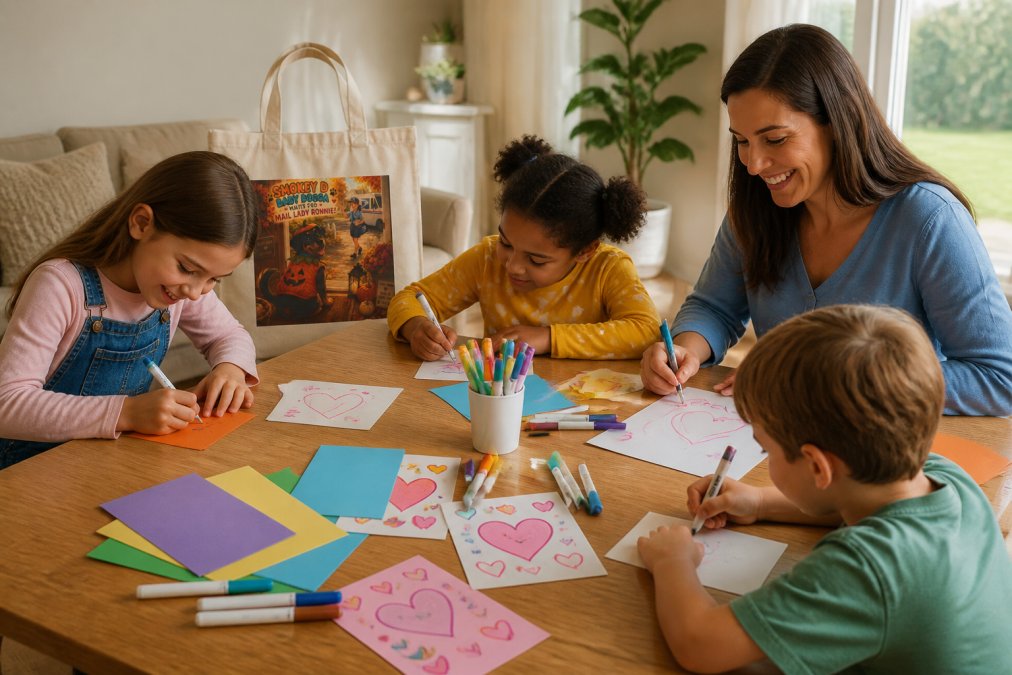
Gratitude and Recognition Activities After reading Smokey D Baby Dogga Waits for the Mail Lady Ronnie, children can create thank-you cards for community helpers: mail carriers, teachers, librarians, crossing guards. This turns the story's lesson about appreciation into action.
Kindness Practice Journals Pair any kindness book with a journal activity. The Smokey D Baby Dogga & Friends Hardcover Journal lets children record stories about kindness they've seen or done, creating a personal record of their growing understanding of compassion.
Visit & Subscribe on YouTube →
Role-Playing and Discussion Prompts After reading, act out scenarios from the book or create new ones. Role-playing helps children practice kindness in a safe space and develop problem-solving skills around social situations.
Creative Projects Inspired by Stories Children can create art, write their own stories, or design their own kindness books. The Smokey D Baby Dogga Coloring Book combines creativity with reinforcement of the characters and values from the stories.
Community Service Projects Connect books about kindness to real-world action. After reading about characters helping others, organize age-appropriate service projects: collecting books for a library, making care packages, or creating decorations for a community space.
Kindness Challenges Create a week-long or month-long kindness challenge inspired by a book. Each day, children practice a specific act of kindness: compliment a friend, help without being asked, include someone who's alone, listen carefully to someone's story.
The most effective activities let children choose how to engage. Offer choices that respect different learning styles and keep engagement high. Pair these activities with merchandise like a Smokey D Baby Dogga Awaits Mail Lady Ronnie T-Shirt or Smokey D Baby Dogga & Friends Bookmark to keep kindness top-of-mind throughout the day.
Which Book Should You Choose?
The best book for teaching kindness depends on your child's age, what specific values you want to emphasize, and what will capture their attention.
For children ages 3-5, start with picture books that show kindness in simple, visual ways. Smokey D Baby Dogga Waits for the Mail Lady Ronnie works beautifully because the illustrations are engaging, the story is short, and the theme of appreciating someone who helps us is concrete and relatable.
For children ages 5-8, look for longer picture books or early chapter books that address real social situations. Smokey D Baby Dogga Goes to School tackles starting school while weaving in lessons about kindness, teamwork, respect, and courage.
For children ages 8-12, introduce chapter books with more complex themes about friendship, inclusion, and standing up for others.
Consider what your child cares about. A child who loves animals will connect more deeply with animal characters. A child anxious about school will benefit from stories that validate those feelings. Pay attention to representation too, children learn best from stories where they see characters who look like them and face situations they recognize.
Conclusion
Teaching kindness through books works because stories make abstract values concrete, memorable, and emotionally real. When children connect with characters who show kindness, they practice empathy, learn how to navigate relationships, and discover that kindness is something they can do.
The best books for teaching kindness show characters children care about making choices that matter and treating others with respect. Smokey D Baby Dogga stories excel here, they're genuinely engaging, beautifully illustrated, and centered on values that matter: friendship, gratitude, kindness, and courage.
Start with one book that matches your child's age and interests. Read it multiple times. Talk about it. Do an activity inspired by it. Then watch as kindness becomes something your child doesn't just understand, but practices and lives.
Choosing the right books for teaching kindness sets the foundation for how your child approaches relationships and community throughout their life. Smokey D Baby Dogga stories provide that foundation with characters children genuinely love and stories that celebrate kindness in everyday moments. Pair the books with our merchandise, like the Smokey D Baby Dogga Awaits the Mail Lady Ronnie Canvas Tote Bag for carrying books to the library or the Smokey D Baby Dogga & Friends Bookmark, and kindness becomes part of your child's daily experience. Explore the full Smokey D Baby Dogga collection and discover stories that teach the values that matter most to your family.

Frequently Asked Questions
Q: What are some books that encourage kindness in children?
A: Picture books like Smokey D Baby Dogga Waits for the Mail Lady Ronnie teach kindness through relatable characters and everyday acts of caring. Stories about friendship, gratitude, and helping others create emotional connections that help children understand compassion. Books featuring diverse characters and inclusive values, like those celebrating community helpers and showing respect, reinforce kindness as a natural part of daily life and peer relationships.
Q: How can picture books help teach empathy to toddlers?
A: Picture books build empathy by showing characters facing feelings and situations toddlers recognize, waiting, making friends, starting school. Bright illustrations and simple stories help young children connect emotionally with characters. When you read aloud and pause to ask 'How do you think Smokey feels?', toddlers practice emotional intelligence and learn to recognize others' feelings. This early exposure to character emotions supports long-term development of prosocial behavior and kindness.
Q: Why is it important to read stories about kindness to young children?
A: Stories about kindness shape character development during critical early childhood years. Reading aloud creates shared moments that strengthen family bonds while teaching values. Kindness-focused narratives help children develop emotional regulation, conflict resolution skills, and positive peer relationships. Character education through storytelling builds a foundation for social-emotional learning (SEL) and helps children internalize kindness as part of their identity, not just a behavior.
Q: Are there specific books that teach children how to be helpful and kind?
A: Yes. Smokey D Baby Dogga Goes to School teaches kindness, teamwork, and respect through Smokey's first-day adventure. Stories featuring everyday heroes, like mail carriers, teachers, and community members, show children that kindness appears in simple acts. Books with diverse characters and inclusive narratives help children understand that helpfulness looks different across cultures and families. Pairing these stories with real-world activities (like making thank-you cards or helping neighbors) reinforces the lessons.
This article was written using GrandRanker