
How to Find High Quality Storybooks for Kids
Table of Contents
- What Makes a Storybook High Quality?
- How to Evaluate Children's Book Quality: A Simple Rubric
- The Importance of Diverse Characters in Children's Books
- Finding the Best Books for 5 Year Olds and Other Ages
- Where to Find High Quality Storybooks: Curated Sources
- The Re-Readability Factor and Critical Thinking Prompts
- Conclusion: Build a Library Worth Revisiting
- Frequently Asked Questions
Last Updated: September 6, 2026
What Makes a Storybook High Quality?
A high quality storybook respects a child's intelligence, engages their emotions, and rewards repeated readings with new discoveries. It combines a well-crafted narrative with illustrations that extend the text.
At Smokey D Baby Dogga, we have over 41 years of experience. The best storybooks offer what literacy experts call layered reading: a simple surface story for young listeners, with deeper themes that reveal themselves as children grow.

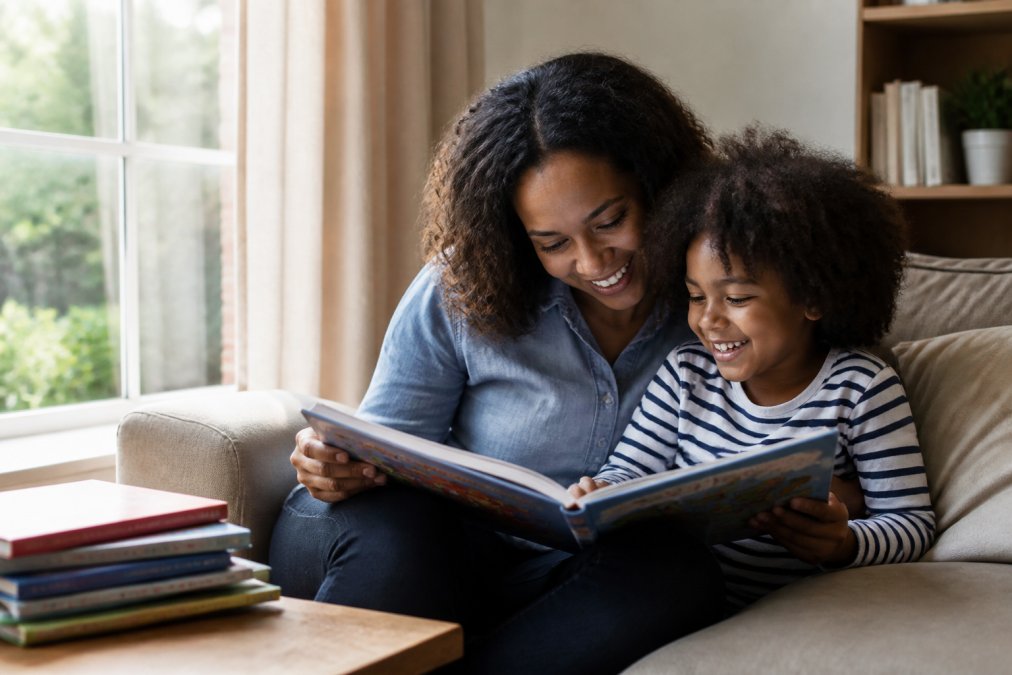
Most guides focus only on award winners or bestseller lists. Those are useful signals, but they don't teach you to think like an editor.
How to Evaluate Children's Book Quality: A Simple Rubric
Evaluating children's book quality comes down to four pillars: story structure, artistic merit, physical durability, and age alignment. Score a book against these criteria before you buy, and you'll rarely waste money on something read once and abandoned.
Here's a rubric to consider when evaluating manuscripts:
- Story Structure (0-5 points): Does the narrative have a clear beginning, middle, and end? Are there stakes and a satisfying resolution?
- Illustration Quality (0-5 points): Do the pictures add information not in the text? Is the art style consistent and expressive?
- Language Craft (0-5 points): Does the prose read aloud well? Are there interesting word choices that build vocabulary?
- Thematic Depth (0-5 points): Does the book offer more than surface entertainment? Can a child take away a lesson about friendship, courage, or kindness?
A book scoring 15 or higher out of 20 is worth your shelf space. Below 12, it's likely forgettable regardless of how shiny the cover looks.
Check the Story's Bones: Narrative Arc and Thematic Depth
The narrative arc is the backbone of any high quality storybook. A strong arc introduces a character with a desire, places obstacles in their path, and resolves the tension in a way that feels earned rather than rushed. Picture books have limited space, typically 32 pages, so every scene must advance the story.
Thematic depth separates a book you read once from one you read seventy times. The best children's stories operate on multiple levels: a child sees an adventure, while an adult notices themes of loss, resilience, or empathy.
Look for Physical Quality Indicators That Last
Physical quality matters more than most parents realize, especially for the 3-to-5 age range where books get handled roughly. Check for a sturdy binding that lies flat when open. Board books should have rounded corners and thick pages that resist bending. Paperback picture books should have a reinforced spine that won't crack after a dozen readings.
The paper quality affects the reading experience too. Thicker, matte pages reduce glare and hold color well, while glossy pages show fingerprints and can reflect light during bedtime reading. For a book you expect to survive multiple children, look for sewn bindings rather than glued ones.
The Importance of Diverse Characters in Children's Books
The importance of diverse characters in children's books extends far beyond checking a representation box. When children see themselves reflected in stories, they develop stronger reading engagement and positive self-identity. When they encounter characters different from themselves, they build empathy and cultural awareness that classroom instruction alone rarely provides.
A diversity audit asks simple questions: Do the characters represent different backgrounds, family structures, and abilities? Are diverse characters the heroes of their own stories rather than sidekicks or comic relief? Is the diversity integral to the narrative rather than tokenized?
Research from The Cooperative Children's Book Center at the University of Wisconsin has tracked representation in children's literature for decades, showing steady progress but persistent gaps. Parents who deliberately seek out books with authentic cultural representation give their children a richer understanding of the world and its many storytellers.
Finding the Best Books for 5 Year Olds and Other Ages
Selecting books by age is less about a strict formula and more about understanding developmental milestones. The best books for 5 year olds balance growing attention spans with still-developing comprehension. At this age, children typically sit for 15 to 20 minute read-aloud sessions and are beginning to recognize sight words. They need stories with slightly more complex plots than toddler books, but still supported by strong illustrations that carry meaning.
Here’s a practical breakdown of what to look for across the early childhood spectrum, moving beyond simple labels:
| Age Range | Developmental Focus | What to Look For | What to Avoid |
|---|---|---|---|
| 3-4 years | Language explosion, cause-and-effect | Repetitive phrasing, predictable patterns, interactive elements (lift-the-flap), stories about daily routines and emotions. | Long, text-heavy pages; abstract concepts without visual support; fragile paper pages. |
| 5-6 years | Emerging phonemic awareness, longer memory | Slightly longer narratives with a clear problem-solution arc, humor, early reader formats with controlled vocabulary, and non-fiction that taps into specific passions (dinosaurs, space). | Books that talk down to the child; overly didactic lessons that overshadow the story. |
| 7-8 years | Independent reading fluency, complex plots | Early chapter books with short chapters, engaging characters, and a series format to build reading momentum. Look for books that bridge picture books and middle-grade, like the Mercy Watson series by Kate DiCamillo or The Magic Tree House by Mary Pope Osborne. | Chapter books with dense text and no illustrations if the child is not yet a fluent reader; content with mature themes they aren't ready for. |
For 5 year olds specifically, look for books that honor their growing independence while still offering the comfort of familiar characters. Series books work well at this age because children develop attachments to characters and eagerly anticipate the next adventure. The Smokey D Baby Dogga series, featuring Smokey and her friends like Rocky the Ghost Dog and Bella the Bat, offers ten distinct adventure-themed books that grow with children from simple picture book engagement to more complex storytelling.
Using Reading Levels and the Five-Finger Rule
Reading levels provide helpful guardrails, but they shouldn't dictate every choice. The Lexile measure and guided reading levels (like Fountas & Pinnell) tell you about text complexity, not about whether a book will spark joy. A child reading above grade level still deserves the freedom to enjoy simpler books for pleasure. Conversely, a child struggling with reading can still benefit enormously from hearing a complex story read aloud.
The five-finger rule is a practical tool for finding independent reading books. Have your child read a page aloud and hold up one finger for each word they struggle with. Zero to one fingers means the book may be too easy. Two to three fingers indicates a good challenge level. Four to five fingers suggests the book is too difficult for independent reading right now, though it may work well as a read-aloud.
A more nuanced approach is the “Goldilocks” method: one book that is easy (for confidence), one that is just right (for learning), and one that is a stretch (for read-aloud or guided exploration). This prevents the boredom of an all-easy diet and the frustration of an all-hard one.
Where to Find High Quality Storybooks: Curated Sources
Finding high quality storybooks becomes easier when you know where the gatekeepers keep their standards high. Book awards like the Caldecott Medal for illustration and the Newbery Medal for writing identify books that have survived rigorous evaluation by librarians and children's literature experts. These award lists provide a reliable starting point, though they represent only a fraction of excellent books published each year.
But award lists are just the tip of the iceberg. The real power lies in learning how to use the professional tools librarians and educators rely on. Here’s how to search like a professional:
1. Master the Library of Congress Subject Headings. This is the single most underutilized tool for parents. Instead of searching a library catalog for a generic term like "dinosaurs," search for the official subject heading: "Dinosaurs -- Juvenile fiction." This instantly filters out adult non-fiction and gives you a curated list of picture books and early readers on that topic. You can then cross-reference that list with your quality rubric.
2. Use NoveList's "Appeal Terms" to find your child's reading sweet spot. NoveList is a reader's advisory database available free through most public library systems. Beyond simple read-alikes, its power is in its appeal terms. If your child loves books that are "humorous," "fast-paced," and have a "strong female protagonist," you can search for those exact terms. This moves you from guessing to targeting the specific elements that keep your child engaged.
3. Go Beyond the Caldecott: Look at the "Notable" and "Best of" Lists. The Caldecott and Newbery are single winners. The American Library Association's Notable Children's Books list and the New York Times Best Illustrated Children's Books list include 10-20 titles annually, offering a broader, still-vetted selection. The ALA list is particularly strong because it is divided by age group (Younger Readers, Middle Readers, Older Readers), making it easy to find age-appropriate options.
4. Check the Back Matter for a Professional Endorsement. A high quality book often signals its own quality. Look for a note like "A Junior Library Guild Selection" or a blurb from a recognized institution like Kirkus Reviews or School Library Journal (e.g., "Starred Review"). These are professional signals that the book has passed a higher bar of editorial scrutiny.
Independent bookstores employ children's specialists who read widely and can match books to specific children's interests. Public librarians are another underutilized resource; they see which books circulate well and which ones children actually request by name. Local library storytimes also let you observe how books land with real audiences before you commit to purchasing.
The Re-Readability Factor and Critical Thinking Prompts
Re-readability is the quality that transforms a good book into a great one. A high quality storybook reveals new details on every reading: a background illustration that foreshadows the ending, a turn of phrase that lands differently once you know the outcome, a thematic layer that only emerges after multiple exposures. When children request the same book repeatedly, they're not being repetitive; they're mastering the story and extracting deeper meaning.
You can extend the life of any storybook with critical thinking prompts that turn passive listening into active engagement. Before reading, ask "What do you think this book might be about?" based on the cover. During reading, pause to ask "What might happen next?" or "Why do you think the character made that choice?" After reading, invite your child to imagine alternatives: "What would have happened if the character had taken a different path?"
These prompts build reading comprehension and critical analysis skills that serve children well beyond storytime. They also transform reading from a solitary activity into a shared experience that strengthens your bond. The Smokey D Baby Dogga stories are designed with this in mind, featuring discussion-worthy themes of friendship and courage that give families natural conversation starters. You can extend the experience with the Smokey D Baby Dogga Coloring Book or the Bookmark to keep young readers engaged between story sessions.

Conclusion: Build a Library Worth Revisiting
Building a high quality home library isn't about accumulating the most books; it's about curating the right ones. Every book you bring home either enriches your child's literary foundation or takes up space that a better book could fill. Armed with a quality rubric, an understanding of age-appropriate selection, and knowledge of curated sources, you can make confident choices that serve your family for years.
At Smokey D Baby Dogga, we pour the same care into every story that we hope you'll bring to your selections, crafting adventures that encourage imagination, friendship, and discovery. Our ten-book series features characters like Rocky the Ghost Dog and Bella the Bat who become genuine friends to young readers, with video trailers available for previewing before you buy. Visit and subscribe on YouTube to join the Smokey D Baby Dogga community and discover stories your children will ask for by name, night after night.
Frequently Asked Questions
Where can I buy high quality books?
Look beyond the bargain bin. Independent bookstores often curate their shelves with librarian-selected titles. Check the winners of major children's book awards like the Caldecott Medal and Newbery Medal at your local library. Online, use bibliographic databases like the Horn Book or Kirkus reviews to find professional critiques. For a ready-made option, explore curated collections from brands like Smokey D Baby Dogga, which offer adventure-filled stories with a focus on friendship and kindness.
What is the 5 finger rule for books?
The five-finger rule helps match a book to a child's reading level. Have your child read a random page. Each time they stumble on a word, hold up one finger. If you end with zero or one finger, the book may be too easy. Two or three fingers usually means it is a good fit. Four or five fingers suggest the book is too challenging right now. This rule works best for early readers and chapter books, not picture books meant to be read aloud.
What criteria define a high-quality children's book?
High-quality storybooks have several marks of excellence. First, the story should have a clear narrative arc with a satisfying ending that builds thematic depth. The illustrations should complement the text and carry artistic merit. Age-appropriate language and a vocabulary-building component are essential, as is a book design with durable binding and quality paper. Finally, look for diverse characters and cultural representation that offer windows and mirrors for young readers.
How do I balance educational value with entertainment in storybooks?
The best storybooks teach without feeling like a lesson. Look for books where character growth and plot are the main engines, not facts. A story about a puppy going on a camping adventure, for example, can build vocabulary and spark curiosity about nature while the child simply enjoys the tale. Ask: does the book encourage critical thinking or empathy? If a child asks for it again, the educational value sticks.
The challenge isn't finding books; it's finding the right ones. Start with your rubric, trust your instincts, and remember that the goal is a library your child will revisit not because they must, but because they can't wait to return. Get started with Smokey D Baby Dogga and give your family stories worth reading again and again.