
Engaging Stories for Mixed Age Siblings
Table of Contents
- Why Engaging Stories for Mixed Age Siblings Matter
- Best Family Read Aloud Books That Work Across Ages
- Tips for Reading to Children of Different Ages
- Interactive Storytelling Techniques for Kids
- Bridging the Gap: Books for Toddlers and School-Age Children
- Creating a Family Reading Routine That Sticks
- Post-Reading Activities That Extend the Story
- Conclusion
Last Updated: August 25, 2026
Why Engaging Stories for Mixed Age Siblings Matter
Reading together as a family creates moments that stick with children long after the book closes. When juggling a toddler's short attention span alongside a school-age child's demand for plot complexity, the gap between ages isn't a problem to solve, it's an opportunity to build something stronger.
Engaging stories for mixed age siblings create shared vocabulary, build empathy across age groups, and give younger children a preview of what reading will become. Older siblings often become storytellers themselves, deepening their comprehension and confidence. At Smokey D Baby Dogga, families use character-driven adventures to bridge developmental stages, turning potential conflict into collaborative play.
Children who experience read-aloud time in mixed-age settings develop stronger vocabulary and social skills than those reading alone (peer-reviewed research). Interactive storytelling, where siblings engage with the narrative together, amplifies these benefits.
Best Family Read Aloud Books That Work Across Ages
Selecting the right read-aloud books for mixed-age groups means prioritizing narrative engagement over reading level. The best family read aloud books feature strong character development, age-appropriate humor, and plots that reward attention from both a 3-year-old and a 7-year-old.
Chapter books with illustrated pages work particularly well because they give younger children visual anchors while older siblings follow dialogue and plot turns. Smokey D Baby Dogga's adventure series features a cast of colorful characters, including Rocky the Ghost Dog and Bella the Bat, whose stories work for toddlers discovering narrative for the first time and school-age children seeking genuine adventure.
Look for books where:
- Illustrations carry meaning for younger readers while text deepens the experience for older ones
- Character motivations are clear but not simplistic
- Humor works on multiple levels (slapstick for toddlers, wordplay for older kids)
- Pacing allows natural stopping points without cliffhangers that frustrate tired younger siblings
Picture books with richer storytelling bridge ages effectively. Stories that introduce themes like courage, discovery, and kindness without being preachy give families something genuine to discuss afterward.
Tips for Reading to Children of Different Ages
Managing different developmental needs during storytime requires practical strategies. Each age combination brings different challenges.
Adjusting Pacing and Language
Reading the same text to different ages means making real-time adjustments without breaking the flow. Younger children need shorter sentences and simpler vocabulary. Older children need enough narrative momentum to stay engaged.
Read descriptive or dialogue-heavy sections at a natural pace for older kids. When you hit sections that might confuse younger children, simplify on the fly: "The knight rode across the vast kingdom" becomes "The knight rode far, far away" without losing the story's meaning. Older siblings often don't notice these adjustments because the narrative keeps moving.
Reading slightly faster through descriptive passages and slowing for dialogue and action gives both groups what they need.
Managing Different Attention Spans
A 3-year-old's attention span differs dramatically from a 7-year-old's (apa.org). Set realistic expectations for session length. A 15-minute read with a toddler and school-age child works better than pushing for 30 minutes with escalating restlessness (aap.org). Build in movement breaks: let younger children act out parts of the story, have older kids predict what happens next, or pause for everyone to stretch.
Position children strategically. Seat the toddler closest to the book's illustrations and your voice. Older siblings can sit slightly back, allowing them to see the text and pictures without feeling crowded. This simple arrangement reduces competition for attention and physical space.
For stories that run longer than toddler attention spans allow, break them into chapters across multiple days. Older siblings actually prefer this, it builds anticipation and gives them something to think about between sessions.
Interactive Storytelling Techniques for Kids
Static read-aloud sessions work for some families, but interactive storytelling creates genuine engagement across age groups. When children participate in the narrative through sound effects, character voices, predictions, or physical actions, they're thinking, imagining, and problem-solving together.
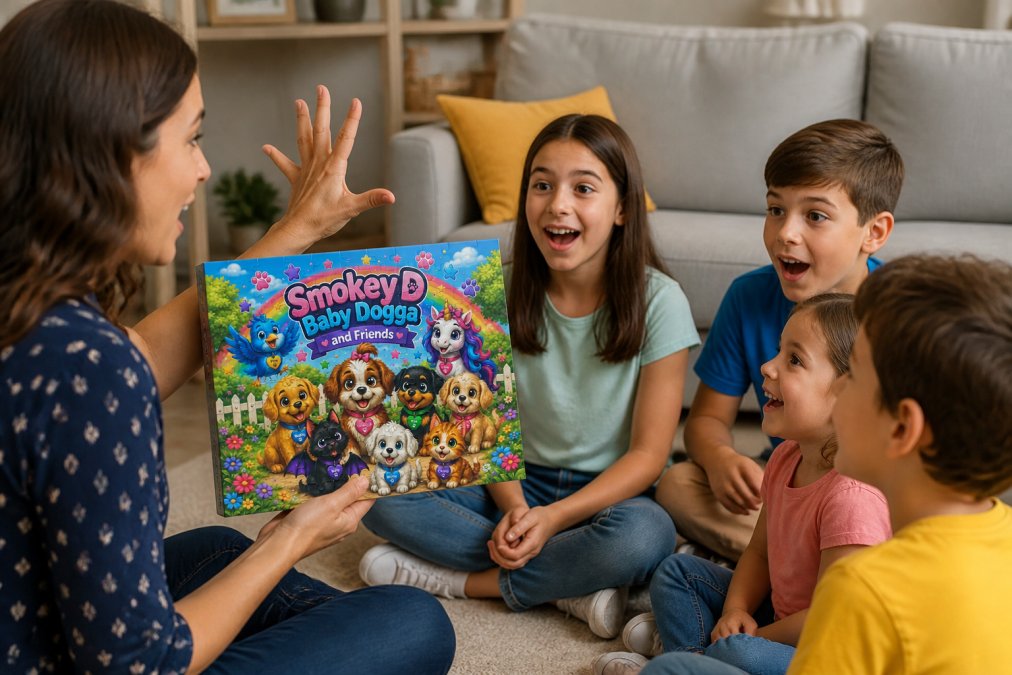
Use character voices that exaggerate emotion and personality. These give younger children concrete anchors for understanding character and motivation. Older siblings often start mimicking these voices, which deepens their engagement and memory of the story.
Pause for predictions. "What do you think happens next?" works for both ages. Toddlers make imaginative guesses; older kids draw on plot logic. Validate each response and continue the story.
Invite physical participation. "Can you make the sound a ghost makes?" or "Show me how the character would move" gives restless younger children an outlet while keeping older siblings invested in the narrative.
Use props or simple illustrations to anchor attention. A stuffed animal representing a character, a blanket transformed into a forest, or drawing simple pictures during pauses gives younger children visual focus.
Bridging the Gap: Books for Toddlers and School-Age Children
The biggest developmental jump happens between ages 3-4 and ages 6-7. Books that genuinely work across this gap are rare, but they exist.
Look for stories where the central character is slightly older than your youngest child but relatable to your oldest. Adventure-driven plots work better than stories focused entirely on emotions or social situations that younger children can't yet process.
Visit & Subscribe on YouTube →
Illustrations matter enormously in bridging this gap. Books with detailed, engaging pictures give toddlers something to focus on while text carries the story for older readers. Smokey D Baby Dogga's illustrated adventures feature characters and settings that appeal across ages, the colorful cast of friends gives younger children immediate visual interest while the adventure narratives satisfy older siblings' need for plot progression.
Stories that introduce gentle challenges or mild peril work well for mixed-age groups. A character getting lost, facing a small obstacle, or needing courage creates narrative tension that engages older kids without frightening toddlers.
Repetitive elements also help bridge the gap. A phrase that recurs throughout the story, a character catchphrase, or a predictable pattern gives toddlers something familiar to anticipate while maintaining narrative interest for older kids.
Creating a Family Reading Routine That Sticks
Consistency matters more than perfection. A 15-minute read-aloud every evening at the same time creates stronger habits than sporadic 45-minute sessions.
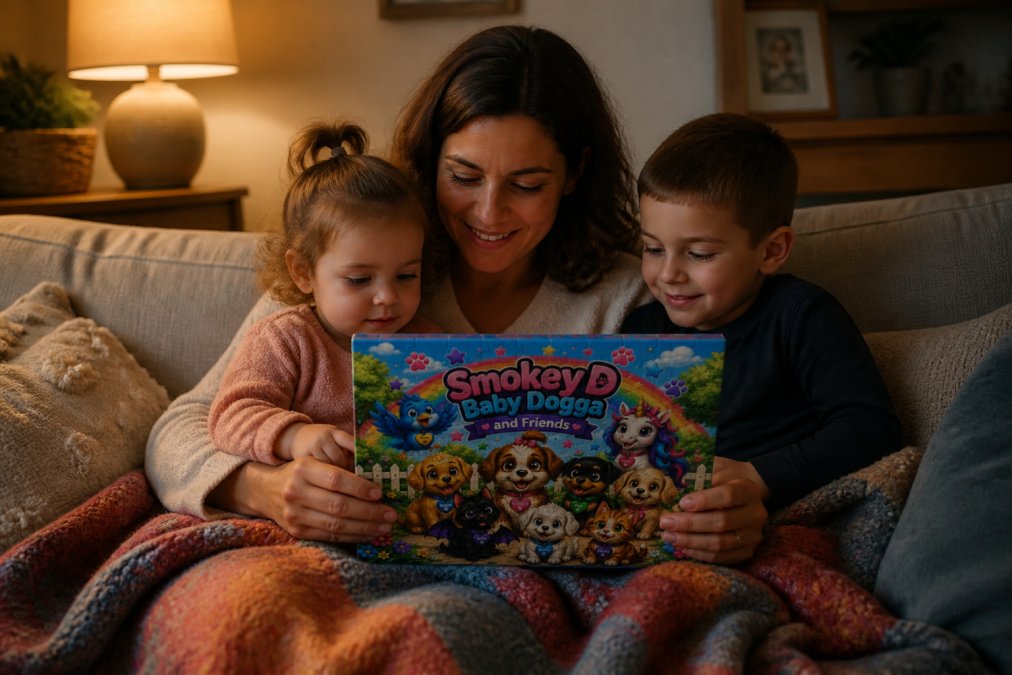
Choose a time when you're not rushed and children are reasonably rested. Create a physical reading space that signals to children that this is story time. A specific chair, a particular blanket, or a designated corner tells younger children "this is when we read together."
Set realistic expectations about behavior. Rather than demanding perfect silence, establish simple boundaries: "We listen while I read, and we talk during our question breaks."
Build in a question break halfway through. Stop the story, answer questions, make predictions, and let children move. Children process stories better when they can discuss them in real time.
Rotate story selection. Let older children choose books occasionally. Let younger children pick based on cover illustrations. This investment in selection increases engagement when the actual reading starts.
Consider complementary activities. After finishing a chapter, pull out the Smokey D Baby Dogga Coloring Book and let children color characters from the story. Or build a simple puzzle together, the Smokey D Baby Dogga Jigsaw Puzzle features the same colorful cast and turns storytime into extended play.

Post-Reading Activities That Extend the Story
Stories don't end when you close the book. Post-reading activities deepen comprehension, reinforce vocabulary, and keep characters alive in children's minds between reading sessions.
Act out favorite scenes. After reading, let children recreate moments from the story. This physical engagement helps both ages process narrative details and remember them longer.
Create simple art projects. Drawing favorite characters, painting scenes from the story, or building with blocks inspired by the plot keeps the story active in children's minds. The Smokey D Baby Dogga Coloring Book gives children a structured way to revisit characters, while sticker sheets let younger children create their own scenes.
Ask open-ended questions that invite thinking rather than testing comprehension. "If you were that character, what would you do?" or "What was your favorite part and why?" invite genuine reflection from both ages.
Create story extensions. "What happens tomorrow in the story?" invites children to imagine beyond the ending. Write or draw these extensions together, creating a family story that builds on the original narrative.
Use story-inspired play. A book about adventure becomes a backyard expedition. Children naturally extend stories into play, your role is noticing and encouraging these extensions.
Introduce story-related merchandise that keeps characters present. A Smokey D Baby Dogga decorative pillow on a child's bed, stickers on a water bottle, or a sherpa blanket for cozy reading time keeps the characters visible and reinforces the connection to the stories.


Creating engaging stories for mixed age siblings isn't about finding the perfect book or mastering a specific technique. It's about recognizing that children at different developmental stages can share meaningful experiences when stories, pacing, and interaction are thoughtfully designed. Smokey D Baby Dogga's character-driven adventures, combined with interactive reading strategies and consistent routines, give families the tools to build reading habits that last. Start with a single read-aloud session this week. Watch how your children engage. Then build from there.
Frequently Asked Questions
How can I keep a toddler engaged while reading to an older child?
Use interactive elements that appeal to both ages: ask the older child to predict what happens next while letting the toddler touch textures or point at pictures. Vary your voice for different characters, which holds attention across developmental stages. Take short breaks so the toddler can move, then resume with a new chapter. Smokey D Baby Dogga stories feature bright, engaging illustrations that captivate younger readers while offering narrative depth for older siblings.
What are the benefits of reading aloud to mixed-age siblings?
Reading together builds shared vocabulary, strengthens family bonding, and creates a common reference point for conversations. Older siblings develop empathy by seeing stories through younger eyes, while toddlers learn from their siblings' questions and engagement. It establishes a reading routine that supports literacy skills across ages and reduces screen time for the whole family. Mixed-age storytime also teaches patience and cooperation.
How do I choose books for siblings with a large age gap?
Look for stories with layered appeal: simple illustrations for toddlers but rich character development and adventure for older kids. Picture books with emotional depth work well across ages. Avoid books with scary content for the younger child or overly simplistic plots for the older one. Stories featuring friendship, kindness, and discovery, like Smokey D Baby Dogga adventures, engage both toddlers and school-age children without feeling babyish to either.
What should I do if my children have very different attention spans during storytime?
Start with interactive activities to settle both children, then read at a moderate pace with expressive voices to maintain interest. Break longer books into shorter segments across multiple days. Use props or ask questions that invite participation from both ages. If one child loses focus, have a quiet activity ready (like coloring or a puzzle) rather than stopping the story. The Smokey D Baby Dogga puzzle ($27.99) pairs well with storytime, giving restless kids something tactile to do while listening.
This article was written using GrandRanker