
Engaging Educational Content for 3-Year-Olds
Table of Contents
- Why Educational Content Matters for 3-Year-Olds
- Educational Storybooks with Video Trailers: Bringing Stories to Life
- Preschool Learning Activities at Home That Spark Curiosity
- Screen Time Guidelines for Toddlers: Finding the Right Balance
- Building Social-Emotional Skills Through Stories and Play
- Developmental Milestones and What to Expect at Three
- Making Learning Stick: Parental Involvement and Consistency
- Frequently Asked Questions
Last Updated: September 3, 2026
Why Educational Content Matters for 3-Year-Olds
Three-year-olds are in a critical window for brain development, absorbing language, concepts, and social skills at an unmatched rate (peer-reviewed research). Engaging educational content isn't just entertainment, it's foundational learning disguised as play. Children this age learn best through stories, interactive experiences, and repeated exposure to concepts. A well-crafted story with colorful characters and simple lessons can teach friendship, courage, or kindness in ways that stick.
Smokey D Baby Dogga understands this balance. The brand's books and video trailers are designed specifically for this age group, combining whimsical storytelling with character-driven narratives that help young children connect emotionally to learning.

Educational Storybooks with Video Trailers: Bringing Stories to Life
Educational storybooks remain one of the most effective tools for early childhood development. When paired with video trailers, they create a multimedia experience that deepens engagement and helps children anticipate the story before opening the book.
A video trailer acts as a hook. Children see characters in motion, hear their voices, and sense the adventure ahead. This preview builds excitement and helps them recognize characters on the page. The combination of visual, auditory, and tactile learning strengthens memory and comprehension.
Smokey D Baby Dogga's ten distinct adventure-themed books come with video trailers that bring characters to life. These carefully crafted previews introduce Smokey, Rocky the Ghost Dog, Bella the Bat, and the rest of the cast in ways that spark curiosity.

Preschool Learning Activities at Home That Spark Curiosity
Preschool learning activities at home don't require expensive materials or complicated setups. The most effective activities use what you already have and tap into a child's natural curiosity.
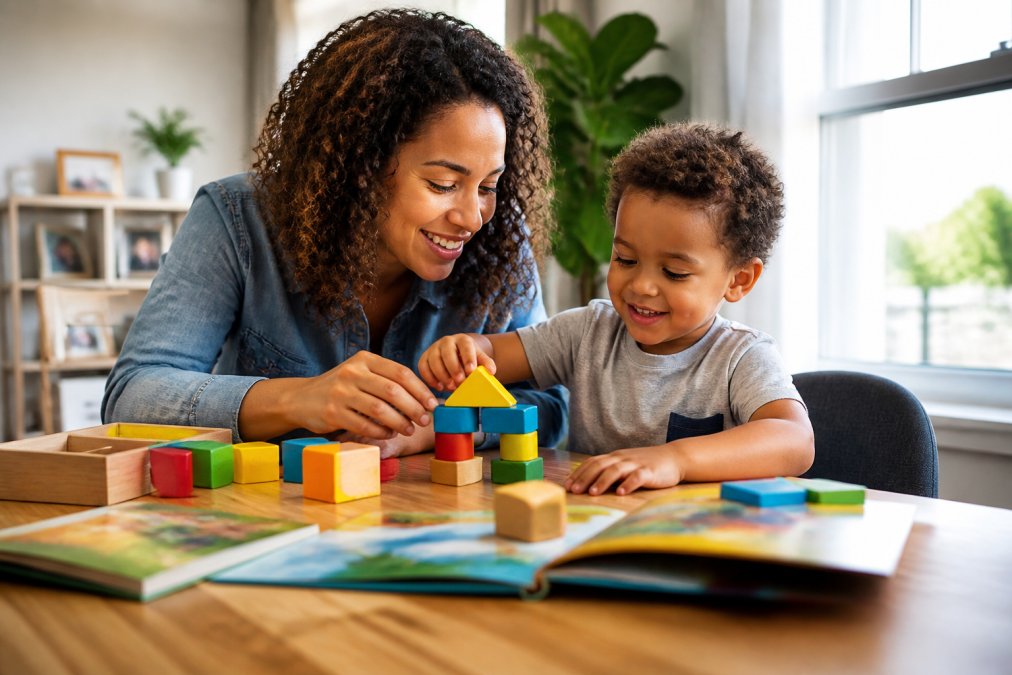
Fine Motor Skills Through Creative Play
Fine motor skills, the ability to control small hand movements, are essential for writing, eating with utensils, and self-care. Coloring, stacking, threading, and manipulating small objects all build hand strength and coordination. A child who colors because they love the characters will develop fine motor skills without realizing they're practicing.
The Smokey D Baby Dogga Coloring Book offers 24 engaging coloring pages featuring Smokey and friends in different adventures. Coloring teaches grip control, pressure management, and intentional mark-making. The Smokey D Baby Dogga and Friends Kids Jigsaw Puzzle with its colorful puppy and unicorn scene comes in multiple piece counts, allowing you to match difficulty to your child's skill level. Fitting pieces together requires spatial reasoning, hand-eye coordination, and problem-solving.
Other simple fine motor activities include threading beads, playing with playdough, turning pages, and stacking blocks, all requiring controlled hand movements with immediate, visible results.
Language and Early Literacy Activities
Language development explodes during the preschool years. Reading aloud remains the single most powerful literacy activity. When you read to your child, you're modeling how language works, introducing new vocabulary in context, and creating positive associations with books.
Beyond reading, conversation drives language acquisition. Ask your child questions about the story: "What do you think Smokey will do next?" Singing songs and reciting nursery rhymes build phonological awareness, the ability to hear and manipulate sounds in language, foundational for later reading (peer-reviewed research). Labeling objects throughout the day expands vocabulary naturally: "Let's put on your shoes. These are red shoes."
The Smokey D Baby Dogga & Friends Bookmark encourages reading by making it tangible and fun. A child who has a bookmark they love is more likely to ask for story time.

Early Math and Problem-Solving Games
Early math isn't about equations; it's about understanding quantity, patterns, and spatial relationships. Sorting activities build classification skills. Give your child objects and ask them to sort by color, size, or type. Counting during everyday activities makes numbers meaningful: "Let's count your steps to the door."
Pattern recognition helps children understand that things follow rules. Simple patterns like "red, blue, red, blue" can be created with toys, snacks, or colored paper. Games and puzzles requiring problem-solving build cognitive flexibility. Sensory play with sand, water, or playdough helps children understand volume and quantity.
Screen Time Guidelines for Toddlers: Finding the Right Balance
Quality matters more than duration. A 20-minute video watched while sitting with you, discussing what you see, differs fundamentally from passive consumption alone. Smokey D Baby Dogga video trailers are designed to be brief, engaging previews, not hour-long entertainment. They work best when watched together, with narration and questions.
Balance also means ensuring screen time doesn't crowd out other essential activities. Three-year-olds need physical play, outdoor time, unstructured play with toys, and social interaction with other children. A practical approach is setting screen time boundaries that work for your family, some find 15-30 minutes of quality educational content per day fits well.
Visit & Subscribe on YouTube →
When you do use video content, choose material specifically designed for young children. Smokey D Baby Dogga's trailers use language, pacing, and concepts appropriate for three-year-olds, built from the ground up for early learners rather than simplified for older children.
Building Social-Emotional Skills Through Stories and Play
Social-emotional skills, the ability to recognize and manage emotions, understand others' feelings, and navigate relationships, develop rapidly during the preschool years. Stories are one of the most powerful tools for building these skills.
When a child hears a story where a character faces a challenge, feels afraid, or learns to be kind, they're seeing emotions and social situations modeled safely. Smokey D Baby Dogga's stories emphasize friendship, kindness, courage, and discovery, giving children multiple opportunities to see how characters handle different situations.
After reading, talk about characters' feelings: "How did Smokey feel when she was scared? What helped her feel brave?" Role-play extends this learning. Let your child act out scenes with toys: "Let's pretend you're Smokey and I'm Rocky. What adventure should we go on?" Collaborative play with other children is equally important, playing together, sharing toys, taking turns, and resolving conflicts are all opportunities for social-emotional growth.
Developmental Milestones and What to Expect at Three
By age three, most children speak in short sentences, understand simple instructions, and name familiar objects (the CDC). They're beginning to understand concepts like "big" and "small," can count to three or higher, and recognize some colors. They're starting imaginative play and becoming aware of other children.
Physically, they're more coordinated than two-year-olds, able to run, jump, climb, and pedal a tricycle. Fine motor skills are improving. These milestones help you choose engaging educational content that matches your child's abilities. A book with simple text, bright pictures, and repeated phrases works well. Activities involving sorting, counting, and basic problem-solving are developmentally appropriate.
Remember that development is uneven. A child might be advanced in language but still developing motor skills. This is normal. The goal is providing experiences that are interesting and slightly challenging.
Making Learning Stick: Parental Involvement and Consistency
The most effective learning happens when parents are involved. This doesn't mean creating a rigid curriculum; it means being present, engaged, and intentional about the experiences you provide.
Consistency matters more than intensity. A child who reads the same book repeatedly, explores the same concepts in different ways, and has daily conversations with an engaged adult will learn more than a child with occasional intensive educational experiences. Reading the same book multiple times is powerful for your child, repetition builds memory and allows them to notice details they missed before.
Parental involvement means narrating your child's learning. When your child plays with blocks, you might say, "You're building a tall tower. You stacked the big block on the bottom. That's smart, it's more stable." Ask open-ended questions: "What's your favorite part of the story?" instead of "Do you like this book?"
Create routines around learning. A consistent story time, regular library trips, weekly art projects signal that learning is valued. These routines also create the consistency that makes learning stick.
At Smokey D Baby Dogga, we believe the best educational content for three-year-olds combines engaging storytelling with genuine developmental value. Our books, video trailers, and merchandise are designed to spark imagination while building the skills and confidence young children need. The Smokey D Baby Dogga Coloring Book, puzzles, sticker sheets, and bookmarks extend learning beyond the page. Start with the video trailers to preview stories, then dive into the books together. Consistency and parental involvement transform engaging educational content into real learning that sticks.
Frequently Asked Questions
Q: What are some fun and engaging educational activities for a 3-year-old?
A: Effective activities combine hands-on play with learning. Sorting games by color or shape, sensory bins filled with rice or beans, simple puzzles, painting, building with blocks, and storytelling all support cognitive growth and fine motor skills. Preschool learning activities at home work best when they're playful and pressure-free, allowing your child to explore at their own pace while developing problem-solving abilities and creativity.
Q: How much screen time is recommended for 3-year-olds?
A: The American Academy of Pediatrics recommends limiting screen time to high-quality programming, with parental co-viewing when possible. For 3-year-olds, screen time guidelines for toddlers suggest keeping digital exposure minimal and balanced with active play, hands-on activities, and outdoor time. Quality matters more than quantity, educational shows paired with interactive follow-up activities create better learning outcomes than passive viewing alone.
Q: Why should I choose educational storybooks with video trailers over regular children's books?
A: Educational storybooks with video trailers engage multiple learning styles by combining visual storytelling with narrative depth. Video previews help children decide which stories excite them, building anticipation and investment in reading. When books feature characters they've seen in trailers, children connect more deeply with the story, improving attention span and comprehension. This multimodal approach supports literacy development while keeping engagement high.
Q: What developmental milestones should I look for at age three?
A: At three, children typically develop clearer speech, follow two-step instructions, engage in imaginative play, and show growing independence. They begin sorting by color and shape, recognize some letters, and demonstrate increased social awareness. Quality educational content supports these milestones by offering vocabulary-rich stories, problem-solving activities, and opportunities for guided play that align with their cognitive growth and learning readiness.
This article was written using GrandRanker