
Why Choose Indie Children's Books: 7 Big Reasons
Table of Contents
- What Makes Indie Children's Books Different
- Indie vs Traditional Publishing Children's Books: A Clear Comparison
- Diverse Representation in Indie Children's Literature
- Cognitive and Developmental Benefits of Indie Children's Books
- Unique Illustrative Styles and Visual Storytelling
- How to Find High-Quality Indie Children's Books
- Sustainability, Ethical Sourcing, and Supporting the Literary Ecosystem
- Conclusion
Last Updated: August 13, 2026
What Makes Indie Children's Books Different
Indie children's books are independently published titles produced outside major commercial publishing houses, giving authors and illustrators direct creative ownership over their stories, characters, and visual style. Where large publishers shape manuscripts around proven commercial formulas, indie creators build from storytelling vision first, resulting in picture books that feel personal and author-illustrator projects where words and images are designed as one unified experience.
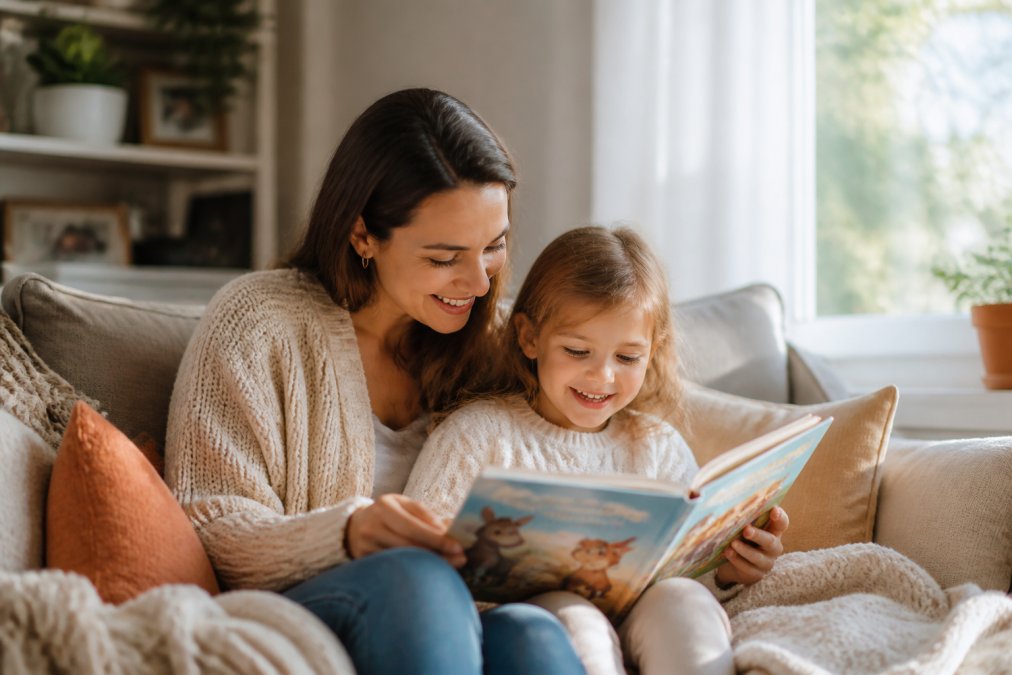
Bibliodiversity describes a healthy literary ecosystem where many voices, formats, and perspectives coexist rather than a handful of dominant publishers setting the cultural agenda. Indie children's books are the engine of bibliodiversity. They introduce debut authors who couldn't access traditional gatekeepers, experimental narrative structures that larger presses consider too risky, and characters from communities that mainstream publishing has historically underserved. For parents, this means building a shelf that reflects the actual width of human experience, not just what tested well in a focus group.
Indie vs Traditional Publishing Children's Books: A Clear Comparison
The debate around indie vs traditional publishing children's books often gets framed as a quality argument. That misses the point.
Traditional publishing offers significant market reach, established distribution networks, and editorial standards backed by decades of institutional knowledge. But these come with constraints: long acquisition timelines, editorial revision cycles that can dilute an author's original voice, and a commercial filter favoring the familiar over the genuinely new.
| Factor | Traditional Publishing | Indie/Small Press |
|---|---|---|
| Creative control | Publisher holds significant influence | Author-illustrator retains full ownership |
| Time to publication | Typically 18-36 months | Often 6-12 months |
| Diversity of themes | Skews toward proven commercial themes | Wide range, including niche storytelling |
| Illustrative style | Tends toward market-tested aesthetics | Highly varied, experimental styles common |
| Production quality | Consistently high | Varies; top indie titles match or exceed traditional |
| Book discovery | Strong retail presence | Relies on community engagement and direct sales |
| Author earnings | Royalty-based, often lower per unit | Higher margin possible through direct-to-consumer |
Creative Control and Storytelling Vision
Creative control is the single most consequential difference between indie and traditional publishing. An indie author keeps the story they set out to tell, preserving the specific, peculiar details that make a story memorable. According to the American Library Association's resources on independent publishing, independent press titles consistently appear on award shortlists precisely because their creative autonomy produces work that stands apart.
Print-on-Demand vs Traditional Distribution
Print-on-demand allows indie publishers to make titles available without holding physical inventory, fulfilling orders as they arrive. The trade-off is per-unit cost: print-on-demand production typically costs more per copy than offset printing at high volume. For the literary ecosystem, this means a book with a niche audience of several hundred passionate readers can still exist and find those readers, rather than being deemed uncommercial before it's written.
Diverse Representation in Indie Children's Literature
Research from the Cooperative Children's Book Center at the University of Wisconsin-Madison has tracked the demographics of children's book characters and creators for decades. The data consistently shows that characters from many racial, cultural, and family backgrounds remain underrepresented relative to the actual population of children reading those books.
Diverse representation in indie children's literature addresses this gap directly. Independent presses have become the primary route to market for authors from underrepresented communities, because traditional gatekeeping has historically been slower to reflect demographic change. A debut author writing from lived experience doesn't have to wait for a major publisher to decide their story is commercially viable.
For children, this matters developmentally. A child who sees their own family structure, background, or experience reflected in a book receives a signal that their life is worth a story. Indie children's books also create space for stories about disability, neurodivergence, blended families, and other experiences that mainstream publishers have been slow to feature as central rather than peripheral.
Cognitive and Developmental Benefits of Indie Children's Books
Reading engagement is strongly influenced by novelty and genuine surprise. Books that follow familiar templates produce passive recognition, while books that do something unexpected with structure, character, or visual storytelling require active meaning-making. According to child literacy research published through the International Literacy Association, children exposed to varied narrative formats develop stronger comprehension skills and broader vocabulary than those whose reading diet consists primarily of formulaic titles.
The author-illustrator format, common in indie publishing, is particularly beneficial. When one person controls both words and images, the relationship between text and illustration becomes more complex and intentional. Children learn to read across two simultaneous information streams, building visual literacy alongside verbal literacy.
Stories built around genuine friendship, moral complexity, and characters who face real consequences prepare children for actual relationships better than stories where every conflict resolves neatly in the final spread. Indie creators, writing from personal conviction rather than market research, tend to allow their characters more authentic emotional range.
Unique Illustrative Styles and Visual Storytelling
Open an indie picture book and you'll often notice something immediately: it doesn't look like everything else on the shelf. Traditional publishing gravitates toward illustrative styles with proven track records, creating aesthetic homogeneity. Indie publishing has no such constraint, resulting in woodcut-inspired textures, hand-lettered typography, collage techniques, bold graphic minimalism, and painterly realism.
This variety matters for children. Visual literacy develops through exposure to diverse visual languages. A child who has read across many illustrative approaches has a wider visual vocabulary than one who has encountered only one dominant style. Indie children's books are the primary source of that variety in the current market.
When an author-illustrator controls both words and images, every visual choice is intentional. The color palette reinforces emotional tone. The page layout controls pacing. The character's expression in a silent panel carries story weight. Children absorb these techniques intuitively, building sophisticated understanding of how visual and verbal communication work together.
How to Find High-Quality Indie Children's Books
Finding high-quality indie children's books requires a slightly different approach than browsing mainstream bestseller lists.
The most reliable discovery routes include:
- Independent booksellers curate actively and stock indie titles that major chains won't carry.
- Library award lists from the American Library Association highlight indie and small press titles earning professional recognition.
- Direct-to-author websites offer video trailers, author notes, and companion materials.
- School librarian recommendations match specific children's reading levels and interests with precision.
- Community reading groups and parent forums surface indie titles months before mainstream awareness.
- Book subscription boxes focused on indie and diverse children's literature curate new titles monthly.
- Social media communities run by educators and librarians share new releases with critical context.
What to Look for in Production Quality and Book Design
Check the binding and paper weight on physical copies. A well-produced indie picture book uses paper stock thick enough that illustrations don't bleed through, binding that lies flat when open, and cover materials that hold up to repeated handling. Book design, the relationship between text placement, illustration, and white space, signals editorial care. The best indie books show the same attention to typography and layout as any traditionally published title.
Where Independent Booksellers and Direct Sales Help
Independent booksellers stock based on curatorial judgment rather than sell-through data, carrying titles that would never survive a major retailer's buying process. Direct sales through an author's website offer access to the full story behind the book, including video trailers and educator guides that enrich the reading experience. Buying direct also means a higher portion of the purchase price reaches the creator, sustaining the conditions that produce more good indie books.
Sustainability, Ethical Sourcing, and Supporting the Literary Ecosystem
Indie publishers are leading the sustainability conversation in children's publishing. Print-on-demand production eliminates overproduction by definition, each copy is produced because someone ordered it. According to the Environmental Protection Agency's guidance on sustainable print production, indie publishers using print-on-demand with certified paper stocks and water-based inks make a measurably different choice than publishers running large offset print runs.
Ethical sourcing extends to the creative chain. Indie publishing tends to pay illustrators and authors more equitably than traditional work-for-hire arrangements. When families choose indie children's books, they're often supporting a model where creators are fairly compensated for the book's continued success.
Supporting the literary ecosystem means recognizing that bibliodiversity requires active maintenance. If families default entirely to titles from a handful of large publishers, the indie press infrastructure that produces the most original, diverse, and developmentally rich children's literature becomes financially unsustainable. Book discovery, community engagement, and direct purchasing from indie creators sustain that ecosystem.
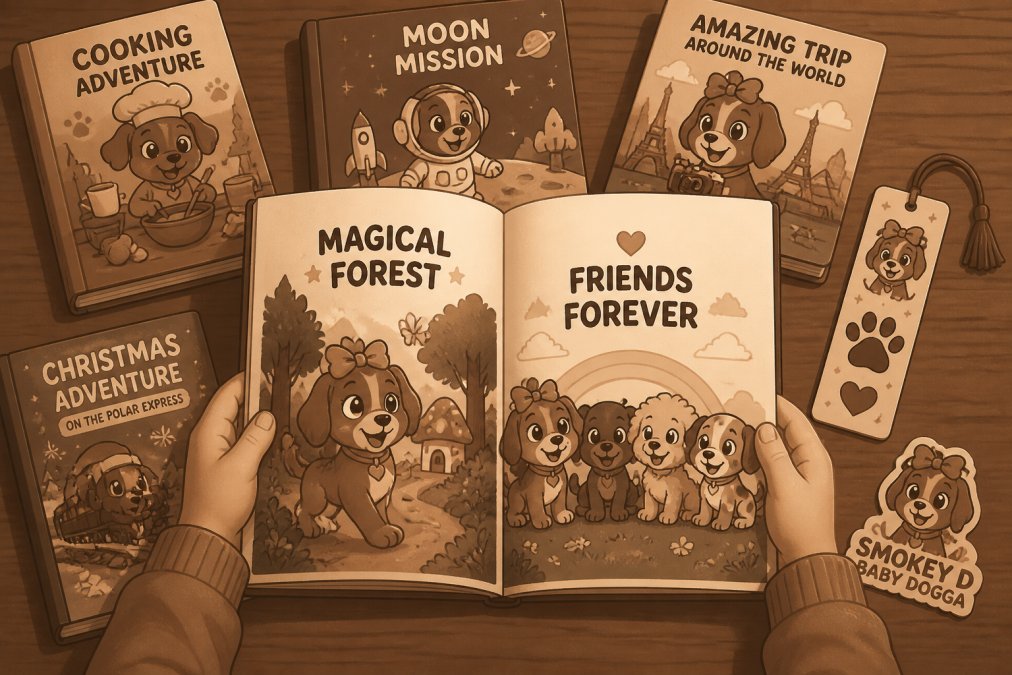
Smokey D Baby Dogga exemplifies what this ecosystem produces: ten adventure-themed books featuring an original family of characters, including Rocky the Ghost Dog and Bella the Bat, built around themes of friendship, kindness, and imagination. The brand's coloring book, sticker sheets, and reading companions like the Smokey D Baby Dogga & Friends Bookmark extend the characters beyond the page in ways that deepen a child's connection to the stories.


Frequently Asked Questions
What makes a book an indie children's book?
An indie children's book is published outside the major commercial publishing houses, either through a small independent press or via self-publishing. The author, illustrator, or a small team retains creative control over the story, art, and production. This independence allows for niche storytelling, experimental themes, and diverse narrative voices that larger publishers often pass on because they target the broadest possible market. Indie children's books range from picture books to middle grade titles and are sold through direct-to-consumer channels, independent booksellers, and online retailers.
Why are indie children's books often more diverse?
Traditional publishing has historically favored stories with mainstream market appeal, which can leave underrepresented communities with few characters who look or live like them. Indie and small press authors face fewer editorial gatekeepers, so they can write the specific stories they want to tell, featuring diverse authors, debut voices, and characters from a wide range of cultural backgrounds. This bibliodiversity enriches the literary ecosystem and gives children access to narratives that reflect their own experiences and expand their understanding of others.
Are indie children's books high quality?
Quality varies, just as it does in traditional publishing, but many indie children's books demonstrate strong literary merit and standout book design. The key is knowing what to look for: consistent illustrative style, clear narrative voice, age-appropriate vocabulary, and professional production quality in the printing and binding. Reading sample pages, checking for video trailers or previews, and buying from curated sources, including direct from the author's own site, all help you assess a title before committing. Indie children's books from established small presses or author-illustrators with a track record are reliably strong choices.
How can I find the best indie children's books for my child?
Start with independent booksellers, who actively curate small press and self-published titles that major chains overlook. Author websites often offer book previews, video trailers, and direct sales that give you a real sense of the story and art before buying. Look for series with multiple titles, a consistent cast of characters across ten or more books signals a committed storytelling vision. For children aged 3 to 8, prioritize picture books with bold visual storytelling and themes like friendship, courage, and discovery, which support both reading engagement and character development.
Families who want books that genuinely challenge, delight, and represent their children's world face a real problem: the mainstream market doesn't always stock them. Smokey D Baby Dogga was built to fill exactly that gap, with original characters, adventure-driven storytelling, and a growing range of merchandise that brings the story world into everyday life. Explore the full collection and visit the Smokey D Baby Dogga YouTube channel to watch video trailers for each title before you buy.
This article was written using GrandRanker