
Smokey D Baby Dogga Review: Imagination & Learning for Families
Table of Contents
- What Makes Smokey D Baby Dogga Stand Out for Family Entertainment
- The Smokey D Baby Dogga Book Lineup, Reviewed
- Educational Storybooks With Video Trailers: How the Series Works
- The Benefits of Imaginative Play for Child Development
- Creative Family Activities for Kids That Extend the Stories
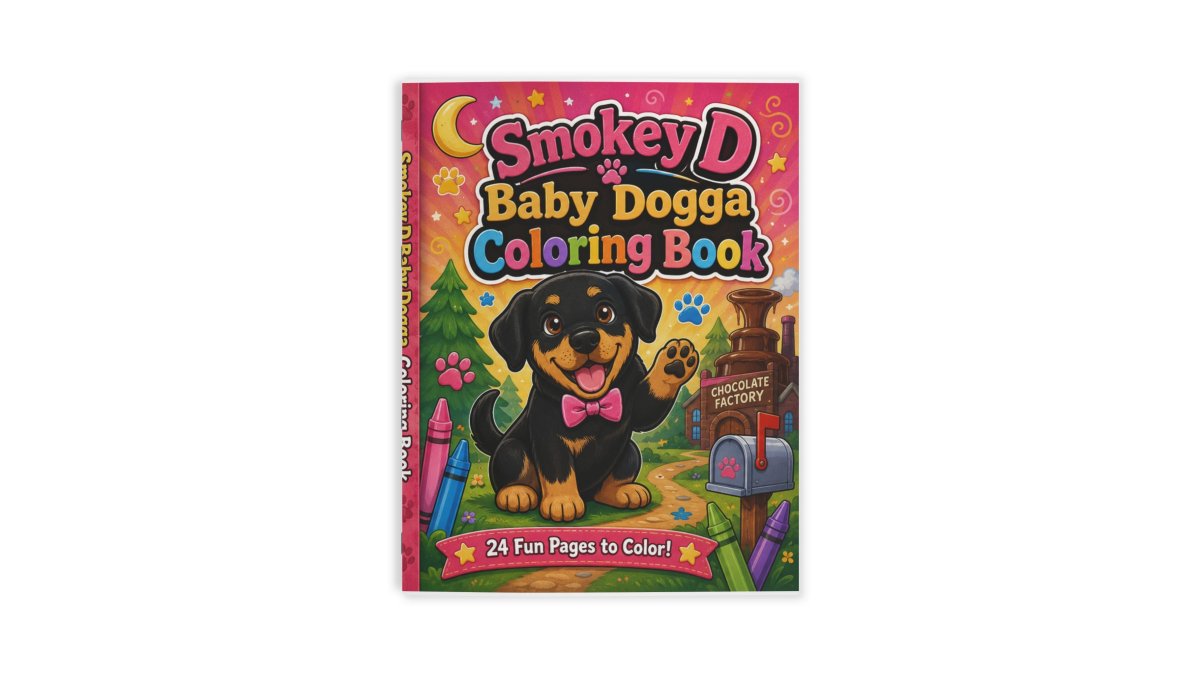
- Companion Products: Puzzles, Coloring Books, and Merchandise
- Who Smokey D Baby Dogga Is Best For, and Where It Falls Short
- Conclusion
- Frequently Asked Questions
Last Updated: September 27, 2026
What Makes Smokey D Baby Dogga Stand Out for Family Entertainment
Smokey D Baby Dogga is a children's storybook and merchandise brand built around one dog and her circle of friends, and it stands out in family entertainment because every title pairs a read-aloud story with a video trailer, a puzzle, or a coloring book that keeps the characters in your home after the book closes. This review from Smokey D Baby Dogga walks through the ten-book lineup, the companion products, and shows you how to build a week of activities around one book.

The Smokey D Baby Dogga Book Lineup, Reviewed
The catalog includes ten distinct adventure-themed books, written for ages 3 to 8. Every paperback is $14.99.
| Title | Setting | Price | Best For |
|---|---|---|---|
| Amazing Trip Around the World | Global travel | $14.99 | Curious kids, ages 5-8 |
| Magical Forest | Enchanted woodland | $14.99 | Bedtime wind-down |
| Cooking Adventure | Kitchen | $14.99 | Hands-on kids |
| Lake Adventure | Outdoors | $14.99 | Nature lovers |
| Moon Mission | Outer space | $14.99 | Space-obsessed kids |
| Chocolate Factory Adventure | Candy factory | $14.99 | Sweet-tooth readers |
| Pirate Treasure Ship | High seas | $14.99 | Action seekers |
| Goes To School | Classroom | $14.99 | First-day nerves |
Adventure Titles That Take Kids Around the World and Beyond
Smokey D Baby Dogga Amazing Trip Around the World sends Smokey to distant destinations, meeting new friends and learning about different cultures.

Everyday Adventures: School, Cooking, and the Lake
Smokey D Baby Dogga Goes To School covers a first day of school, new classmates, a colorful classroom, and lessons about kindness and confidence.
Educational Storybooks With Video Trailers: How the Series Works
Educational storybooks with video trailers pair a printed picture book with a short animated preview that shows the characters and setting before a child ever opens the cover. Smokey D Baby Dogga offers a trailer for each adventure title, and you can watch them on the brand's YouTube channel. The trailer does two useful things: it previews the story so a hesitant reader knows what to expect, and it gives you a screen-time option that still points back to a book.

The Benefits of Imaginative Play for Child Development
The benefits of imaginative play for child development show up across language, thinking, and social skills, but they do not look the same at every age. Story-driven play is one of the easiest ways to start, and knowing what to expect at each stage keeps you from expecting too much or too little. A American Academy of Pediatrics report on the power of play notes that play supports brain development, language, and emotional well-being in young children, and the Zero to Three resource library on early learning breaks down how those skills emerge over time.
What Imaginative Play Looks Like by Age
Ages 2 to 3 (toddler). Play is mostly imitation: a child "feeds" a stuffed dog with an empty spoon or pushes a box around like a car. Language is just starting to carry the story, so action leads and words follow. Symbolic thinking is forming, a block becomes a phone, a blanket a cape. Keep props realistic and large, and sessions short; five to ten minutes of focused pretend is a full win.
The Mechanisms Behind the Benefits
- Language. Role-playing stretches vocabulary because the child reaches for words the character would use, not just the words they use every day.
- Self-regulation. Staying in a role means suppressing your own impulses in favor of the character's, the same muscle that later helps a child wait their turn.
- Critical thinking. Inventing a problem and a solution inside a story is low-stakes practice for reasoning through real ones.
- Social-emotional learning. Playing a scared character, a bossy character, or a kind one lets a child try on feelings and perspectives safely.
A Note for Neurodivergent Kids
Children with sensory processing differences or autism spectrum needs often engage more readily when play has a predictable structure and a clear end point. That can mean scripting the first round of a scene, using a visual sequence of steps, or letting the child choose the same book and role repeatedly. Repetition is often how the skill gets built, not a sign that play is stalled.
Creative Family Activities for Kids That Extend the Stories
Creative family activities for kids work best when they grow out of something the child already loves, so use the book as the launchpad. Everything below runs on items already in a typical home, which keeps the barrier to entry at zero and makes the routine easy to repeat with any title in the series.
The Five-Step Routine
- Read the book aloud once, straight through. No stopping, no quiz. Let the story land.
- Watch the trailer together. Ask one question: "Which part did you like best?"
- Pick one scene to act out. Assign roles. Let your child cast you as the villain.
- Build something from the story. A block bridge, a paper pirate ship, a cardboard rocket.
- Draw or color the ending. Ask your child to invent what happens next.
Household-Item Play by Book
- Moon Mission, cardboard rocket and a countdown. A shipping box, tape, and a flashlight. Cut a porthole, tape on fins, dim the lights, and count down from ten together. The flashlight becomes the sun; moving it across a wall teaches how light and shadow change.
- Pirate Treasure Ship, a treasure map and a clue hunt. Draw a map of one room on the back of a paper grocery bag, mark an X, and hide a small object. Write three clues that each eliminate a location, problem-solving through pretend play with no purchase required.
- Cooking Adventure, a no-bake mixing station. A bowl, a spoon, and a few safe pantry items let a child run the kitchen while you narrate. Measuring cups introduce early math language: half, full, more, less.
- Lake Adventure, a sink-or-float tray. A shallow bin of water and a handful of household objects. Before each test, ask your child to predict. The prediction is the learning; the result is the payoff.
- Magical Forest, a flashlight shadow puppet show. Hands, a lamp, and a blank wall. Have your child invent a creature, name it, and give it one problem to solve before bedtime.
Low-Cost Materials That Outperform Kits
The most reusable playroom items are also the cheapest: cardboard boxes, masking tape, paper bags, clothespins, string, and a flashlight. Keep a designated bin so the routine does not depend on a trip to the store.
Smokey D Baby Dogga and Friends Kids →
Adapting the Routine for Different Needs
If a child finds open-ended play overwhelming, narrow the choices to two. If a child needs movement, make the build step physical, crawl through the box rocket rather than just decorating it. If a child prefers to plan, let them draw the map before anyone hunts for the treasure. The routine is a frame, not a script.
Companion Products: Puzzles, Coloring Books, and Merchandise
Companion products let the characters leave the page, and the Smokey D Baby Dogga and Friends Kids Jigsaw Puzzle is available for $27.99. It comes in four piece counts, 110, 252, 520, or 1014, so one purchase can serve a 4-year-old and a 9-year-old at the same table. The chipboard pieces have a glossy laminated face that resists smudges, and the box is printed with the same artwork.
Who Smokey D Baby Dogga Is Best For, and Where It Falls Short
Smokey D Baby Dogga fits families with children roughly ages 3 to 8 who want kindness-forward stories and a cast they can carry into puzzles, coloring, and screen time. Grandparents looking for a character-driven gift will find the price point easy: paperbacks at $14.99, the coloring book at $12.95, and the puzzle at $27.99.
Conclusion
The hard part of family reading is not finding a book, it is keeping a child interested after the last page. Smokey D Baby Dogga solves that with ten titles, a trailer for each one, and companion products that keep Smokey, Rocky, and Bella in the room. Start with one paperback, watch the trailer, and build a week of play around it.
Frequently Asked Questions
How do educational storybooks with video trailers enhance learning?
Video trailers give kids a preview of the characters and setting before they open the book, which builds anticipation and helps them connect the story to something they have already seen. Smokey D Baby Dogga offers trailers for titles like Magical Forest, Moon Mission, and Pirate Treasure Ship, so a child can watch first, then read, then retell the adventure in their own words. That watch-read-retell loop strengthens narrative skills and keeps young readers engaged longer than a book alone.
What do children actually learn from imaginative play?
Pretend play builds cognitive flexibility, self-regulation, and empathy because kids practice taking on roles, negotiating rules, and solving problems inside a made-up world. When a child acts out Smokey's Pirate Treasure Ship or Cooking Adventure, they are rehearsing teamwork, sequencing, and language in a low-stakes setting. Those skills carry into real classrooms and friendships. The benefits of imaginative play for child development show up in vocabulary, emotional control, and creative thinking.
Will one Smokey D Baby Dogga book work for both a 3-year-old and a 7-year-old?
The series is written for ages 3 to 8, so the same story can serve both kids at different levels. A 3-year-old follows the pictures and the rhythm of the read-aloud, while a 7-year-old tracks the plot, predicts what happens next, and reads some pages independently. For shared reading, pick titles with clear action like Pirate Treasure Ship or Moon Mission. For solo reading, the shorter everyday stories like Goes to School work well.
Are the Smokey D Baby Dogga books and products worth the price?
The paperback storybooks are $14.99 each, the coloring book is $12.95, and the jigsaw puzzle starts at $27.99. Compared to mass-market picture books, that puts Smokey D Baby Dogga in the same range as most independently published children's titles. What you get beyond the story is the ecosystem: video trailers, a recurring cast including Rocky the Ghost Dog and Bella the Bat, and companion activities like puzzles and coloring pages that stretch one purchase across many afternoons.
What creative family activities for kids pair well with these stories?
After reading Magical Forest, try a backyard nature walk where kids hunt for 'glowing fireflies' and hidden paths. After Cooking Adventure, bake simple cupcakes together and let kids decorate them like the characters did. The 110-piece jigsaw puzzle is a good fit for younger kids on a rainy afternoon, while the 520-piece version suits older children. Coloring pages from the Smokey D Baby Dogga coloring book also work as a quiet wind-down after storytime.