
Moral Stories for Kids vs Educational Picture Books
Table of Contents
- Moral Stories for Kids vs Educational Picture Books: What's the Real Difference?
- Side-by-Side Comparison: Storytelling Approach, Learning Focus, and Age Fit
- How Moral Stories for Kids Build Character and Integrity
- Books That Teach Kindness to Kids: What to Look For
- How to Teach Values Through Storytelling at Home
- Cognitive Development and Social-Emotional Learning: How Each Format Contributes
- Choosing the Right Format for Your Child's Age and Needs
- Frequently Asked Questions
Last Updated: October 2, 2026
Moral Stories for Kids vs Educational Picture Books: What's the Real Difference?
The difference between moral stories for kids and educational picture books comes down to intent: moral stories teach a lesson through a character's choices, while educational picture books build knowledge or skills through facts and illustration. Most children benefit from both. The trick is knowing which format to reach for, and when.
This guide from Smokey D Baby Dogga breaks down how each format works, what the research on early reading suggests, and how to match the right book to your child's age and attention span.

Defining Each Format
Moral stories for kids are narratives built around a character who faces a choice and lives with the consequences. The lesson arrives through the plot, not a lecture.
Educational picture books teach a specific concept: letters, numbers, colors, animals, or how a volcano works. The text delivers information, and the illustrations make it memorable.
Both formats use illustrated books and read-aloud techniques recommended by Reading Rockets, but they pull in different directions.
Why the Distinction Matters for Parents
A common mistake is treating all picture books as interchangeable. They aren't.
Moral stories build character and integrity over time, one decision at a time. Educational picture books build vocabulary and world knowledge.
The good news: you don't have to choose one camp. You just have to know what each book is doing.
Side-by-Side Comparison: Storytelling Approach, Learning Focus, and Age Fit
Most guides treat these two formats as interchangeable. They aren't, and the difference shows up the moment you sit down to read. Here's the breakdown, followed by the decision rule most parents never get.
| Feature | Moral Stories for Kids | Educational Picture Books |
|---|---|---|
| Core purpose | Teach values through plot | Teach facts or skills |
| Structure | Character faces a dilemma, makes a choice, lives with the outcome | Concept presented directly, often one idea per spread |
| Best ages | 3-8 | 2-6 |
| Strength | Empathy, integrity, courage, perspective-taking | Vocabulary, letters, numbers, categorization |
| Weakness | Less factual content; lesson can feel heavy if repeated too often | Weaker narrative pull; kids may not request rereads |
| Read-aloud style | Discuss choices together, ask "what would you do?" | Point, name, repeat, invite the child to answer |
| Reread behavior | High when the character is lovable | High when the format is interactive (flaps, seek-and-find) |
| Typical session length | 5-12 minutes for ages 3-5, longer for 6-8 | 3-8 minutes, often child-led |
The Decision Rule: Ask One Question First
Before you pick a book off the shelf, ask: is my goal tonight to build a feeling or build a fact?
- If the goal is a feeling, patience, honesty, courage, reach for a moral story. The plot does the teaching.
- If the goal is a fact, the letter B, the number 7, what a firefighter does, reach for an educational picture book. The illustration does the teaching.
- If you're not sure, default to the moral story. Narrative comprehension is the harder skill to build, and it transfers to every other subject later.
When the Two Formats Overlap
The cleanest picture books blur the line. A counting book where the ducklings learn to share is doing both jobs at once. That's not a flaw, it's efficiency. The trade-off is that blended books usually do one job better than the other, so watch which one your child actually engages with and lean into it.
A Weekly Rotation That Works
A simple pattern many families land on:
- Monday and Wednesday: moral story with a clear dilemma.
- Tuesday and Thursday: educational picture book tied to something your child saw that day (a truck, a bug, a color).
- Friday: child's choice, this is where you learn what's actually sticking.
- Weekend: reread a favorite from the week. Repetition is where the value settles in.
The strongest home libraries carry both. Picture this: a bedtime rotation where Monday is a fable about honesty and Tuesday is a counting book about farm animals. Your child gets the emotional and the academic in the same week.
How Moral Stories for Kids Build Character and Integrity
Character doesn't develop from a single lesson. It develops from repetition. When a child hears the same moral dilemma play out across many stories, the reasoning behind honesty and kindness starts to feel familiar.
Smokey D Baby Dogga builds its ten adventure-themed books around exactly this idea. Characters like Rocky the Ghost Dog and Bella the Bat face choices that mirror the small decisions kids face daily: whether to share, whether to tell the truth, whether to help a friend who's struggling.

The Role of Fables and Animal Characters
Animal fables work because they create just enough distance. A child can watch a fox lie and see the consequence without feeling personally accused. That distance makes the lesson safer to absorb.
Moral Dilemmas and Critical Thinking
The best moral stories don't hand kids the answer. They set up a choice and let the child wonder. Ask "What would you have done?" and you turn storytime into a thinking exercise. That question is where critical thinking starts.
Books That Teach Kindness to Kids: What to Look For
Not every book labeled "kindness" actually teaches it. Look for stories where kindness costs the character something, a toy, a turn, a piece of pride. Sacrifice is what makes the lesson stick.
Kindness, Courage, and Honesty in Story Form
The strongest titles weave all three virtues into one arc. A character who tells the truth when it's hard, helps a friend when it's inconvenient, and keeps going when the path gets dark.
For families building that shelf, the Smokey D Baby Dogga collection pairs each adventure with a clear value, and the Smokey D Baby Dogga & Friends Bookmark gives young readers a small, cheerful way to mark their place and stay excited about the next chapter.
Smokey D Baby Dogga Coloring Book – 24 Fun Coloring Pages for Kids | Cute Puppy →

How to Teach Values Through Storytelling at Home
The most effective way to teach values through storytelling is to read aloud, then talk about what happened. The story opens the door; the conversation walks through it.
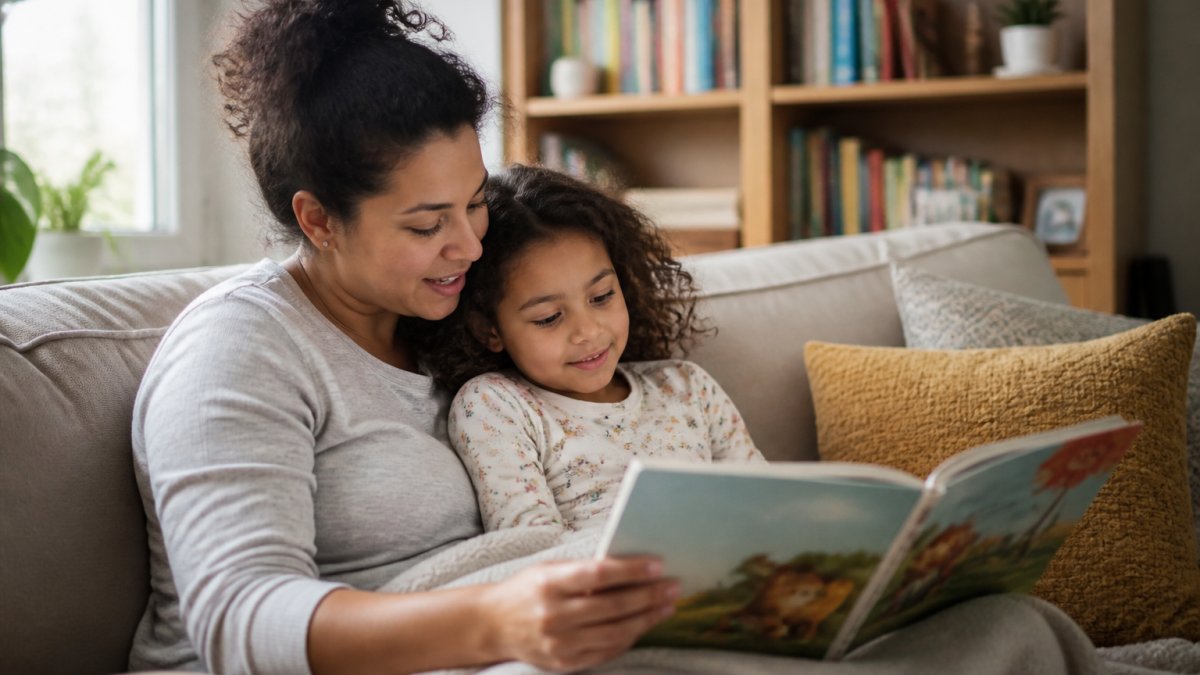
Read-Aloud Strategies by Age
- Ages 3-5: Pause after each page and ask what the character is feeling. Keep it to one question per page.
- Ages 6-8: Ask what the character should do next before you turn the page. Let them predict.
- All ages: Reread favorites. Repetition is where values settle in.
Pairing Stories with Activities
A story lands harder when a child's hands are involved. After a tale about a camping trip, pull out the Smokey D Baby Dogga Coloring Book and let them color the same scene. The Smokey D Baby Dogga and Friends Kids Jigsaw Puzzle works the same way: the story continues off the page, and the lesson gets another repetition without feeling like a lesson.
Cognitive Development and Social-Emotional Learning: How Each Format Contributes
Cognitive development and social-emotional learning split the work between the two formats, but the split is more specific than most guides admit. Here's what each format is actually doing while your child listens. While moral tales often rely on explicit instruction to shape behavior, social emotional books invite children to navigate complex internal landscapes through the lens of empathy and self-awareness.
What Educational Picture Books Train
Educational picture books are built for fast mapping, the brain's ability to attach a new word to a concept after just a few exposures. When a toddler points at a labeled picture of a tractor and you say "tractor," three things happen at once:
- Vocabulary growth. Children who are read to daily hear roughly 290,000 more words by age 5 than children who aren't, according to long-running literacy research summarized by Reading Rockets on reading aloud and vocabulary.
- Categorization. Grouping by color, size, or animal type builds the mental filing system kids later use for math and science.
- Print awareness. Seeing words on a page, left to right, top to bottom, teaches the mechanics of reading before decoding starts.
What educational picture books do not train well: sustained narrative attention. A child can name every animal on the page and still struggle to follow a story with a beginning, middle, and end.
What Moral Stories Train
Moral stories exercise a different set of muscles:
- Theory of mind. Tracking what a character knows, wants, and fears is the same skill kids use to understand that a friend might feel left out.
- Narrative comprehension. Holding a plot in working memory, who did what, why, and what happened next, is the foundation for reading comprehension in later grades.
- Delayed gratification rehearsal. When a character chooses the harder right over the easier wrong, the child rehearses that trade-off vicariously, without the cost.
- Emotional vocabulary. Naming a character's feeling ("Rocky was nervous") gives a child the word for a feeling they'll have themselves next week.
Why the Two Formats Need Each Other
A child who only reads ABC books may know her letters but struggle to sit through a story. A child who only hears fables may love stories but lag on early literacy skills. The two formats feed different systems, and the systems talk to each other: vocabulary makes stories richer, and stories make vocabulary stick.
The American Academy of Pediatrics guidance on shared reading points out that reading aloud with a child supports brain development, language, and bonding at the same time. The format matters less than the habit, but the mix of formats is what determines which skills get built.
A Simple Check-In for Parents
Once a month, ask yourself two questions:
- Can my child follow a story? If not, add more moral stories with clear dilemmas.
- Is my child picking up new words and concepts? If not, add more educational picture books with labeled illustrations.
If the answer to both is yes, you're already running the right mix. If one is lagging, that's the format to add, not the one to drop.
Choosing the Right Format for Your Child's Age and Needs
Match the format to the developmental stage, not the calendar. A 5-year-old with a long attention span can handle a moral story that a restless 7-year-old would abandon.
Ages 3-5: Building Attention and Empathy
Short moral stories with animal characters work best here. Keep sentences simple, pictures large, and the dilemma clear. Aim for stories your child can finish in one sitting.
Ages 6-8: Growing Independence and Critical Thinking
This is where moral dilemmas and longer narratives shine. Kids this age can hold a plot in their head and reason about a character's choices. Let them read to you when they're ready, and let them disagree with the character's decision. That disagreement is a good sign.
Choosing books for a growing reader can feel like guesswork, especially when every shelf claims to build character. Smokey D Baby Dogga takes the guesswork out with ten adventure-themed books starring Smokey, Rocky the Ghost Dog, Bella the Bat, and the rest of the gang, each one built around friendship, kindness, and courage. Pair the stories with the Smokey D Baby Dogga and Friends Plush Teddy Bear for a bedtime companion, or add the Decorative Pillow to turn a reading nook into a place your child wants to be. Visit and subscribe on YouTube to meet the characters before you buy, then bring home a story your family can grow with.
Frequently Asked Questions
What age should kids stop reading picture books?
Most children transition away from picture books between ages 7 and 9, but there is no hard cutoff. Many 8-year-olds still enjoy illustrated stories, especially when reading aloud with a parent. Picture books build visual literacy and narrative comprehension long after kids can read independently. If your child still reaches for picture books at 8, that is normal and beneficial. The key is offering a mix of formats so they can choose based on mood and interest.
What is the best book of moral stories for kids?
The best moral stories for kids match your child's age and the values you want to reinforce. Look for stories with clear consequences, relatable characters, and opportunities to discuss choices. Animal fables work well for ages 3-5 because the characters are easy to follow. For ages 6-8, stories with moral dilemmas and layered plots encourage deeper thinking. Series like Smokey D Baby Dogga offer consistent characters across multiple adventures, which helps kids connect with lessons about friendship, kindness, and courage over time.
What is the 5 finger rule for books?
The five finger rule helps you pick books at the right reading level. Have your child read a page aloud. Each time they stumble on a word, they hold up one finger. Zero to one fingers means the book is easy. Two to three means it is a good fit. Four means it is challenging. Five or more means the book is too hard for independent reading. This rule works best for early readers, but you can still use it when choosing read-aloud books for younger kids.
What's the difference between a children's book and a picture book?
A children's book is a broad category that includes picture books, early readers, chapter books, and middle-grade novels. A picture book is a specific format where illustrations carry part of the story, usually 32 pages, with text and art working together. Picture books are typically written for ages 3-8. Children's books can target any age from birth through the teen years. The confusion happens because many people use the terms interchangeably, but picture books are one type within the larger children's book category.
How do moral stories impact a child's social-emotional development?
Moral stories give children a safe way to explore emotions, conflict, and consequences. When a character faces a moral dilemma, kids practice empathy by imagining how the character feels. Research on social-emotional learning shows that discussing stories helps children name emotions, consider others' perspectives, and think through decisions. Repeated exposure to stories about kindness, honesty, and courage reinforces these behaviors in daily life. The key is pairing the story with conversation so kids connect the lesson to their own experiences.