
How to Teach Kids to Be Kind to Animals: 7 Steps
Table of Contents
- Start With You: Modeling Kindness Toward Animals Every Day
- Safe Ways for Kids to Interact With Animals at Every Age
- Reading Animal Body Language: Stress Signals Kids Can Spot
- Animal Kindness Activities for Kids That Build Empathy
- How Kids Can Help Animals Without Touching Them
- Books That Teach Kindness to Kids About Animals
- What to Do After an Unsafe Interaction With an Animal
- Conclusion: Small Lessons, Lifelong Compassion
- Frequently Asked Questions
Last Updated: October 15, 2026
Start With You: Modeling Kindness Toward Animals Every Day
Children learn how to teach kids to be kind to animals by watching the adults around them. At Smokey D Baby Dogga, we create stories where kindness drives every adventure, and the same rule applies at home: your daily actions teach more than any lecture.

Modeling kindness means treating animals as living creatures with feelings, not toys. Kids copy what they see, so the way you speak to and about animals becomes their script.
Here is what that looks like in practice:
- Speak softly around pets, even when you are rushed
- Never hit, shout at, or tease an animal, not even “playfully”
- Let the animal come to you instead of grabbing at it
- Say “good girl” or “good boy” when a pet behaves well
- Talk about how the animal might feel: “He looks sleepy, let’s let him rest”
The American Veterinary Medical Association pet care resources notes that pets rely on routine and calm handling to feel secure. When your child sees you protect that calm, kindness stops being a rule and becomes a habit.
Safe Ways for Kids to Interact With Animals at Every Age
Safe ways for kids to interact with animals change as children grow. A toddler and a twelve-year-old need different rules, and matching your guidance to what a child can actually understand prevents most bites, scratches, and tears.
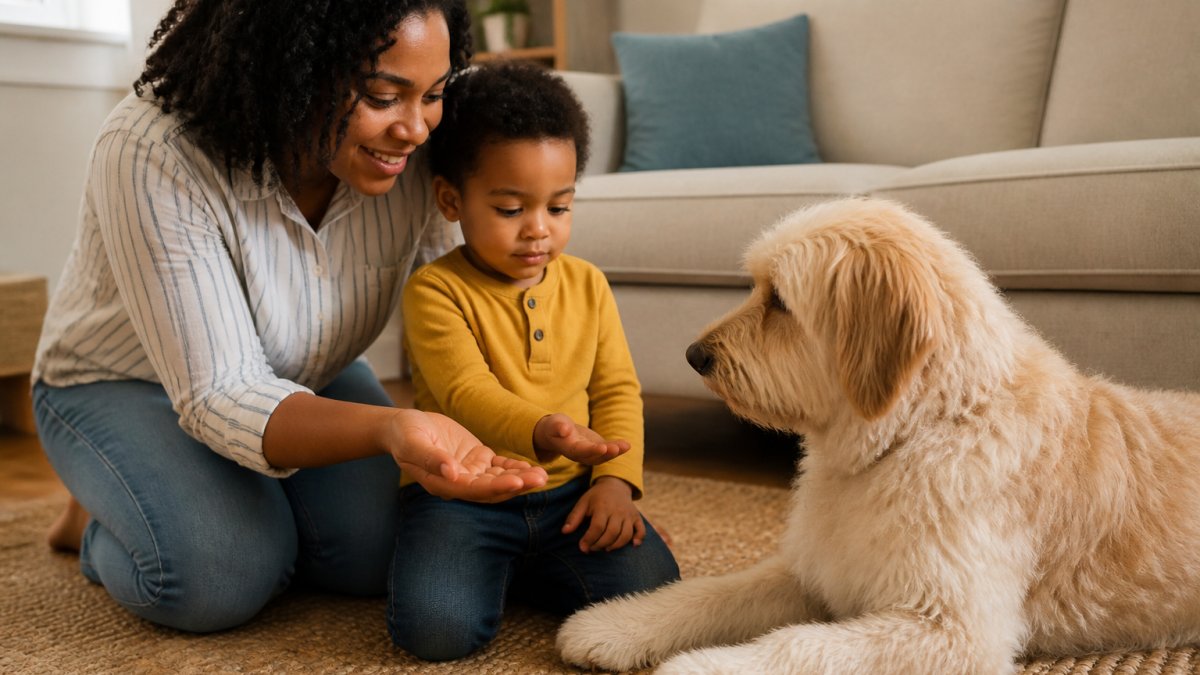
Use the stages below as a rough map, not a strict schedule. Children develop at different rates, and a cautious four-year-old may handle a pet more gently than an impulsive seven-year-old.
Ages 2-3: Watch, Don't Touch
Toddlers cannot yet control impulses or read a pet's mood. The safest rule is simple: look with your eyes, not your hands.
- Keep the child and the animal separated by a gate, crib rail, or adult arm
- Let the child watch you pet the animal and narrate what you are doing
- Redirect grabbing or squeezing immediately and calmly
- Never leave a toddler alone with any animal, even a calm family pet
Ages 4-5: One Gentle Stroke, Adult Hand on the Child
Preschoolers can follow a single instruction and copy a motion, but their grip is still unpredictable. Place your hand over your child's hand for the first few touches.
- Keep visits to a minute or two
- Show the "flat hand, no fingers" approach
- Let the child stroke one gentle stroke, then stop
- Watch for grabbing, squeezing, or chasing
Ages 6-8: Building Skills and Responsibility
By this age, kids can take on small jobs that build empathy. Let them refill the water bowl, help measure food, or pick out a new toy for the pet.
- Assign one daily pet task
- Teach them to ask, "Can I pet your dog?" before touching
- Practice reading simple cues together
- Praise gentle choices right away
Ages 9-12: Reading Cues Independently
Tweens can learn to check an animal's body language before and during contact, and they can handle more responsibility without constant prompting.
- Have them name the signals they see before they approach: "His tail is tucked, so I'll wait"
- Let them walk a calm, well-trained dog on a short leash with you nearby
- Teach them that ending an interaction is always allowed, even if a friend says the pet is friendly
- Give them a role in feeding, grooming, or cleaning that the animal depends on
Ages 13+: Consent, Care, and Advocacy
Teens can understand an animal's needs as separate from their own wants, which is the core of real empathy.
- Discuss why some animals need space, quiet, or slow introductions
- Let them volunteer at a shelter if one near you accepts teen helpers
- Encourage them to speak up when a younger child handles an animal roughly
- Talk about the cost and time a pet requires, so kindness includes realistic commitment
When a Child Is Fearful or Has No Pets
Not every child grows up around animals, and fear is a normal starting point, not a failure.
- Never force contact. Let the child watch from across the room first
- Practice on stuffed animals or a neighbor's calm, leashed dog at a distance
- Read books about animals together so the child builds familiarity without pressure
- Visit a pet store or a friend's home just to observe, with no touching required
Reading Animal Body Language: Stress Signals Kids Can Spot
Teaching kids to spot stress signals is the single most useful safety skill you can give them. Most bites happen after an animal has already asked, in its own way, for space.
A simple way to teach this is the stoplight system. Green means the animal is relaxed and contact is okay. Yellow means slow down or pause. Red means stop and give space right now.
Green: Relaxed and Approachable
- Soft, loose body with no stiffness
- Ears in their natural position, not pinned back
- Tail at a relaxed height, wagging loosely rather than stiffly
- Eyes soft and blinking normally
- Animal chooses to come toward the child
Yellow: Slow Down or Pause
- Turning the head away means "I need a break"
- Yawning or lip licking in a calm moment often means worry
- A tucked tail or flattened ears means "I'm scared"
- A stiff, still body means "back away"
- Whale eye, when you can see the whites, means stress
Red: Stop and Give Space
- A growl or hiss is a warning, never a challenge
- Baring teeth, snapping, or lunging
- Flattened body pressed to the ground
- Hackles raised along the back
- A cat with ears flat and tail lashing
Teach your child that when an animal walks away, the kind choice is to let it go. Walking away is the animal's way of saying "I'm done," and respecting that is the whole lesson.
How to Practice at Home
Reading signals is a skill, and skills need repetition. Try these short routines:
- Name it out loud. When you see a signal, say it: "His ears just went back, so we'll wait."
- Use photos or videos. Look at pictures of dogs and cats together and ask, "Green, yellow, or red?"
- Practice with stuffed animals. Pose a toy dog with ears back and ask what your child would do.
- Role-play the stop. Have your child practice saying "Let's give him space" and stepping back.
- Review after real interactions. Ask, "What did you notice about how he felt?"
The American Society for the Prevention of Cruelty to Animals explains that these signals are an animal's way of communicating discomfort before it escalates. The earlier a child learns to read them, the fewer scary moments everyone has.
Animal Kindness Activities for Kids That Build Empathy
Animal kindness activities for kids work best when they are hands-on and repeatable. Empathy grows through practice, not one-time lessons.
Smokey D Baby Dogga and the Golden Acorn Adventure →
Try these at home:
- Role-play the vet visit. One child plays the nervous pet, the other the calm helper.
- Draw feelings faces. Sketch a happy, scared, and sleepy animal together.
- Set up a stuffed animal clinic. Practice gentle handling on toys first.
- Start a kindness jar. Add a bead each time your child helps an animal.
- Visit a shelter. Many welcome families to read to quiet cats or walk calm dogs.
These small routines turn compassion into something your child does, not just something you talk about.
How Kids Can Help Animals Without Touching Them
Kids can help animals without ever touching one, and that matters for shy kids and shy pets alike. Respecting space is its own form of kindness.
Here are simple ways to help:
- Fill water bowls and clean food dishes
- Donate old towels to a local shelter
- Make a bird feeder for the yard
- Leave wildlife alone and watch from a distance
- Put up a “quiet zone” sign near a resting pet
Kindness toward wildlife follows the same rule. A rabbit in the yard is not a toy. Look, don’t chase.
Books That Teach Kindness to Kids About Animals
Books that teach kindness to kids give families a shared language for big ideas. A story lets a child practice empathy safely, then carry it into real life.
At Smokey D Baby Dogga, our adventure series was built around exactly this.
A few picks that fit the theme:
- Smokey D Baby Dogga and the Golden Acorn Adventure ($14.99), where Charlie the Chipmunk learns that helping others matters more than any prize
- Smokey D Baby Dogga Magical Forest ($14.99), a journey through friendship and kindness with Rocky the Ghost Dog and Bella the Bat
- Smokey D Baby Dogga Lake Adventure ($14.99), which teaches caring for nature and the animals that share it
- Smokey D Baby Dogga Goes To School ($14.99), where respect and teamwork lead the way
After reading, ask your child: “What would you have done to help?” That one question turns story time into a lesson.

What to Do After an Unsafe Interaction With an Animal
After a bite, scratch, or scare, your first job is calm and safety, not blame. How you respond teaches your child whether animals are to be feared or understood.
Follow these steps:
- Separate the child and the animal right away.
- Wash any wound with soap and running water.
- Check the injury and seek medical care if the skin is broken.
- Report the incident to the animal’s owner or, for a stray, to local animal control.
- Talk about what happened without shaming the child or the animal.
- Review the body-language signals you both missed.
The Centers for Disease Control and Prevention guidance on animal bites recommends prompt medical attention for any bite that breaks the skin. Once everyone is calm, revisit the lesson gently. The goal is a wiser child, not a frightened one.
Conclusion: Small Lessons, Lifelong Compassion
Teaching kindness to animals is not a single talk. It is a hundred small moments: a soft voice, a flat hand, a story before bed.
If you want a gentle place to start, our Smokey D Baby Dogga books pair heartwarming adventures with lessons on friendship, courage, and caring for others.

Visit and subscribe on YouTube to meet Smokey and her friends.
Frequently Asked Questions
At what age can children learn to be kind to animals?
Children can start learning kindness toward animals as early as age 3. At this stage, keep lessons simple: use gentle touches, quiet voices, and short supervised visits with calm pets. Between ages 6 and 8, kids can take on more responsibility, like filling a water bowl or helping brush a dog. The key is matching the lesson to your child's attention span and coordination, then adding a little more each year.
What should children do if an animal seems scared or uncomfortable?
Teach kids to stop, step back, and stay quiet if an animal seems scared. Signs of discomfort include flattened ears, a tucked tail, growling, hissing, or backing away. Children should never chase, corner, or pick up an animal that is trying to hide. Instead, have them tell an adult and give the animal space. Practicing this response at home with stuffed animals helps kids react calmly when it matters.
How can books help teach kids compassion for animals?
Stories let children step into an animal's perspective without any risk. When a character like Smokey D Baby Dogga helps a friend in trouble, kids see kindness in action and connect it to real life. Read together and pause to ask, "How do you think Charlie the Chipmunk felt?" Books like Smokey D Baby Dogga and the Golden Acorn Adventure ($14.99) turn abstract ideas about empathy into moments your child can remember and copy.
How can kids help animals without touching them?
Plenty of kind acts need no contact at all. Kids can leave fresh water in a shaded spot for birds, help fill a pet's food bowl, or make a bird feeder from a pinecone and seed. They can also draw thank-you cards for shelter workers or help choose a donation item for a local animal rescue. These activities teach respect for wildlife and pets while keeping everyone safe and calm.