
How to Keep Kids Reading Daily: A Parent's Guide
Table of Contents
- Why a Daily Reading Habit Matters for Kids
- How Long Should Kids Read Each Day?
- Building a Daily Reading Routine for Kids That Sticks
- Fun Reading Activities for Kids Beyond the Book
- Books for Reluctant Readers: Finding the Right Fit
- Making Reading Together a Family Habit
- Tracking Progress Without Creating Pressure
- How to Keep Kids Reading During Summer and School Breaks
- Frequently Asked Questions
Last Updated: October 14, 2026
Why a Daily Reading Habit Matters for Kids
A daily reading habit is the single most reliable way to build vocabulary, comprehension, and a lifelong love of books.
Here is the part most parents get wrong: they treat reading as homework. Kids read because a grown-up assigned it, then close the book the second the timer stops.
This guide from Smokey D Baby Dogga covers how to keep kids reading daily, from age-by-age time targets to flexible routines for busy families.

Reading builds skills that carry into every subject at school. According to the National Center for Education Statistics, children who read frequently at home score higher on reading assessments than peers who rarely do.
How Long Should Kids Read Each Day?
Most children do best with 15 to 30 minutes of daily reading, split into shorter blocks for younger kids. The right amount is the amount your child will actually do without a fight. But the number matters less than the match between the time, the format, and the level of adult support. A 20-minute block looks completely different for a 4-year-old and a 10-year-old.
Daily Minutes by Age and Reading Level
| Age | Reading Stage | Daily Target | Best Format | Adult Role |
|---|---|---|---|---|
| 3-4 | Pre-reader | 10-15 min | Read aloud together | You read every word; child turns pages and names pictures |
| 5-6 | Early reader | 15-20 min | Shared reading plus simple words | You read the hard sentences; child reads the easy ones |
| 7-8 | Growing reader | 20-30 min | Independent reading plus discussion | You listen for 5 minutes, then talk about the story |
| 9-12 | Fluent reader | 20-30 min | Independent reading, any format | You stay nearby and read your own book |
| Reluctant reader (any age) | Any | 10 min to start | High-interest books, read aloud | You read aloud and let the child follow along |
Start at the low end and add minutes as your child asks for more. A child who begs for one more chapter is a child who will keep reading next week.
How the Routine Changes as Readers Grow
Early readers (ages 3-6). The goal is warm association, not word count.
Growing readers (ages 7-8). This is where the handoff happens. Move from you reading to your child reading, but keep a safety net.
Fluent readers (ages 9-12). Time stays roughly the same, but your role shifts from reader to witness. Read your own book in the same room.
When to Adjust the Time
Drop the target by five minutes if any of these show up for more than three days in a row: your child sighs when you mention reading, they watch the clock, or they suddenly "forget" where their book is.
Raise the target only when your child asks. If they finish a chapter and reach for the next one, add five minutes. Let them set the pace and the routine will hold.
Building a Daily Reading Routine for Kids That Sticks
The best daily reading routine for kids happens at the same time and in the same place every day.
Pick a slot that already exists in your day. Attach reading to it like a train car on a track.
- Morning: 10 minutes at breakfast, before screens turn on
- After school: a snack and a book to decompress
- Bedtime: the classic, and still the most effective
- Car rides: audiobooks during the school run
Keep books where the routine happens. A basket in the kitchen, a shelf by the couch, a tote bag in the car.
Flexible Routines for Busy Families
Some days fall apart. Sports practice runs late, dinner burns, everyone is tired. A flexible routine bends instead of breaking.
Try a weekly minutes goal instead of a daily one. If Monday gets wiped out, Tuesday and Wednesday can carry the load. Kids still hit the target, and you skip the guilt.
Fun Reading Activities for Kids Beyond the Book
Reading practice does not have to mean sitting still with a novel. Fun reading activities for kids turn books into games, and games get repeated.
Try these:
- Act out a favorite scene with stuffed animals
- Draw a new ending to a story you just finished
- Build a blanket fort reading nook for the week
- Cook a recipe from a story, like the treats in reading-themed cooking activities
Our own stories are built for this. In Smokey D Baby Dogga Cooking Adventure, Smokey bakes cupcakes with Rocky the Ghost Dog and Bella the Bat, then learns about teamwork and sharing. You can preview the adventure at Smokey D Baby Dogga Cooking Adventure.

Books for Reluctant Readers: Finding the Right Fit
Books for reluctant readers should match interest first and reading level second. A child who loves sharks will push through harder words for a shark book. A child who loves pirates will do the same for a treasure hunt. The usual mistake is handing a struggling reader a "baby" book. It feels like a punishment. Instead, find a high-interest story at a comfortable level and let the subject do the work.
Why a Child Resists Reading
Resistance is information, not defiance. Before you change the books, figure out which of these is driving it:
- Decoding gap. Your child guesses at words, skips small words, or reads the same word differently on the next page. This is a phonics and fluency issue, not a motivation issue.
- Comprehension gap. Your child reads smoothly but cannot tell you what happened. The words are fine; the meaning is not landing.
- Attention difference. Your child loses the thread after a few sentences, fidgets, or needs to move. Long blocks of sitting still will not work.
- Interest mismatch. Your child can read the book but does not want to. This is the easiest problem to fix.
Non-Shaming Strategies That Work
Read aloud to a child who can read. This is not a step backward.
Smokey D Baby Dogga Cooking Adventure →
Try audiobooks paired with the print book. Your child follows along with their finger while the narrator reads.
Use short sessions. Ten minutes is a real session.
Let them read below their level. A comfortable, easy book builds fluency and confidence.
Drop the timer. A visible clock turns reading into a performance.
Choosing Age-Appropriate Books by Interest and Reading Level
Use this simple test before you buy:
- Interest check: Would your child pick this off a shelf unprompted?
- Five-finger rule: Hold up a finger for each word they miss on a page. Three or fewer means the level fits.
- Series check: A series means the next book is already waiting.
- Format check: Graphic novels, comics, and illustrated chapter books count as reading. Do not dismiss them.
For ages 3 to 8, adventure stories with clear heroes work well. Smokey D Baby Dogga and the Golden Acorn Adventure follows Charlie the Chipmunk as he learns that courage and kindness can lead to big things. It is a gentle fit for early readers who need a win.

When to Ask for Help
If your child avoids reading because it feels hard, talk with their teacher. A reading specialist can check for decoding or fluency gaps. That is a support question, not a discipline question.
If attention or focus is the pattern, a pediatrician can help you rule out vision, hearing, or attention issues. Reading struggles rarely resolve on their own, and early support is far easier than late repair.
Making Reading Together a Family Habit
Family reading time is the strongest predictor of a child's reading enjoyment. When kids see adults reading for pleasure, they copy it.
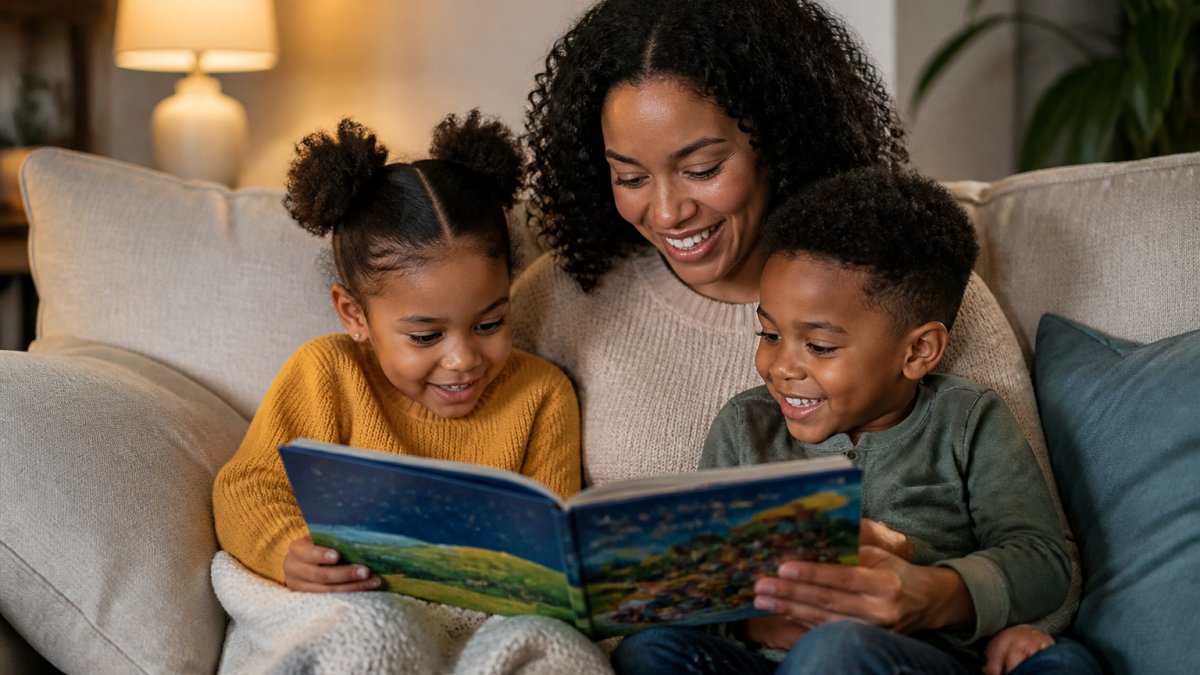
Set aside one shared block each week. Everyone reads, including you. No phones at the table. Ten minutes of everyone reading side by side beats an hour of nagging.
Read aloud even after kids can read alone. Listening builds vocabulary and comprehension above their current level.
Tracking Progress Without Creating Pressure
Track minutes, not mastery. A simple reading log on the fridge does the job.
Avoid tying reading to prizes. A book for a book works. A toy for a book teaches kids that reading is a chore you get paid to do.
Watch for these signs the routine is working:
- Your child asks for one more chapter
- They bring a book to the car without being asked
- They retell a story to a sibling or grandparent
- They pick a book over a screen during free time
If none of that is happening yet, shrink the goal. Ten minutes a day beats thirty minutes three times a week, because the habit is the point.
How to Keep Kids Reading During Summer and School Breaks
Summer reading loss is real, and it hits hardest when the routine disappears. Kids who stop reading over break can slide backward in fluency and vocabulary by the time school starts.
The fix is not a summer school packet. It is a lighter version of the same routine. Keep the same time slot, swap in a summer reading challenge, and lean on your local library.
- Join the library summer reading program
- Set a family page goal instead of a minutes goal
- Let kids pick "vacation books" before the trip
- Trade screen time for reading time, minute for minute
- Start a family book club with one book everyone reads
For grandparents and caregivers, a book is the easiest gift that keeps giving. A hardback like the Smokey D Baby Dogga Pirate Treasure Ship works as a read-aloud for the whole visit, and the paperback Pirate Treasure Ship is easy to pack for travel.
Frequently Asked Questions
How can I make reading a daily habit for my child?
Pick a fixed time that already exists in your day, like right after dinner or before bed, and attach reading to it. Start with just 10 to 15 minutes so it feels easy, not like homework. Let your child choose the book, keep a small basket of options nearby, and read together rather than quizzing them. Consistency matters more than length, so a short session every day beats a long one twice a week.
How much should a child read each day?
Most guidelines suggest 15 to 20 minutes of daily reading for early elementary kids, building toward 20 to 30 minutes as they get older. For ages 3 to 5, 10 to 15 minutes of shared reading is plenty. For ages 6 to 8, aim for 15 to 20 minutes, split into two shorter sessions if attention fades. The goal is a steady daily reading routine, not a perfect number.
What are fun reading activities for kids who get bored easily?
Try acting out scenes, drawing favorite characters, or listening to an audiobook while following along in the print book. You can also build a cozy reading nook, start a family book club with snacks, or let your child read to a pet or stuffed animal. Rotating activities keeps reading for pleasure fresh and gives reluctant readers a low-pressure way in.
How do I keep kids reading during summer and school breaks?
Join a library summer reading program, set a relaxed page goal or daily minutes target, and let kids pick their own books from a mix of fiction and nonfiction. Swap screen time for audiobooks on car rides, plan a weekly library visit, and keep books visible in the car, kitchen, and living room. A simple reading log with small rewards helps kids see their progress without turning it into a chore.
The hard part of how to keep kids reading daily is not finding books. It is keeping the habit alive on the days when everyone is tired and the schedule falls apart. At Smokey D Baby Dogga, we build stories that make reading the easy choice, with ten adventure-themed books, characters like Rocky the Ghost Dog and Bella the Bat, and video trailers that preview each story before you buy. Get started with Smokey D Baby Dogga and give your child a daily reading habit they will keep for life.