
How to Encourage Reading in Children: 7 Simple Steps
Table of Contents
- How to Make Reading Fun for Kids
- Reading Strategies for Reluctant Readers
- Creating a Home Reading Environment
- Read Aloud and Model Reading Behavior
- How to Encourage Reading in Children with a Daily Routine
- Use Library Resources and Connect Books to Daily Life
- Frequently Asked Questions
Last Updated: September 12, 2026
How to Make Reading Fun for Kids
Learning how to encourage reading in children starts with one shift: stop treating books as homework. Let kids pick their own material, add playful extras, and read together without pressure. This guide from Smokey D Baby Dogga breaks the process into seven steps you can start tonight.

Reading motivation is fragile in the early years. A child who resists a chapter book will happily devour a comic or the same picture book twenty times in a row. The goal is engagement, not difficulty.
Let Children Choose Their Own Books
Choice is the single biggest driver of intrinsic motivation in young readers. Take your child to the library or bookstore and let them lead, even if their pick seems silly or repetitive. A child who chooses the book is far more likely to finish it.
A common mistake is steering kids toward "level-appropriate" titles they find boring. Fluency grows faster when material is interesting, not technically correct. Keep a mix on hand: picture books, early readers, and graphic novels.
Add Playful Extras Like Bookmarks and Stickers
Small props make reading feel like play rather than a task. A bright bookmark gives a child ownership of their place in a story, and stickers turn finished pages into a visible reward. These tiny rituals build reading stamina one sitting at a time.
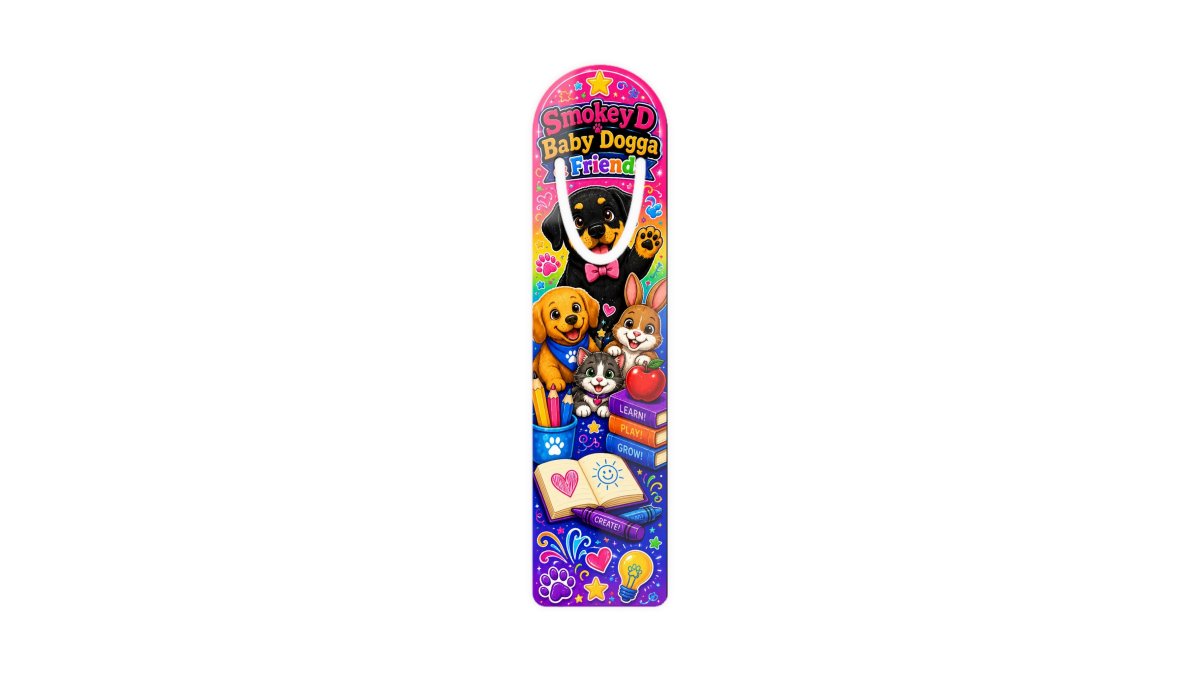
The Smokey D Baby Dogga & Friends Bookmark ($11.99) features Smokey and friends surrounded by books, pencils, and paw prints, which makes it a natural companion for storybooks and chapter books alike. Pair it with the Smokey D Baby Dogga Sticker Sheet ($10.99) and let your child place a sticker each time they finish a reading session.
Reading Strategies for Reluctant Readers
Reluctant readers are not broken readers. Most children who resist books simply have not found the right format, topic, or amount of support yet. The most effective strategies lean on alternative formats, high-interest subjects, and zero pressure to finish anything, and match the approach to the reason your child is resisting.
Match the Strategy to the Reason
Before you change anything, name the problem. A child who says "books are boring" needs a different topic. A child who says "I can't" needs an easier on-ramp. A child who squirms after two minutes needs a shorter session. A child who reads the same book forty times is not stuck, repetition builds fluency and confidence.
Parents often solve for difficulty when the real issue is interest, or solve for interest when the real issue is decoding fatigue. Watching for which one your child shows will save months of guessing.
Try Graphic Novels and Audiobooks
Graphic novels count as real reading. The visual panels carry meaning alongside the text, so a reader who loses the thread of a paragraph can recover it from the art. Many librarians now treat them as a legitimate bridge to chapter books rather than a detour.
Audiobooks build vocabulary and comprehension through listening, which is especially useful for kids who tire quickly on the page. The strongest use is pairing the two: have your child listen while following along in print. This reinforces word recognition without the frustration of decoding every line alone, and lets a child access a story above their independent reading level.
A practical starting ratio is one graphic novel or audiobook for every two traditional books on the shelf, available without becoming the only thing your child will accept (ala.org).
Support Neurodivergent Readers
Neurodivergent children often need a genuinely different on-ramp, and the strategies that help are specific.
For ADHD: short, high-interest books beat long ones every time. Movement breaks between pages, a lap around the room, a stretch, a drink of water, reset attention better than sitting still. Some kids focus better standing, bouncing on a yoga ball, or with instrumental background noise. Fidget tools in one hand while the other holds the book are a common accommodation, not a distraction. Graphic novels and illustrated nonfiction hold attention longer than dense text.
For dyslexia: audiobooks and text-to-speech are not cheating, they let a child access grade-level content while decoding skills catch up separately (dyslexiaida.org). Many dyslexic readers do better with sans-serif fonts and generous line spacing than decorative fonts. Rereading the same book builds fluency. Avoid timed reading challenges, which turn reading into a stress test.
For sensory processing differences: lighting, seating, and background noise can make or break a reading session. A child who melts down at the kitchen table may read happily in a quiet corner with a weighted blanket. Let your child choose the reading spot, that choice is part of the strategy, not a preference to override.
For autistic readers: predictable routines, familiar characters, and books tied to a special interest are the strongest levers. A child who will not touch a general chapter book may read a 200-page book about trains cover to cover. Deep-diving one topic is a legitimate reading habit, breadth usually follows interest, not the other way around.
A common mistake is treating a neurodivergent reader's pace as a problem. It is not. Progress looks different for every child, and forcing grade-level reading erodes motivation fast. If your child has an IEP or 504 plan, ask the school what reading accommodations are documented, what works at school often works at home.
Keep the Pressure Off
Whatever strategy you try, give it two to three weeks before judging it. A child who ignores a new format for a week may pick it up once the novelty of resisting wears off. Track what your child reaches for without prompting, that is the real signal.
Visit & Subscribe on YouTube →
Creating a Home Reading Environment
A reading environment is the physical and emotional setup that makes books the easy choice. You do not need a dedicated library, a basket of books beside a favorite chair, good lighting, and a no-screens rule during story time signal that reading matters here.
Keep books at your child's eye level so they can reach them without help, and rotate the selection every week or two. A small beanbag or floor cushion gives kids a spot that belongs to reading, and a clip-on reading light lets an older child keep reading after lights-out without disturbing a sibling.
Balance Digital and Physical Reading
Digital reading is not the enemy, but it needs boundaries. Screens offer instant access to e-books and audiobooks, a real benefit for families on the go and kids who need larger fonts or text-to-speech. The trade-off is distraction: notifications and app switching break the sustained attention that builds reading stamina, and a child on a tablet is one tap from a game.
The goal is not to ban screens but to match the format to the moment. Sort reading into two buckets: deep reading (long-form, uninterrupted, comprehension-building) and convenience reading (short, portable, on-the-go). Physical books are usually better for deep reading; e-readers and audiobooks win for convenience reading.
A few practical rules that many families find workable:
- Make physical books the default at home. Reserve digital reading for travel, waiting rooms, and car rides. This split keeps both formats useful without letting screens take over.
- Use a dedicated e-reader rather than a general-purpose tablet when you can. A device that only reads books removes the notification problem entirely. If your child uses a tablet, turn on Do Not Disturb and remove or hide non-reading apps during reading time.
- Set a screen-free window around reading. Thirty minutes before and after story time is a common starting point. The point is not punishment, it is protecting the attention span the book needs.
- Let audiobooks count as reading. Listening builds vocabulary and comprehension, and for kids who struggle with decoding, it is often the only way they access stories at their interest level.
- Check what your child is actually doing on the device. A reading app with a built-in reward loop (streaks, badges, coins) can motivate some kids and turn reading into a game to be gamed for others. Watch for a child who is chasing points rather than following the story.
| Setting | Best Format | Why It Works |
|---|---|---|
| Bedtime routine | Physical book | Fewer distractions, wind-down cue |
| Car rides and travel | Audiobook or e-book | Portable, hands-free |
| Independent reading time | Physical book | Builds focus and stamina |
| Reluctant reader warm-up | Graphic novel | Visual support lowers pressure |
| Struggling decoder | Audiobook + print | Access to content above reading level |
| Long wait or appointment | E-reader | Lightweight, easy to pause and resume |
Keep the Environment Low-Pressure
A reading environment is also emotional. If books are tied to tests, logs, and required minutes, the space stops feeling like a refuge. Let your child see you reading for pleasure, keep books in the car and by the couch, and treat a half-finished book as normal. The message the setup sends, that reading is something your family chooses, matters more than the setup itself.
Read Aloud and Model Reading Behavior
Reading aloud is the highest-return habit in early literacy, building vocabulary, comprehension, and a positive association with books long before a child reads independently. Aim for 10 to 15 minutes a day, even after kids can read on their own (reachoutandread.org).
Modeling behavior matters just as much. When children see you reading for pleasure, they copy it. Keep a book on your own nightstand, talk about what you are reading, and let your child catch you choosing a book over a screen.
How to Encourage Reading in Children with a Daily Routine
A predictable routine removes the daily negotiation over reading. Anchor story time to an existing habit, like right after dinner or just before bed, so it becomes automatic rather than optional. The same time and spot every day does more for reading habits than any reward chart.
Keep sessions short for young children. Ten minutes of focused, enjoyable reading beats thirty minutes of resistance. If your child is engaged, let them extend it. If they are done, close the book without a fight and try again tomorrow.
For a full routine that also builds fine motor skills, add the Smokey D Baby Dogga Coloring Book ($12.95) to your evening lineup. Its 24 pages follow Smokey and friends through forests, the moon, and a chocolate factory, which keeps story characters alive between reading sessions.


Use Library Resources and Connect Books to Daily Life
A library card is one of the most underused tools in family literacy. Libraries offer free picture books, early readers, audiobooks, story-time programs, and summer reading challenges. Visit weekly if you can, and let your child check out whatever grabs their attention.
Connecting books to daily life is the final piece. Read about cooking, then bake together. Read about animals, then visit a park or zoo. When stories link to real life, comprehension deepens and reading stops feeling like a separate activity.
The Smokey D Baby Dogga and Friends Kids Jigsaw Puzzle ($27.99) turns storytime into a hands-on activity, with 110 to 1,014 pieces depending on your child's attention span. It is a simple way to keep characters and storytelling in front of kids without another screen.
Building a reading habit takes consistency, not perfection. If your child resists books, the fix is usually a better fit, not more pressure. Smokey D Baby Dogga offers storybooks and reading companions built around friendship, kindness, and adventure, including ten adventure-themed titles, video trailers, and characters like Rocky the Ghost Dog and Bella the Bat. Visit and subscribe on YouTube to meet Smokey and her friends, then pair a story with a bookmark or sticker sheet to make reading the easiest choice in your home.
Frequently Asked Questions
Is it normal that my 5-year-old can't read yet?
Yes, it is normal. Most children begin reading simple words between ages 5 and 7, and the range varies widely. The important thing is exposure: read aloud daily, talk about stories, and let your child see you reading. If you are concerned, talk with your child's teacher or pediatrician. They can check for phonemic awareness and other early literacy skills that support reading development.
How can I make reading more engaging for reluctant readers?
Start with what they already love. If your child likes dogs, space, or jokes, find books on those topics. Try graphic novels and audiobooks, which can lower the pressure of decoding every word. Let them choose their own books at the library. Set a short, low-pressure reading time, like 10 minutes before bed, and pair books with fun extras such as a colorful bookmark or sticker sheet to make reading feel like a treat.
At what age should I start reading to my child?
You can start reading to your child from birth. Babies enjoy the sound of your voice and simple board books with high-contrast pictures. By ages 1 to 3, they begin pointing at pictures and turning pages. Daily reading aloud builds vocabulary, listening skills, and a positive association with books. Even a few minutes a day helps, and the routine itself becomes a bonding ritual.
What are 5 effective reading strategies for parents?
1) Read aloud daily and let your child pick the book. 2) Ask open-ended questions about the story to build comprehension. 3) Model reading yourself so your child sees it as a normal habit. 4) Create a cozy reading nook with good light and low distractions. 5) Use a reading diary or sticker chart to celebrate progress. Keep sessions short and playful, especially for reluctant readers.