
How to Buy Character Themed Gifts for Kids in 2026
Table of Contents
- Why Character Themed Gifts Win With Kids
- How to Match Gifts to Your Child's Age and Interests
- Best Educational Books for Kids Online: What to Look For
- How to Build a Themed Gift Basket for Kids
- Unique Character Merchandise for Children That Goes Beyond Toys
- How to Spot Authentic vs. Counterfeit Licensed Merchandise
- Budgeting for Character Themed Gifts and Parties
- Frequently Asked Questions
Last Updated: September 20, 2026
Why Character Themed Gifts Win With Kids
Character themed gifts work because children don't just want a toy; they want a relationship with a world they already love. At Smokey D Baby Dogga, we've watched kids carry a book character everywhere.
What Makes a Character Gift Stick
A character gift sticks when the child meets the character before the gift arrives, the part most gift guides skip. Kids connect through repetition: the same story read forty times, the same voice, the same face. A gift that extends that world feels like a reunion, not a random object.
Three things make this work:
- Familiarity, the child recognizes the character from a book, show, or bedtime routine
- Extension, the gift adds something new to the story world instead of repeating it
- Usability, the child can actually wear it, play with it, or read it daily
How to Match Gifts to Your Child's Age and Interests
Age determines almost everything about which character gift lands. A three-year-old and an eight-year-old can love the same character and need completely different products: younger children use characters for comfort and security, older kids for identity and social belonging.
Toddlers and Preschoolers (Ages 3-5): Characters as Comfort
At this stage, a character is a stand-in for a caregiver. Kids this age are building mental templates for how safe the world is, and a familiar character becomes a portable piece of that safety, which is why a plush pup gets dragged to daycare and the doctor's office.
Best options include:
- Plush toys and soft character companions for comfort and sleep
- Simple puzzles with large, sturdy pieces for fine motor practice
- Board books and storybooks with bold, colorful art
- Slip-on shoes and easy-wear apparel kids can put on themselves
School-Age Kids (Ages 6-8): Characters as Identity
By first or second grade, the job changes. Kids are figuring out who they are in a group, and the characters they wear become shorthand for that identity. A hoodie with a recognizable character signals to other kids, "I'm part of this world too."
Strong picks at this age:
- Graphic hoodies and character shirts they can wear to school
- Action figures and collectible sets tied to the story
- Activity kits and larger puzzles for focused play
- Room decor and bedding that lets them personalize their space
The In-Between Years (Ages 9-12): Characters as Collection
Older kids often get skipped in character gift guides, but they're the highest-value audience because they care about completeness. A single action figure is a toy; the full set is a project.
- Boxed sets and series runs rather than single items
- Display shelving or a dedicated shelf for a collection
- Higher-complexity activity kits and 500-plus-piece puzzles
- Graphic novels and chapter-book series tied to the character world
Matching Interests, Not Just Ages
Age is the first filter, not the only one. Watch how your child already plays and match the format, not the franchise:
- The builder wants puzzles, kits, and construction sets, not apparel
- The performer wants costumes, hoodies, and anything wearable
- The collector wants sets, series, and display pieces
- The reader wants books, and specifically the next book in a series they've already started
Best Educational Books for Kids Online: What to Look For
The best educational books for kids online combine a story children want to reread with a lesson they absorb without noticing. If a book feels like homework, it fails both jobs.
- Read the sample pages. Most listings offer a preview or a video trailer. Watch it and listen for natural, rhythmic language rather than stiff text.
- Check the reading level. Match the vocabulary to your child's current stage, not their grade on paper.
- Look for a clear theme. Kindness, courage, friendship, and curiosity are the themes that hold up to repeated readings.
- Confirm the series. A single book is a gift; a series is a habit.
- Verify the seller. Buy from the brand's own store or a reputable retailer to avoid counterfeit printings.
How to Build a Themed Gift Basket for Kids
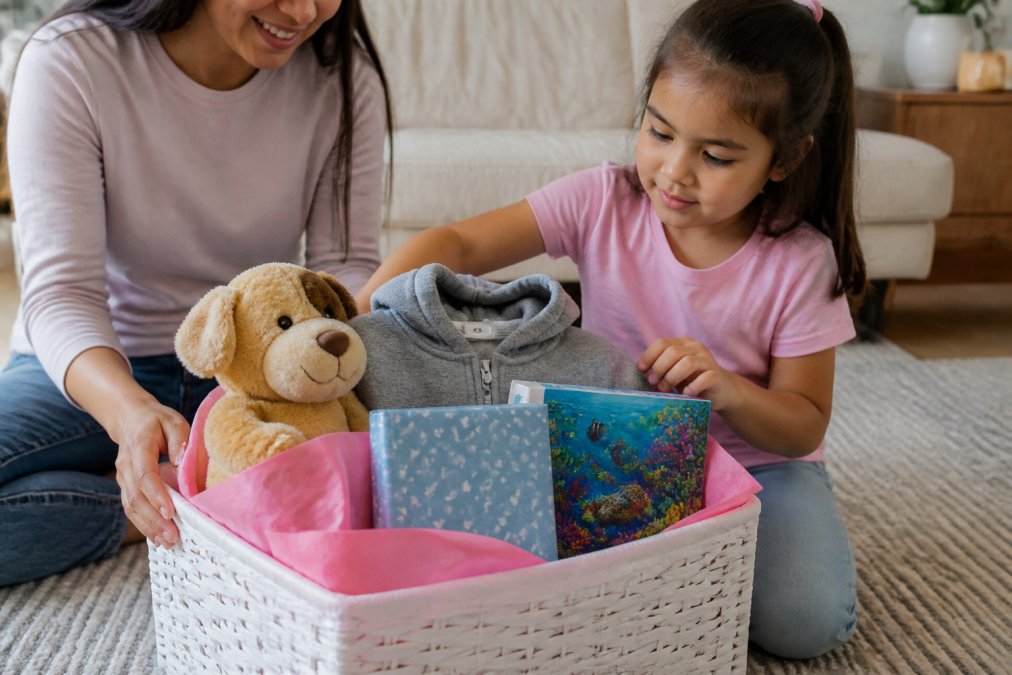
A themed gift basket works when every item points to the same character world and covers a different use: something to read, wear, play with, and keep. The part most guides skip is the math, a basket built without a budget is how a $40 gift turns into a $140 gift.
The Four Layers
Build it in four layers:
- The anchor item, one larger gift that sets the theme, such as a storybook or a hoodie.
- The wearable, a shirt, hoodie, or pair of character slip-ons so the theme goes out into the world.
- The activity, a puzzle, activity kit, or game that gives the child something to do, not just own.
- The small extras, stickers, charms, or a mug to round out the basket.
Keep the basket to one character family. Mixing three franchises dilutes the effect and makes the gift feel like a clearance haul; a basket where every item belongs to the same world reads as a coherent story.
Smokey D Baby Dogga Kids Hoodie – Cute →

Budgeting the Basket Before You Shop
The most useful habit is to set the total before you pick a single item, then work backward. Parents who stay on budget often allocate roughly half to the anchor, a quarter to the wearable, and the remaining quarter split between activity and extras.
| Basket Tier | Anchor | Wearable | Activity | Extras |
|---|---|---|---|---|
| Small | Board book or single storybook | Sticker sheet or small accessory | Mini puzzle | One charm |
| Mid | Hardcover storybook or plush | Kids hoodie or tee | 110-piece puzzle | Stickers plus a mug |
| Large | Storybook set or premium plush | Hoodie plus slip-on shoes | 520-piece puzzle or activity kit | Full extras set |
Occasion Changes the Build
The same four layers work for a birthday, a holiday, or a just-because gift, but the emphasis shifts:
- Birthday: the anchor gets bigger, and the basket becomes the main gift rather than a supplement
- Holiday: the wearable and extras carry more weight, since kids often receive multiple gifts in one sitting
- Just-because or get-well: the activity and the book do the work, because the goal is something to do, not something to show off
- Sibling gift: keep each basket to one character family so two kids don't end up with overlapping items
Party Bundles: The Higher-Intent Version
If you're hosting a character-themed party, the basket logic scales into a party bundle. Party favors are where most parents overspend, because the per-unit cost looks small until you multiply it by the guest count.
A Worked Example
A mid-tier basket for a six-year-old who knows the character from a bedtime story: a hardcover storybook as the anchor, a kids hoodie as the wearable, a 110-piece puzzle for the activity, and a sticker sheet plus a mug as the extras. Four items, one theme.
Unique Character Merchandise for Children That Goes Beyond Toys
Unique character merchandise for children extends the story into daily life, which is why it outperforms a toy that gets shelved after a week. Apparel and sleepwear top the list: a character hoodie gets worn to school, to the park, and to bed.

Beyond clothing, consider:
- Bedding and room decor that turn a bedroom into the character's world
- Accessories like tote bags, mugs, and stickers for older kids
- Interactive items such as puzzles that turn a quiet afternoon into shared play
- Activity kits that pair a story with something hands-on
How to Spot Authentic vs. Counterfeit Licensed Merchandise
Counterfeit character merchandise is common online and fails in predictable ways: faded prints, unsafe materials, and no recourse if something goes wrong. Licensed merchandise should carry verifiable proof of authenticity.
Run through this checklist before you buy:
- The seller is the official brand store or an authorized retailer
- The listing shows a full product description, materials, and care instructions
- Children's apparel carries a CPSIA-compliant tracking label
- Product photos are original, not copied stock images
- The price is plausible for the materials described
- Reviews and return policies exist and are specific
Budgeting for Character Themed Gifts and Parties
Budgeting for character themed gifts and parties comes down to one rule: decide the number before you shop, not after. Character merchandise is designed to be collectible, which makes overspending easy.
Split your budget into three buckets:
| Bucket | What It Covers | How to Keep It in Check |
|---|---|---|
| Gifts | Books, apparel, puzzles, accessories | Set a per-child cap and stick to one theme |
| Party | Decor, favors, themed tableware | Buy decor in one character family, reuse next year |
| Extras | Stickers, charms, small add-ons | Cap at two small extras per basket |
Frequently Asked Questions
How do I choose the best character-themed gift for a child?
Start with what the child already loves: favorite shows, book characters, or animals. Then match the gift to their age and attention span. A 3-year-old may prefer a soft hoodie or simple 110-piece puzzle, while a 7-year-old can handle a 520-piece puzzle or a chapter book series. Check for age-appropriate sizing, safety labels like CPSIA-compliant tracking, and whether the character appears across multiple items so the gift feels connected rather than random.
Are character-themed gifts considered educational?
They can be. Character-themed books and puzzles build vocabulary, storytelling skills, and problem-solving. A puzzle with 110 to 1014 pieces lets kids choose their challenge level, and storybooks that follow a character through adventures teach friendship, kindness, and courage. The key is picking items that invite interaction, like reading together or completing a puzzle, rather than passive toys that only light up or make noise.
How can I find high-quality character merchandise for kids?
Look for brands that list materials, care instructions, and safety labels on the product page. A quality kids hoodie will note its fabric blend, weight, and CPSIA-compliant tracking label. A puzzle should specify piece count, chipboard construction, and finish. Avoid listings with no size chart, no material details, or stock photos that do not match the described product. Buying directly from the brand's official store is the simplest way to avoid counterfeits.
What age groups are most interested in character-themed gifts?
Kids ages 3 to 8 are the sweet spot. Toddlers and preschoolers connect with bright colors, soft textures, and simple stories. School-age kids want characters they can collect, wear, or display, like graphic hoodies, puzzles, and room decor. The same character can work across both groups if you adjust the format: a 110-piece puzzle for a 4-year-old and a 520-piece version for an 8-year-old from the same series.