
How to Build a Home Library: A 2026 Guide
Table of Contents
- Your Home Library Blueprint: Space, Shelves, and Seating
- Budget-Friendly Bookshelf Ideas That Look Great
- Designing a Reading Nook for Maximum Comfort
- Home Library Organization Ideas for Every Collection
- Protecting Your Books: Climate Control and Care
- How to Encourage Reading in Children with Your Library
- Your Home Library: A Space for the Whole Family
- Frequently Asked Questions
Last Updated: September 9, 2026
A home library is more than a collection of books; it is a dedicated space that invites discovery, comfort, and a lifelong habit of reading. For families with young children, building one can be the single most effective way to encourage quiet time and shared stories. This guide from Smokey D Baby Dogga walks you through creating a space that works for your family, covering everything from choosing a spot to protecting your collection.
Your Home Library Blueprint: Space, Shelves, and Seating
Before buying anything, focus on the three pillars of any good library: location, storage, and a place to sit. A successful home library for children doesn’t require a grand room; it requires a thoughtful layout where books are visible and seating is inviting.
Choosing the Right Location
A quiet corner of a living room, a section of a home office, or a repurposed closet can all become excellent libraries. The best location has consistent, indirect light and is away from high-traffic zones where play can disrupt reading. A former coat closet converted with shelving is a classic trick for small spaces, offering a cozy, enclosed feel that children often adore. When scouting your floor plan, look for underutilized vertical space, such as walls next to doorways or above low furniture, to maximize your storage potential.
Budget-Friendly Bookshelf Ideas That Look Great
You don’t need custom built-ins to create an impressive library. A common mistake is waiting until you can afford expensive furniture, which delays the benefits of having a reading space. Instead, focus on creating a functional and attractive display using affordable materials and a little creativity.
Repurposing Furniture and Secondhand Finds
A home library often starts with a single repurposed piece. Solid wood dressers can be laid on their backs to create low, accessible bins for board books, while vintage suitcases stacked on a sturdy table offer unique, portable storage. Secondhand furniture from thrift stores or garage sales is a goldmine; a fresh coat of paint on a sturdy old bookshelf can make it look custom. Always check for stability and lead-free paint on older items, a crucial step for safety in a child's space.
Simple DIY Bookshelf Construction
For the beginner-friendly builder, a simple DIY project can be the most rewarding. The most accessible design is a "crate shelf," where wooden crates are securely fastened to the wall in a grid pattern, creating instant, stylish cubbies. Another easy project involves using painted wooden planks and standard metal brackets to create floating shelves. When mounting, always secure the shelf to wall studs, as a bookshelf full of heavy picture books can easily exceed one hundred pounds, posing a tipping hazard.
Designing a Reading Nook for Maximum Comfort
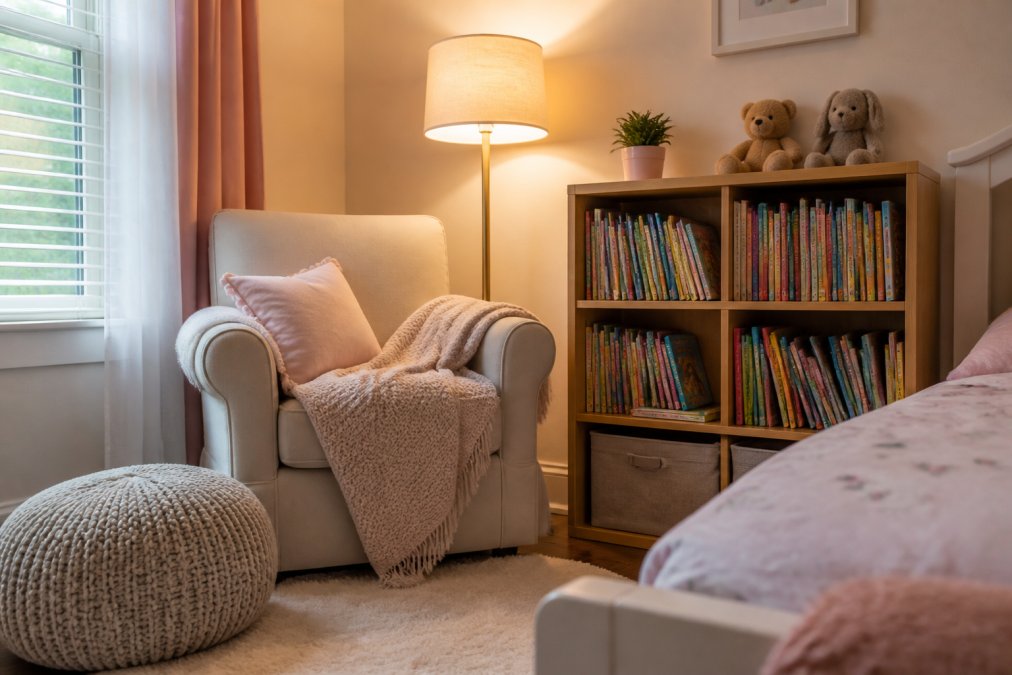
The heart of any home library is the reading nook, but comfort is more than a soft cushion, it is ergonomics. The best reading nooks are designed around how the body actually sits, reaches, and holds a book for extended periods.
Ergonomic Seating: Support for Every Age
For adults and older children, the ideal reading chair supports the lower back and allows feet to rest flat on the floor. A common mistake is choosing a deep, overly soft armchair that looks inviting but forces the reader to slump forward to keep the book in focus. Look for chairs with a seat depth of 20-22 inches and firm back support, or add a lumbar pillow to correct posture.

For young children, floor seating is developmentally appropriate, but it needs structure. A simple foam floor cushion with a firm backrest (not a pile of loose pillows) supports the developing spine while allowing freedom to shift positions. Beanbags are popular but offer zero back support; if you use one, pair it with a low-backed version or place it against a wall.
Consider the 90-90-90 rule used by occupational therapists: hips, knees, and ankles should each be at roughly 90-degree angles when seated (aota.org). For a child, this means their feet should touch the floor or a stable footrest, not dangle. A stack of sturdy hardcover books wrapped in fabric makes an excellent adjustable footrest that blends into the decor.
Task Lighting: The Overlooked Variable
Ambient lighting sets the mood, but task lighting determines whether reading is sustainable. The Illuminating Engineering Society recommends 300-500 lux for reading printed material, roughly the output of a dedicated 60-watt equivalent LED task lamp positioned over the shoulder, not directly overhead where it casts shadows from the head (ies.org).
Choose an adjustable floor lamp with a swing arm or a wall-mounted reading light that can be positioned to illuminate the page without glare on a nearby screen or window. Warm white bulbs (2700-3000K) reduce eye strain compared to cool blue-toned light, which suppresses melatonin and can disrupt sleep if reading happens before bed.
Accessibility: Designing for All Bodies
A reading nook should accommodate every family member, including those with mobility challenges or visual impairments. Key considerations:
- Shelf height: Books that are meant to be browsed independently should sit between 15 and 48 inches from the floor, the range most children and seated adults can reach without stretching or bending. Reserve shelves above 60 inches for display or adult-only collections.
- Clearance: Ensure at least 36 inches of clear floor space in front of the nook for wheelchair or walker access. If the nook is in a corner, angle the chair outward rather than trapping it against walls.
- Contrast and visibility: Paint shelves a light color and use bookends with high visual contrast so spines are easier to distinguish for low-vision readers. A magnifying lamp on a side table is a low-cost addition that extends usability.
Acoustics and Sensory Comfort
Reading requires focus, and hard surfaces create echo that increases cognitive load. A wool or high-pile area rug absorbs sound far better than a flat-weave option. If the nook sits in a high-traffic area, add heavy curtains or a room divider to dampen noise. For children with sensory sensitivities, avoid buzzing fluorescent fixtures and opt for dimmable LED lamps that can be adjusted to a calm, low level.
The Multi-User Nook
If the library serves both a toddler and a tall adult, design for both rather than compromising. A low bench with storage underneath gives a child a perch while an adult sits in a standard chair nearby. A lap desk with an angled surface (15-20 degrees) reduces neck flexion for both ages and is especially helpful for reading large picture books or tablets. By addressing ergonomics and accessibility explicitly, the nook becomes a space that invites everyone to stay a while.
Home Library Organization Ideas for Every Collection
Once the space is built, the real challenge begins: keeping it organized in a way that encourages use rather than chaos. The secret is to organize for the user, not the librarian. For young children, this means prioritizing accessibility over strict categorization, allowing them to see covers and reach books without help.
Organizing and Categorizing Book Collections
A practical method is front-facing display. Use shelves or wire racks that show book covers, as young children select books by their artwork, not their spines. For larger collections, group books by theme, such as "Animals," "Adventures," or "Bedtime," using simple, colorful bins or baskets. Rotate the selection every few weeks to keep the display fresh and exciting, which is a subtle but powerful way to encourage reading in children by maintaining their curiosity.
Protecting Your Books: Climate Control and Care
Most home library guides stop at aesthetics, but a collection is a long-term investment that requires deliberate preservation. Books are physically vulnerable: paper is hygroscopic, and binding adhesives degrade under heat and UV exposure. Without basic environmental controls, you will eventually face warped pages, foxing, and brittle spines.
The Ideal Environment: Temperature and Humidity Targets
The commonly cited preservation standard, used by the Library of Congress and many rare-book conservators, is to keep storage areas around 65-70°F with relative humidity between 30% and 50% (loc.gov). Most homes sit outside this range seasonally, especially in basements or attics, so the goal is to stay as close as practical without turning your living space into a vault.
- Humidity above 60% invites mold growth and causes pages to ripple. In humid months, run a dehumidifier in the room and keep an inexpensive hygrometer (available for under $15 at hardware stores) on the shelf to monitor conditions.
- Humidity below 25% makes paper dry and brittle, accelerating cracking at the hinges. If your home runs dry in winter, a small room humidifier can help, but avoid placing it directly near the bookshelf.
- Temperature spikes, such as a shelf above a radiator or against a wall with uninsulated ductwork, dry out bindings and accelerate chemical breakdown of the paper. Keep shelves at least a few inches away from exterior walls to allow air circulation and reduce condensation risk.
Sunlight and UV Damage: The Silent Fader
Direct sunlight is the fastest killer of book spines. Ultraviolet light bleaches colors and breaks down lignin in paper, turning white pages yellow and making covers look washed out within a single season. Position shelves perpendicular to windows rather than facing them, or install UV-filtering window film on glass that receives strong afternoon light. If a reading chair sits near the window, keep the most delicate or sentimental books on the opposite side of the room.
Dust, Pests, and Handling Protocols
Dust is not just cosmetic; it holds moisture and provides food for silverfish and booklice. Establish a simple quarterly routine:
- Remove books from a shelf section.
- Wipe the shelf itself with a barely damp cloth.
- Dust each book by holding it closed and brushing from the spine outward with a soft, dry brush or microfiber cloth, never push dust into the spine gutter.
- Inspect for signs of pests (fine webbing, tiny holes, or powdery residue) and address immediately with targeted traps rather than broad pesticides near the collection.
For families with young children, create a preservation hierarchy: designate the lowest, most accessible shelves for board books and well-loved paperbacks that can withstand rough handling, and reserve higher shelves for delicate picture books, first editions, or library-quality hardcovers. Teach children the "two-hand carry" method, supporting the bottom of the book rather than pulling from the top of the spine, which prevents the most common structural damage.
Climate Control as a Design Feature
If you are planning a dedicated library room, build climate control into the design rather than treating it as an afterthought. A ceiling fan improves air circulation without the noise of a portable unit. A bookshelf with solid backing (rather than open-backed) protects books from wall temperature fluctuations. And if you live in a region with extreme seasonal swings, consider a standalone dehumidifier with a built-in humidistat that cycles automatically, a modest investment compared to replacing a mold-damaged collection.
By treating preservation as part of the building process, you ensure the library serves not just this year's reading habits but the next generation's.
How to Encourage Reading in Children with Your Library
Building the physical space is only half the battle; the other half is making it a living part of your family's routine. A library that sits unused is just furniture. The most effective way to encourage reading in children is to model the behavior yourself and make the library a positive, screen-free zone.
Making the Library a Family Destination
Elevate the space from a storage area to a destination by integrating it with your daily life. Use a special bookmark to track your current family read-aloud, and keep a dedicated journal nearby where kids can draw their favorite scenes or characters. You can also weave the library into other activities; for example, after reading a story about a magical forest, pull out a coloring book featuring those same types of adventures to extend the narrative.

Your Home Library: A Space for the Whole Family
Building a home library is ultimately about creating a legacy of learning and a sanctuary for the imagination. By focusing on a smart layout, budget-friendly storage, and a comfortable atmosphere, you create a space that serves every member of the family, from toddlers to grandparents.
Remember that the goal is not perfection but invitation. A library that grows with your family, adapting to new interests and new readers, is a gift that keeps giving. To keep the spark alive, consider adding a special journal for your child to write their own stories, or a cozy decorative pillow to make the nook even more inviting.

Frequently Asked Questions
How much does it cost to build a home library?
You can start a home library for very little. The biggest expense is usually shelving, but budget-friendly bookshelf ideas like using secondhand furniture or building simple plank-and-bracket shelves can keep costs under $100. The books themselves are the real investment. You can save by visiting library sales, thrift stores, and using book swaps to grow your collection affordably.
How do I start building a home library from scratch?
Start by picking a dedicated spot, even if it's a single shelf in a hallway. Choose a location away from direct sunlight and moisture. Next, focus on a simple, sturdy shelving unit that can hold the weight of books. Finally, build your collection gradually by focusing on your family's favorite genres and authors. A small, well-chosen library is more valuable than a large, random one.
What are the essential elements every home library needs?
Every functional home library needs four core elements: proper shelving that can support the weight of books, comfortable seating for readers, adequate lighting to prevent eye strain, and an organization system for book organization. For a children's library, consider low, accessible shelves and soft furnishings like a rug or pillows to create an inviting reading nook.
How can I organize a home library for children?
For young children, use home library organization ideas that prioritize accessibility. Place books on low shelves with covers facing out to spark interest. Organize by category, such as 'Adventure' or 'Animals', rather than by author. Rotate the selection every few weeks to keep the library feeling fresh and exciting. Use colorful bins or baskets for picture books to make cleanup easy.
What are the best ways to build a home library on a budget?
The best budget-friendly bookshelf ideas involve looking beyond traditional bookcases. Repurpose a sturdy entertainment center or use wooden crates mounted on the wall. Cinder blocks and planks create a cheap, industrial look. For the books themselves, check library discard sales, online marketplaces, and dollar stores. Focus on building a quality collection over time rather than buying everything at once.
How do I choose the right shelving for a home library?
Choose shelving based on the weight and size of your books. For a child's library, use low, sturdy units that are anchored to the wall for safety. For large hardcover books, ensure shelves are deep enough and made of solid wood or metal. Adjustable shelves offer flexibility as your collection grows. Ensure the unit is level to prevent leaning and warping.
Building a home library that nurtures a love for reading is one of the most rewarding projects a family can undertake. The challenge is finding the right stories and tools to keep young readers engaged. Smokey D Baby Dogga supports this mission with a collection of adventure-filled storybooks, journals, and accessories designed to spark imagination and friendship. Visit & Subscribe on YouTube to join our community and discover more ways to make reading a cherished family ritual.