
Best Gifts for Curious Young Children: 2026 Guide
Table of Contents
- STEM Gifts for Preschoolers That Build Real Skills
- Buy Educational Books for Kids Online: What to Look For
- Creative and Artistic Gifts for Hands-On Discovery
- Experience Gifts for Kids: Classes, Events, and Memberships
- Non-Toy Gifts for Curious Young Children Who Have Everything
- How to Choose Gifts for Curious Young Children by Age
- Frequently Asked Questions
Last Updated: October 1, 2026
STEM Gifts for Preschoolers That Build Real Skills
The best gifts for curious young children are the ones that let them figure something out on their own. A puzzle with a satisfying snap, a robot that finally rolls the right way after three wrong turns, a set of magnets that keeps pulling pieces together no matter how they're flipped. These are the moments where problem-solving skills actually form.
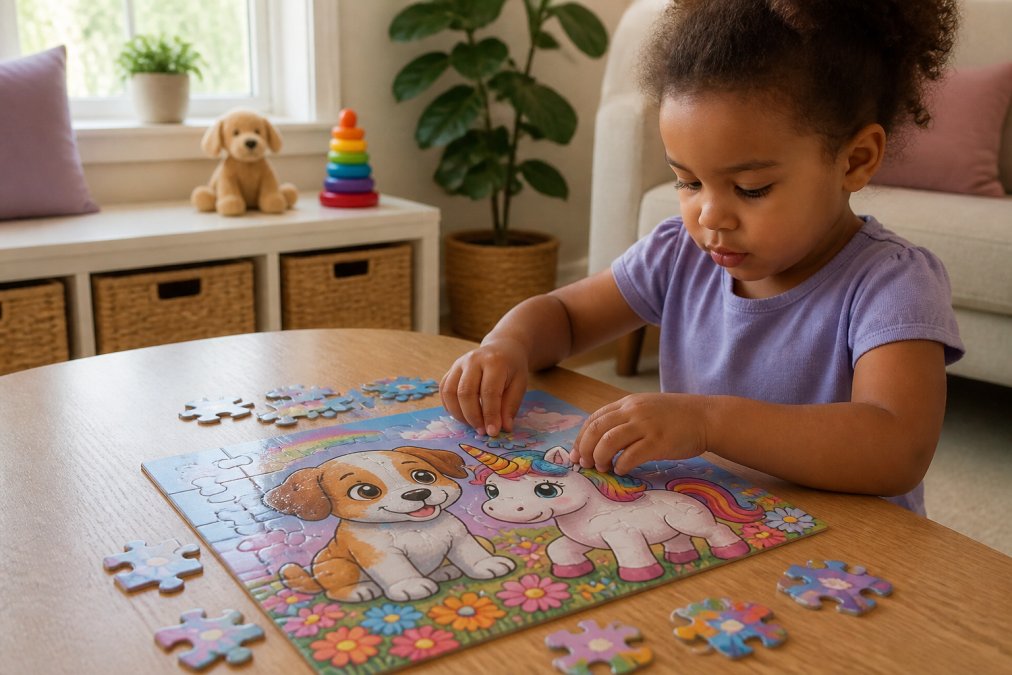
At Smokey D Baby Dogga, we've spent 41 years watching how stories and play shape the way kids think. The toys that stick around longest are never the loudest ones. They're the ones that reward patience.
Hands-on learning beats passive entertainment for building critical thinking. When a child has to test, adjust, and try again, they're practicing scientific inquiry without knowing it. That's why STEM gifts for preschoolers work best when they feel like play, not a lesson.
What Actually Counts as a STEM Gift at This Age
For ages 3-5, the useful categories are narrower than the marketing suggests. Most practitioners group them into four buckets:
- Building and engineering sets, magnetic tiles, wooden blocks, interlocking gear sets. These teach spatial reasoning and cause-and-effect because the structure either stands or falls.
- Simple science kits, baking soda reactions, color mixing, sink-or-float tests. The mechanism is observation: the child predicts, then checks.
- Beginner coding toys, screen-free programmable robots and sequencing card games. These introduce if-then logic without a tablet.
- Puzzles and pattern games, jigsaws, tangrams, matching sets. These build working memory and visual discrimination.
Safety and Materials to Check Before You Buy
Any toy marketed for children under 6 in the United States should carry a CPSC-compliant age label and, for electrical or battery-operated items, a UL mark. Look for:
- Choking-hazard warnings, small parts are a risk under age 3 (Small Parts Ban and Choking Hazard Labeling). If the box says "3+", believe it.
- Non-toxic finishes, water-based paints and FSC-certified or sustainably sourced wood are the common markers parents look for.
- Battery compartments, screw-secured, not snap-open, on anything a preschooler handles.
A Concrete Starting Point
The Smokey D Baby Dogga and Friends Kids Jigsaw Puzzle ($27.99) is a strong starting point. It comes in 110, 252, 520, or 1014 pieces, so you can match the challenge to the child. A 3-year-old can start with 110 and work up. Each piece is sturdy chipboard with a glossy finish that resists sticky fingers, and the finished scene of puppies and a rainbow-eyed unicorn makes a display piece worth showing off.

Buy Educational Books for Kids Online: What to Look For
Shopping for books online means you're buying blind. You can't flip through the pages or test whether the story holds a child's attention past page two. So the question becomes: what actually separates a book that gets read fifty times from one that gets abandoned?
Creative and Artistic Gifts for Hands-On Discovery
Coloring, drawing, and sticker play do more than keep kids busy. They build fine motor skills, spatial awareness, and the kind of open-ended play where a child decides what happens next. No rules, no wrong answers.
Smokey D Baby Dogga and Friends Kids →
Experience Gifts for Kids: Classes, Events, and Memberships
Not every great gift comes in a box. Experience gifts for kids, like a museum membership, a nature center pass, or a weekly art class, create memories instead of clutter. Many families find these work especially well for children who already have plenty of toys.
The Main Categories and What Each One Actually Delivers
- Museum and science center memberships, Children's museums and science centers typically offer family tiers that cover two adults and all children in the household. Most pay for themselves after two or three visits, since a single family admission often runs close to half the annual membership cost.
- Zoo, aquarium, and botanical garden passes, These work best for children who are already drawn to animals or plants. The recurring-visit model rewards curiosity because the child can return to the same exhibit and notice something new each time.
- Nature center and park programs, Many state and county park systems run low-cost junior naturalist programs, guided hikes, and seasonal camps. These are often the most affordable experience gift on this list.
- Classes and lessons, Weekly art, music, or beginner coding classes build a skill over time. The gift is the series, not a single session, so the child has something to look forward to.
- Membership reciprocity, Many science centers and children's museums participate in reciprocal networks, so a membership at one venue can grant discounted or free entry at hundreds of others. Check the venue's website for the reciprocal list before you buy.
How to Present an Experience Gift So It Lands
A printed card with the date, the venue name, and one small physical item works better than a bare certificate. For a science center trip, tuck in a Bookmark ($11.99) or a Sticker Sheet ($10.99) so there's something to open. For a class series, a Pencil Case ($23.12) gives the child a place to keep supplies and signals that the gift is ongoing, not one-and-done.
What to Check Before You Commit
- Age minimums, Many classes and camps have hard age cutoffs. Confirm before purchase.
- Refund and transfer policies, Memberships are usually non-refundable, but some venues allow a one-time transfer to another family.
- Scheduling, A weekly class only works if it fits the family's existing routine. A gift that creates logistical stress gets returned or forgotten.
Non-Toy Gifts for Curious Young Children Who Have Everything
Some children genuinely don't need another toy. For them, non-toy alternatives that support curiosity tend to land better. Think practical items they'll use daily, plus a little creative spark.
| Gift | Price | Best For | Why It Works |
|---|---|---|---|
| Pencil Case | $23.12 | Ages 5-8 | Organizes art supplies, encourages daily creativity |
| Bookmark | $11.99 | Ages 4-8 | Supports reading habits, small and useful |
| Canvas Lunch Bag | $22.99 | Ages 3-8 | Practical daily item with playful character art |
| Sticker Sheet | $10.99 | Ages 3-8 | Personalizes belongings, builds fine motor skills |
| Kids Hoodie | $50.45 | Ages 4-8 | Wearable comfort with character art kids recognize |
How to Choose Gifts for Curious Young Children by Age
Age is a starting point, not a rule. A 3-year-old and a 7-year-old can enjoy the same series if the format adapts. That's the real test of a good gift: does it grow with the child?

Frequently Asked Questions
What are the best educational gifts for curious toddlers?
For toddlers, look for gifts that combine hands-on learning with open-ended play. A jigsaw puzzle with adjustable piece counts, like the Smokey D Baby Dogga and Friends Puzzle (110 to 1014 pieces, $27.99), grows with your child's attention span. Coloring books, sticker sheets, and simple building toys also build fine motor skills and spark curiosity-driven discovery. The key is choosing something your child can manipulate independently without getting frustrated.
How do I choose a gift that encourages a child's curiosity?
Pick gifts that invite questions rather than deliver answers. Experiment kits, puzzles, and storybooks with rich characters all work because they reward exploration. Match the gift to your child's current interests and developmental stage. A 3-year-old might love a coloring book with large illustrations, while a 7-year-old may prefer a 520-piece puzzle or a beginner coding robot. The best curiosity gifts leave room for your child to decide what happens next.
Are books good gifts for curious children?
Books are one of the strongest gifts for curious young children because they build vocabulary, imagination, and critical thinking simultaneously. Character-driven series work especially well because kids want to return to familiar friends. Pairing a book with a small accessory, like a bookmark ($11.99) or sticker sheet ($10.99), extends the experience beyond reading time. When you buy educational books for kids online, check the recommended age range and look for stories that model kindness and problem-solving.
What are some non-toy gift ideas for curious young children?
Non-toy gifts build skills without adding to the toy bin. Consider a canvas lunch bag ($22.99), a pencil case ($23.12), or a kids hoodie ($50.45) featuring characters your child already loves. Experience gifts like museum memberships or art classes also work well. These gifts feel personal because they connect to something your child cares about, and they get used daily rather than abandoned after a week.
What types of gifts help develop critical thinking in young kids?
Puzzles, STEM kits, and open-ended art supplies top the list. A puzzle with multiple piece counts lets a child start at 110 pieces and work up to 1014, building logical reasoning and spatial awareness along the way. Coding robots for beginners introduce sequencing and problem-solving. Coloring books and sticker activities encourage creative expression and decision-making. The common thread is that these gifts require your child to think, adjust, and try again rather than just watch.