
10 Heartwarming Friendship Stories for Ages 3-5
Table of Contents
- Why Friendship Stories Matter for Ages 3-5
- 1. Smokey D Baby Dogga and the New Friend
- 2. Rocky the Ghost Dog Learns to Share
- 3. Bella the Bat and the Big Scary Night
- 4. Luna the Unicorn and the Lost Butterfly
- 5. Charlie the Chipmunk's Big Adventure
- 6. The Day the Forest Friends Disagreed
- Books That Teach Kindness to Kids
- How to Teach Friendship Skills to Toddlers
- Frequently Asked Questions
Last Updated: September 24, 2026
Why Friendship Stories Matter for Ages 3-5
Friendship stories give young children a safe place to practice the social skills they're just beginning to build. Ages 3-5 mark a critical window for social-emotional learning: kids move from playing side by side to playing together, and they need language for sharing, waiting, and making up after a disagreement. This guide from Smokey D Baby Dogga collects ten heartwarming stories about friendship for ages 3-5, each one chosen to spark conversation between you and your child.

The research backs up what parents already sense. The Collaborative for Academic, Social, and Emotional Learning (CASEL) framework identifies relationship skills as one of five core competencies children develop in early childhood, and story time is one of the easiest ways to nurture them. Books let a child watch a character feel left out, apologize, or offer to share, all without the pressure of a real conflict.
What most book lists miss is the conversation after the last page. Below, we pair each story with a quick discussion question so the learning sticks. We also flag developmental milestones for ages 3-5 and note sensory-friendly features where they apply.
1. Smokey D Baby Dogga and the New Friend
Smokey D Baby Dogga opens this list because the whole series is built on friendship, kindness, and courage. In this story, Smokey meets a newcomer and has to decide whether to stick with her old pals or make room for someone new. It's a gentle first lesson in inclusion: welcoming a stranger doesn't shrink your circle, it grows it.

Kids respond to Smokey because she's curious rather than perfect. She hesitates, then chooses kindness. That small arc gives you an easy talking point.
2. Rocky the Ghost Dog Learns to Share
Rocky the Ghost Dog is the series' most relatable character for kids who struggle with sharing. In this tale, Rocky guards a favorite toy until he sees how left out his friend feels. The story never scolds him. It simply shows the reward of letting a friend in.
3. Bella the Bat and the Big Scary Night
Bella the Bat turns fear into a friendship story. Bella is nervous about the dark until a friend stays close and shows her there's nothing to be afraid of. It's a quiet lesson in courage and in what it means to be a good friend: showing up when someone is scared.
Discussion question: "Who helps you feel brave?"
4. Luna the Unicorn and the Lost Butterfly
Luna the Unicorn and the Lost Butterfly is about helping someone who can't help themselves. Luna spots a butterfly who's lost and chooses to guide it home, even though it delays her own plans. The heartwarming payoff is the friendship that forms along the way.
Smokey Baby Dogga Tee — Vintage Cartoon →
5. Charlie the Chipmunk's Big Adventure
Charlie the Chipmunk's Big Adventure follows a small woodland animal who discovers that the best part of any journey is the company. Charlie sets off alone and ends up surrounded by friends by the final page. It's a warm reminder that shared adventures beat solo ones.
6. The Day the Forest Friends Disagreed
The Day the Forest Friends Disagreed tackles the hard part of friendship: conflict. When two friends want different things, the group has to figure out how to make peace. It models conflict resolution for kids who are just learning that disagreements don't end friendships.
Books That Teach Kindness to Kids
If you're building a shelf around books that teach kindness to kids, the Smokey D Baby Dogga collection covers friendship, courage, and sharing in one connected world. Because the same characters appear across stories, kids build real attachment, and that attachment is what makes the lessons stick. But the real value for parents and educators is not just the titles.
| Story | Core Skill | Best Age | Discussion Focus | Question to Ask |
|---|---|---|---|---|
| Smokey and the New Friend | Inclusion | 3-5 | Welcoming others | "What would you say to a new kid at preschool?" |
| Rocky Learns to Share | Sharing | 3-4 | Taking turns | "How did Rocky's friend feel before he shared?" |
| Bella and the Scary Night | Courage | 3-5 | Facing fears | "Who helps you feel brave?" |
| Luna and the Lost Butterfly | Compassion | 4-5 | Helping others | "Have you ever helped someone who was lost?" |
| Charlie's Big Adventure | Connection | 4-5 | Friendship joy | "What's more fun, going somewhere alone or with a friend?" |
| The Forest Friends Disagreed | Conflict resolution | 4-5 | Making peace | "What can you do when you and a friend disagree?" |
- The Smokey D Baby Dogga series uses warm, uncluttered forest scenes that reduce visual overload.
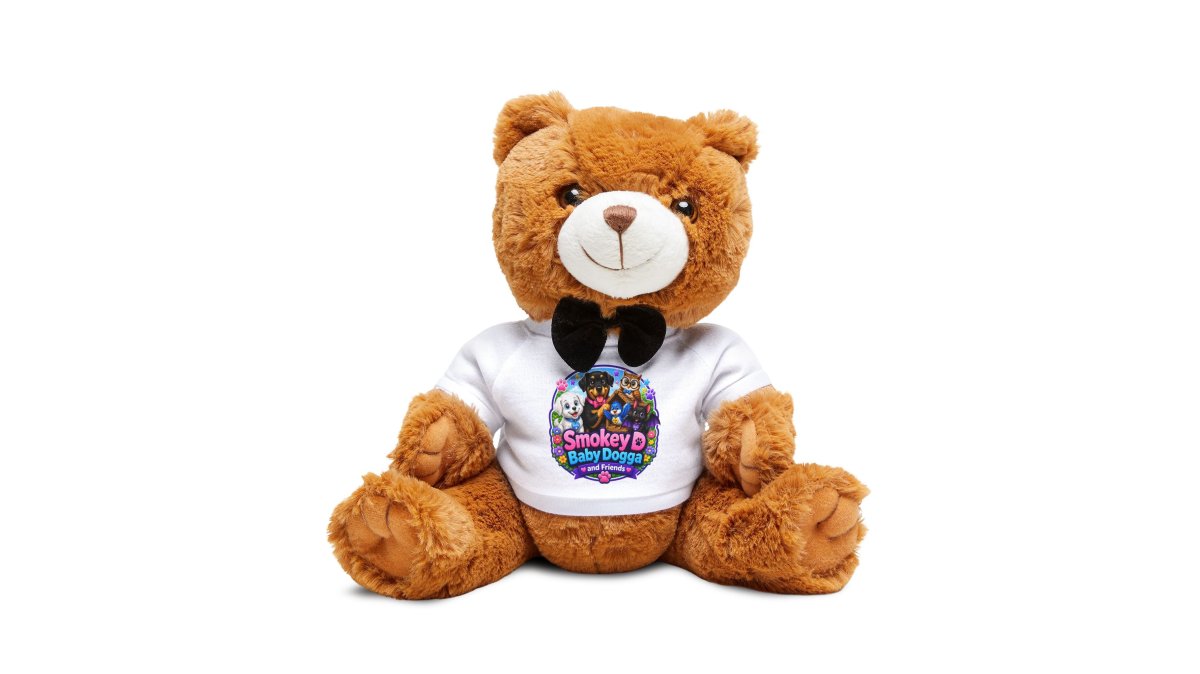
- The Smokey D Baby Dogga and Friends Plush Teddy Bear gives a child something to hold during the read, which helps with attention and self-regulation.
- The Smokey D Baby Dogga and Friends Kids Jigsaw Puzzle comes in 110 to 1014 pieces, so a 3-year-old and a 7-year-old can each work at their own level while building the same scene. For a non-verbal child, the puzzle offers a shared activity that does not require conversation.
- For grown-ups who want a little of that warmth too, the Rocky the Ghost Dog ceramic mug brings the characters into your morning coffee.
How to Teach Friendship Skills to Toddlers
Teaching friendship skills to toddlers works best through repetition, modeling, and matching the story to your child's current social stage. Ages 3-5 are not one uniform block. A 3-year-old is often still in parallel play, sitting beside a peer with separate toys. By 4, cooperative play emerges, and by 5, kids can negotiate roles, take turns in a game, and repair a disagreement with words.

| Story | Social Stage | Core Skill | Best Age | Why It Fits |
|---|---|---|---|---|
| Smokey and the New Friend | Parallel to cooperative | Inclusion | 3-5 | Welcoming a newcomer without losing existing friends |
| Rocky Learns to Share | Parallel play | Turn-taking | 3-4 | Concrete toy conflict a 3-year-old recognizes instantly |
| Bella and the Scary Night | Parallel to cooperative | Courage and comfort | 3-5 | Naming fear and accepting help from a peer |
| Luna and the Lost Butterfly | Cooperative | Compassion | 4-5 | Helping someone who cannot reciprocate immediately |
| Charlie's Big Adventure | Cooperative | Connection | 4-5 | Shared joy and group identity |
| The Forest Friends Disagreed | Cooperative | Conflict resolution | 4-5 | Repairing a friendship after a real disagreement |
- Choose books with clear, high-contrast illustrations and predictable page turns. The Smokey D Baby Dogga series uses warm, uncluttered forest scenes that reduce visual overload.
- Let the child hold a plush companion, like the Smokey D Baby Dogga and Friends Plush Teddy Bear, to anchor attention during the read.
- Offer a non-verbal response option. Instead of asking "What would you say?", ask the child to point to the character who helped or to nod when a feeling matches.
- Read the same book at the same time each day. Predictability lowers anxiety and makes the friendship lesson easier to absorb.
Frequently Asked Questions
What are some heartwarming children's stories about friendship?
Heartwarming friendship stories for ages 3-5 focus on characters helping each other, sharing, and resolving conflicts. Look for titles where animal friends navigate new situations together, like welcoming a new neighbor or overcoming a fear. The best stories show kindness in action rather than just talking about it, giving young children a clear model to follow.
How do friendship stories help social-emotional development in preschoolers?
Friendship stories build social-emotional learning by letting children practice empathy through characters. When a child sees Rocky the Ghost Dog feel scared, they connect that feeling to their own experiences. Research shows that discussing story characters' emotions helps children recognize and manage their own feelings, building emotional intelligence that supports cooperative play and conflict resolution.
How to choose the best books about friendship for ages 3-5?
Look for stories with clear, simple narratives, relatable characters, and positive reinforcement of kindness. Check that the book matches your child's attention span: 3-year-olds do best with short, rhythmic text, while 5-year-olds can follow longer plots. Choose titles that show diverse friendship dynamics and include opportunities for discussion, like asking 'How do you think she felt?'
Why is reading about kindness and connection important for toddlers?
Reading about kindness and connection builds the foundation for social awareness. Toddlers learn best through repetition and story, so books that model sharing, compassion, and helping behavior give them scripts to use in real life. This early exposure supports character building and makes friendship skills feel natural rather than forced.
What are the top moral stories for young children?
The best moral stories for ages 3-5 feature animal characters who face relatable challenges like making a new friend, resolving a disagreement, or showing courage. Stories that show consequences naturally, such as a character feeling sad after being unkind, help children understand moral lessons without lecturing. Look for narratives that end with connection and positive reinforcement.